
Reviewed · COOKING CLASSES
Gyoza Cooking Class in Kyoto: Traditional Japanese Dumplings
Dumplings make a fine Kyoto souvenir. This hands-on class takes you into a traditional Kyoto townhouse, where you choose a filling, make wrappers from scratch, wrap your own gyoza, and cook them for lunch or dinner. I like the from-scratch wrapper lesson and the chance to choose your filling. I also like the cultural touches, including stories about Samurai life and optional armor photos.
The class is listed at about 90 minutes and costs $118.19 per person. That is not cheap for a cooking lesson, especially if you are counting yen carefully. Still, it includes an English-speaking instructor, cooking tools, your food, and a memorable skill you can use at home. Some sessions run closer to two hours, so do not schedule your next activity too tightly.
The strongest instructors named by participants are Hama, Maya, Ryo, and YO. Families, couples, solo visitors, and older children all seem to fit well here. The main point to consider is the price: this is best for you if you value personal instruction and a cultural activity, not simply a quick meal.
In This Review
- Key Points to Know Before You Book
- Inside the Kyoto Townhouse at 230-1 Kamimyōkakujichō
- Choosing a Filling and Building the Gyoza
- Learning the Art of the Fold
- Cooking the Dumplings with a Professional Machine
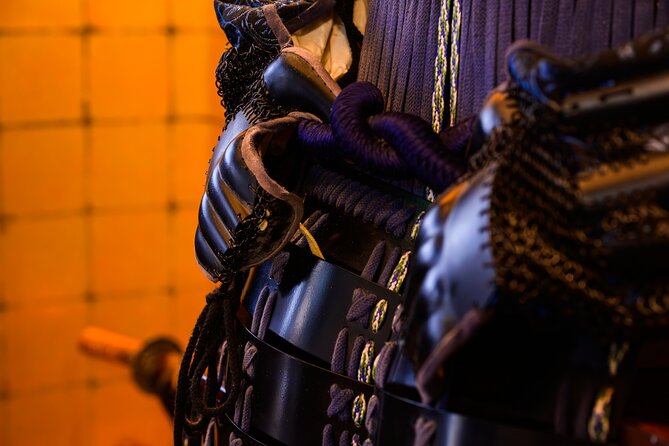
- Samurai Culture and Optional Armor Photos
- The Instructors Make the Difference
- What You Take Home Besides the Recipe
- Is $118.19 a Fair Price?
- Who Should Book This Kyoto Cooking Class?
- Booking Details, Cancellation, and Practical Tips
- Should You Book It?
- FAQ
- How long does the gyoza cooking class last?
- How much does the class cost?
- What is included in the experience?
- Is transportation included?
- Where does the activity end?
- Can I wear Samurai armor?
- What is the cancellation policy?
Key Points to Know Before You Book
- Make 10 to 12 gyoza per person: The class can provide a hearty meal, not just a token taste.
- Start with homemade wrappers: You learn a part of gyoza-making that many casual cooking classes skip.
- Choose your own filling: This gives you some control over the final flavor.
- Cook with a professional baking machine: The final cooking step is designed to help you get crisp, well-cooked dumplings.
- Learn in a Kyoto townhouse: The setting gives the class a more local feel than a generic commercial kitchen.
- Try Samurai armor photos afterward: Armor dress-up is optional, so you can keep the class focused on food if that suits you better.
Inside the Kyoto Townhouse at 230-1 Kamimyōkakujichō
The meeting point is at 230-1 Kamimyōkakujichō in Kyoto’s Nakagyo Ward. The location is near public transportation, which matters in Kyoto, where a short walk from a station or bus stop can be easier than arranging a private ride.
The activity begins and ends at this same point. Private transportation is not included, so you need to make your own way there. Plan to arrive with enough time to find the townhouse, especially if you are coming from another part of the city.
A traditional townhouse is a fitting place for this experience. Gyoza may be an everyday food, but the class connects it to a Japanese home setting rather than treating it as a restaurant demonstration. You are there to work, not just watch someone fold dumplings at a distance.
The group size can reach 20 people. That is a useful limit to know before booking. The class may feel friendly and social, but you should not assume a private lesson unless your particular time slot has few bookings. A solo visitor has had a private session, and small groups may sometimes receive more direct help.
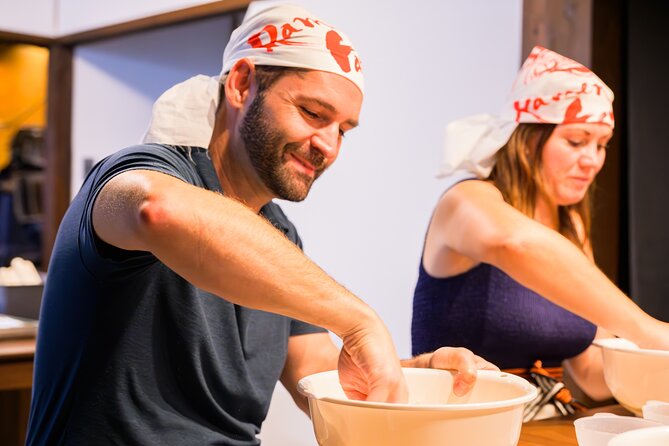
The cooking area provides tools for the class. You also get a personal working station, which lets you handle your own dough and filling rather than waiting for another participant to finish.
More Cooking Classes in Kyoto
- Ramen Cooking Class at Ramen Factory in Kyoto
★ 5.0 · 1,937 reviews - Sushi Making in Kyoto! Same-day bookings welcome!
★ 5.0 · 713 reviews - Kyoto: Ramen Cooking Class at a Ramen Factory with Souvenir
★ 4.9 · 532 reviews
Choosing a Filling and Building the Gyoza
The first useful choice is your filling. The class lets you select a favorite filling, giving you a small but welcome bit of control. This is helpful for families and mixed groups, since not everyone wants exactly the same dumpling.
The class also gives you a chance to learn what makes Japanese gyoza different from the dumplings found elsewhere. Gyoza began in China, then changed over time in Japan. Japanese versions are often associated with thin wrappers, a savory filling, and a crisp base, though styles and sizes vary.
You will make the wrappers from scratch. This is one of the best parts for anyone who wants to repeat the dish at home. Prepared wrappers make gyoza faster, but working with fresh dough teaches you more about texture, thickness, and the care needed to make a wrapper that folds without tearing.
Do not expect perfect circles on your first try. That is part of the fun. The class is designed for participation, and the instructors keep the process simple enough for beginners. Hama has been praised for making each step easy to follow, while Maya has been described as friendly and clear in English.
The lesson also includes paper practice for the folding technique. That small step can save you from wasting dough while you learn the basic pleats. You will get more from the class if you focus on the movement rather than trying to make every dumpling look identical.
Learning the Art of the Fold
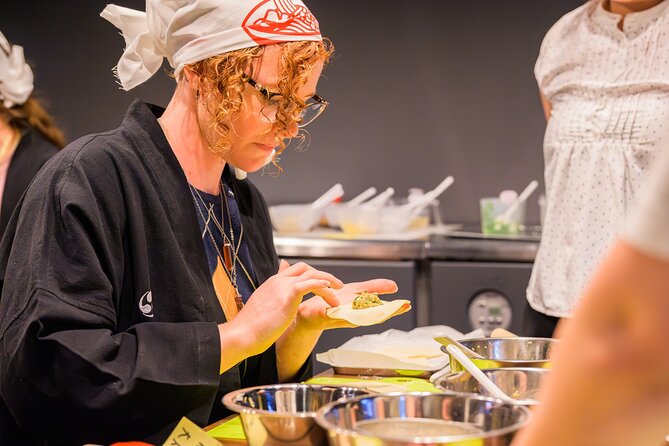
Wrapping gyoza looks simple until you try it. You place the filling in the center, moisten the edge, fold the wrapper, and create a sealed shape. The instructor shows you how to keep the filling under control and close the dumpling properly.
Ryo has been praised for being personable and good with older children and teens. That is useful if you are booking this as a family activity. Younger children may need help with dough and folding, but a 10-year-old has taken part successfully in a family group.
The class works well because every person has something to do. You are not standing behind a counter watching a chef prepare the meal. You roll, fill, fold, and learn through repetition. By the time you reach the last dumpling, your hands should feel more confident.
Expect some uneven shapes. Homemade gyoza do not need to look factory-made to taste good. In fact, the odd-looking dumpling often becomes the one you remember.
The English-speaking instructor explains the process in English, and the named teachers have received strong praise for making the steps easy to understand. That does not mean the class is a formal language lesson. The focus stays on food, with Japanese culture and history added along the way.
Cooking the Dumplings with a Professional Machine
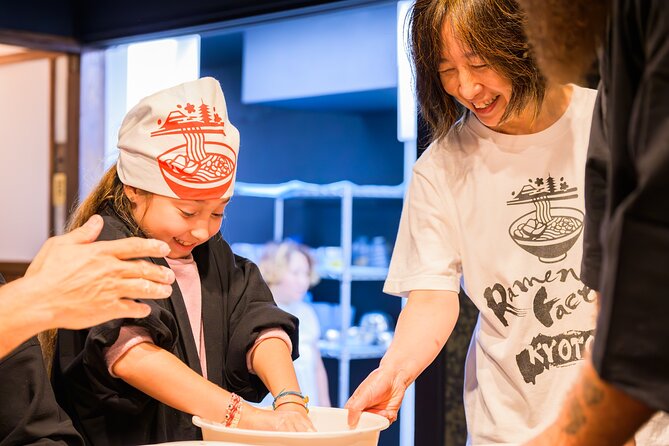
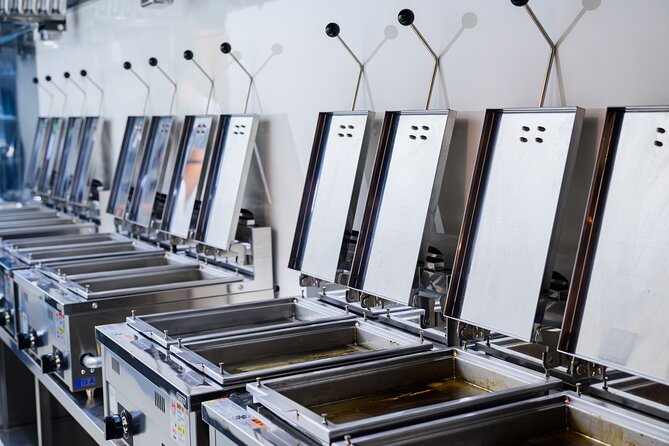
Once your dumplings are wrapped, you cook them using a professional baking machine. This helps with the final stage, especially if you have never cooked gyoza before.
The cooking step is important. A good gyoza should have a tender wrapper, a hot filling, and a crisp underside. The machine gives the instructor more control over the process than a casual setup would provide.
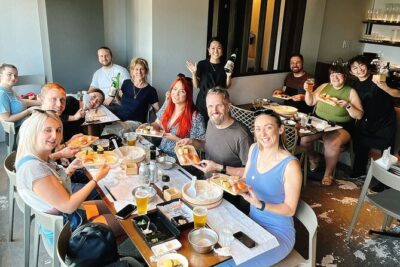
The number of dumplings can make this feel like a proper meal. One class produced about 10 to 12 gyoza per person. You should arrive hungry, since the activity is not just a tasting session.
The meal also gives you a clear test of what you learned. You can see how the wrapper holds together, how much filling works best, and what the finished dumpling should feel like when cooked. Those details are easier to remember after you have eaten the results yourself.
The food is the reward, but the real value is the repeatable method. You leave knowing how to make a Japanese-style dumpling from basic steps rather than simply knowing which restaurant served you a good plate.
A completely different kind of day out:
- PERFECT KYOTO 1-Day Bus Tour
★ 5.0 · 13,518 reviews - [Kyoto & Nara Day Tour] Sagano Scenic Railway & Nara Park & Fushimi Inari Taisha Thousand Torii Gates & Togetsukyo Bridge & Bamboo Grove & Kimono Forest (Departing from Osaka)
★ 4.9 · 10,942 reviews - Kyoto: Fushimi Inari, Kinkakuji, Bamboo Grove 1 Day Bus Tour
★ 4.8 · 4,316 reviews - Kyoto: Tea Ceremony in a Traditional Tea House in Kiyomizu
★ 4.9 · 3,519 reviews
Samurai Culture and Optional Armor Photos
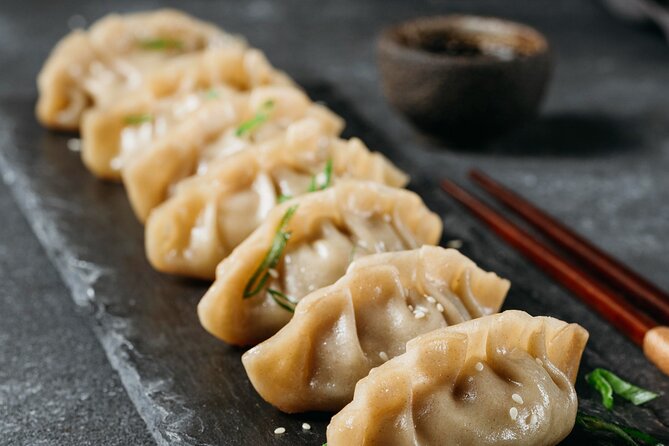
The cooking class includes a little Samurai culture and Japanese history. This is not presented as a separate museum visit or a long lecture. Instead, it adds context while you work in the townhouse.
That balance suits the activity. You get a cultural connection without losing most of your time to explanations. If your main goal is cooking, the history should not overwhelm the lesson.
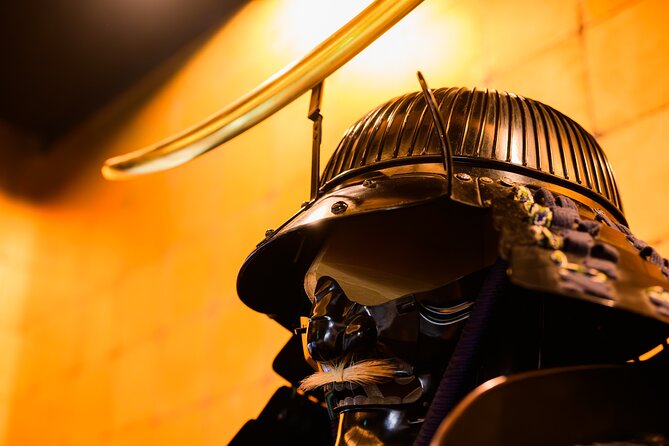
Afterward, you can dress in Samurai armor and take photos. This part is optional. You can enjoy the gyoza class without putting on armor, or add the dress-up moment if you want a more playful souvenir.
The armor is especially appealing for families and children, though adults may enjoy it just as much. It also gives the session a second theme beyond food. You leave with more than a meal, but the experience still stays compact enough to fit into a Kyoto sightseeing day.
The photos are not a substitute for seeing Kyoto’s temples, gardens, and neighborhoods. They are simply a fun extra attached to the cooking lesson. I would treat them as a bonus, not the main reason to book.
The Instructors Make the Difference
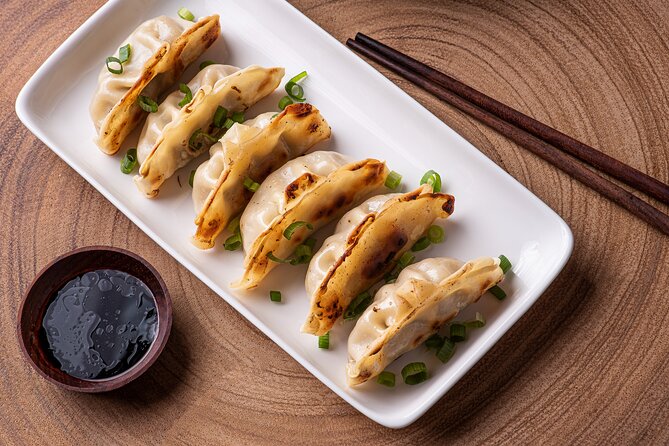
A cooking class can succeed or fail based on the teacher. Here, Hama, Maya, Ryo, and YO are the names connected with the strongest experiences.
Hama is particularly good at helping beginners feel comfortable. Her teaching style has been praised for making the process fun and easy, and she has guided families through making delicious gyoza without making the lesson feel difficult.
Maya brings clear English and an upbeat approach. She has helped participants understand the steps without turning the class into a stiff demonstration. If you are nervous about cooking in an unfamiliar country, that kind of communication matters.
Ryo has a warm, personable style that works well for families with older children and teens. YO has also been praised for being friendly and for making good use of the townhouse setting.
You cannot choose the instructor with certainty from the information provided. Your teacher depends on the schedule and availability. Still, the range of positive names suggests that the class is not built around one single personality.
A small class or an unusually quiet evening may give you more individual help. One solo participant received a private lesson at the 6:00 pm time slot. You should not count on that outcome, but off-peak timing may sometimes produce a more personal experience.
What You Take Home Besides the Recipe
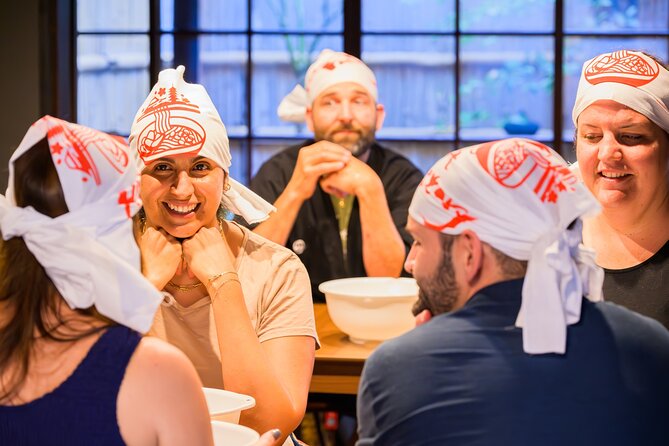
A cooking class is more useful when it leaves you with something you can repeat. The apron souvenir is a nice touch, and some participants also received a headband. The apron is practical and gives you a physical reminder of the activity.
A recipe or take-home instructions may also be available. One participant forgot to request the recipe before leaving, and the provider offered to send it afterward. I would ask for the recipe before you go rather than assume it will arrive automatically.
The class can become a useful part of your trip because it gives you a skill to share at home. You can make gyoza for family and friends and explain that you learned the folding method in Kyoto. That has more staying power than another photograph stored on your phone.
The lesson is also easy to remember because you perform every step yourself. You choose the filling, handle the dough, fold the dumplings, and eat the finished batch. That sequence gives the activity a clear shape and makes it feel worthwhile even after the meal is over.
Is $118.19 a Fair Price?
At $118.19 per person, this class sits on the expensive side for a 90-minute food activity. You are paying more than the cost of a plate of gyoza in Kyoto, of course. The question is not the price of the food alone. It is the value of instruction, the setting, the cultural element, the equipment, and the hands-on work.
The price looks more reasonable if you want a structured experience with an English-speaking instructor. You receive cooking tools during the session, a personal work area, a substantial serving of dumplings, and the chance to use a skill later.
It is also a better fit for you if you are traveling with children or teens. The class gives everyone a role, and the optional Samurai armor photos add another activity. A family can turn it into a shared memory instead of splitting up while one person shops or rests.
The value is less convincing if you only want a quick introduction to Japanese food. If your budget is tight, you may prefer to eat gyoza at a local restaurant and spend the difference on another Kyoto sight.
Some sessions last closer to two hours, despite the approximate 90-minute duration. That extra time can be welcome, especially if you enjoy a relaxed pace. It also means you should leave room in your schedule for a session that runs longer than expected.
Who Should Book This Kyoto Cooking Class?
I would recommend it to first-time visitors who want a simple way to connect with Japanese food. You do not need previous cooking experience, and the instructions are built around clear, practical steps.
Families with older children and teens are a strong match. The personal workstation keeps the class active, while the Samurai armor option gives children a memorable photo opportunity.
Couples and solo visitors can also enjoy it. A solo booking might occasionally become a private session if the time is quiet, but that is not guaranteed. Couples can split tasks, compare folding styles, and share the finished meal.
You may want to skip it if you dislike group activities or want a highly advanced cooking lesson. The class is friendly and beginner-focused rather than a professional chef course.
It may also be a poor choice if you need a very firm 90-minute schedule. The published duration is approximate, and at least one class lasted about two hours.
Booking Details, Cancellation, and Practical Tips
The class accepts a mobile ticket, and booking confirmation arrives at the time of booking. The meeting point is near public transportation, but private transportation is not part of the package.
The activity ends back at the starting point. This makes it easy to continue sightseeing in Kyoto afterward, provided you allow enough time for the class and any optional Samurai photos.
You can cancel for a full refund if you do so at least 24 hours before the local start time. Cancellations or changes made less than 24 hours before the start are not refunded or accepted.
Bring an appetite. A serving of 10 to 12 gyoza per person can be filling, and the class is built around eating what you make.
Finally, ask for the recipe before leaving. The apron is a confirmed souvenir, while recipe delivery may require a request. That one small step makes it much easier to recreate the meal at home.
Should You Book It?
Book this class if you want to cook, eat, and take part in a light cultural activity during your Kyoto visit. The strongest reasons are the homemade wrappers, clear English instruction, personal workstations, and the chance to make enough gyoza for a real meal.
I would be happy to recommend it for families, couples, solo visitors, and anyone who wants an experience they can repeat at home. Hama, Maya, Ryo, and YO have all helped make the class approachable and enjoyable.
Skip it if $118.19 feels too high for a short activity or if you are looking only for a cheap meal. For the right person, the lasting value is not the dumplings alone. It is learning how to make them, remembering Kyoto while you cook at home, and perhaps wearing Samurai armor for a wonderfully silly photograph.
FAQ
How long does the gyoza cooking class last?
The approximate duration is 1 hour and 30 minutes. Some sessions have lasted about two hours, so allow extra time if your schedule is tight.
How much does the class cost?
The listed price is $118.19 per person.
What is included in the experience?
An English-speaking instructor and the cooking tools needed for the class are included.
Is transportation included?
No. Private transportation is not included. You need to travel to the meeting point at 230-1 Kamimyōkakujichō, Nakagyo Ward, Kyoto.
Where does the activity end?
The activity ends back at the same meeting point where it begins.
Can I wear Samurai armor?
Yes. Samurai armor dress-up and photos are available as an optional part of the experience.
What is the cancellation policy?
You can cancel up to 24 hours before the local start time for a full refund. Cancellations or changes made less than 24 hours before the start are not accepted for a refund.
Just added in Kyoto
- The “Golden Route” and Ancient Japan by DIAMIR Erlebnisreisen – 14-Day Tour★ 2.0 · 2 reviews
- Japan: Castles & Cuisine by G Adventures – 6-Day Kyoto to Osaka Tour★ 4.5 · 4 reviews
- Cycle Japan by Explore! – 13-Day Kyoto to Tokyo Tour★ 4.7 · 12 reviews
- Cycle Japan by Intrepid Travel – 11-Day Kyoto to Tokyo Tour★ 4.8 · 2 reviews
- Classic Japan by Intrepid Travel – 11-Day Kyoto to Tokyo Tour★ 4.4 · 14 reviews
- Ancient & Modern Japan 14-Day Tour by Exodus Adventure Travels★ 4.4 · 40 reviews
- 5 Day Cultural Adventure of Kyoto, Nara & Osaka by Tourist Journey★ 2.5 · 2 reviews
- 12 Days Kinosaki Onsen Escape: A Journey Through Japan’s Timeless Towns by UME Travel★ 4.8 · 5 reviews
Cooking Classes, compared.
Sushi Making Tokyo Roll and Authentic Japanese Sushi Class
Read our review →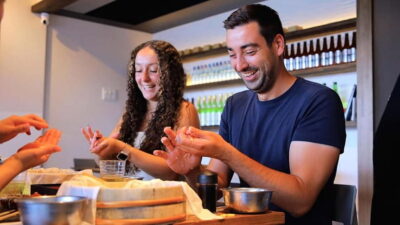
Roll and Authentic Sushi Making Class in Asakusa
Read our review →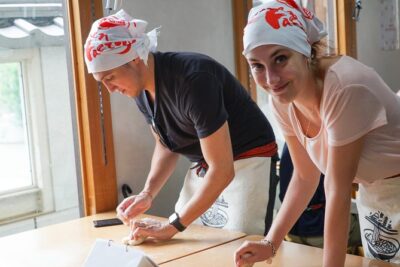
Ramen Cooking Class at Ramen Factory in Kyoto
Read our review →
Sushi Making Class in a Happi Coat near a Famous Spot
Read our review →
Sushi Making Osaka Roll and Authentic Japanese Sushi Class
Read our review →
Tokyo Sushi Making Class in Tsukiji with Professional Chef
Read our review →
Ramen & Gyoza Cooking Class in Tokyo with Local Supermarket Visit
Read our review →Browse the lists this tour appears in