
Reviewed · COOKING CLASSES
Kyoto: Japanese Washoku Bento Small Group Cooking Class
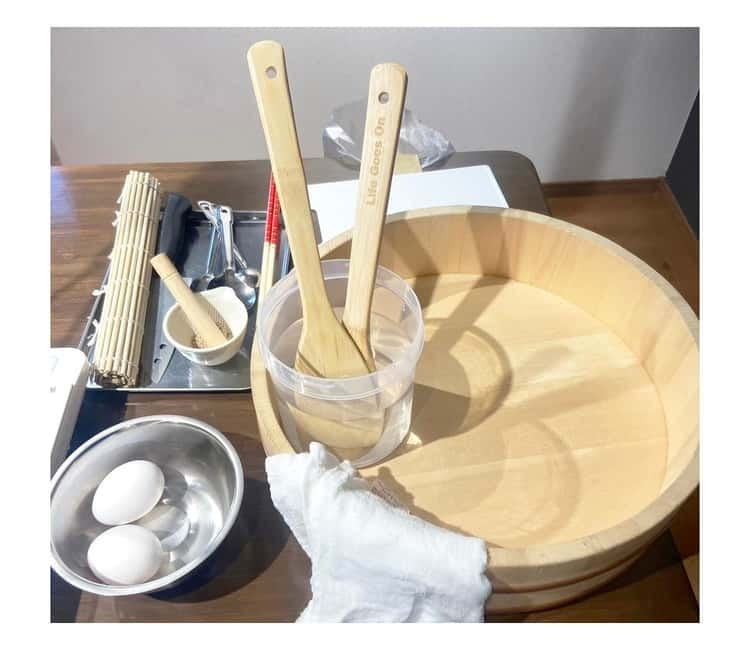
Come hungry, leave with lunch skills. This 150-minute Kyoto cooking class turns a simple bento box into a hands-on lesson in washoku, Japan’s traditional approach to food. You make sushi rolls, tempura, tofu salad, a Japanese rolled omelette, and dashi stock, then sit down to eat what you prepared.
I like the small group limit of five, which gives you a real chance to handle the knife, roll the omelette, and ask questions. I also like the focus on everyday Japanese cooking rather than a flashy restaurant menu. The main drawback is timing: arriving more than 15 minutes late means automatic cancellation, with no refund or same-day schedule change.
In This Review
- Key things to know before booking
- What this Kyoto bento class is really about
- Meeting the chef near Saiin Station
- Learning washoku through four different dishes
- Sushi rolls and careful preparation
- Tempura and the practical side of frying
- Dashi stock and the foundation of flavor
- Tofu salad and balance
- The rolled omelette may be the class highlight
- Knife skills and the Japanese approach to cooking
- A friendly teaching style makes the difference
- Eating your own bento at the end
- Is $58 a fair price?
- Who will enjoy this class most?
- Practical timing and booking advice
- Should you book the Kyoto bento cooking class?
- FAQ
- How long does the Kyoto bento cooking class last?
- How much does the experience cost?
- Where do I meet the chef?
- Should I use Instagram Maps to find the meeting point?
- How many people can join the class?
- Which languages are available?
- What food will I prepare?
- Is the meal included?
- What happens if I arrive late?
- Can I cancel the booking?
Key things to know before booking
- Four substantial dishes: You prepare sushi rolls, tempura, tofu salad, and Japanese rolled omelette, with dashi stock used as an important base.
- A true hands-on class: You do the chopping, rolling, frying, seasoning, and arranging rather than simply watching a chef work.
- Only five participants: The small format makes it easier to receive individual help with knife work and Japanese cooking methods.
- Meeting point near Saiin Station: Start at Kyoto Laundry Cafe, about five minutes from Hankyu Railway’s Saiin Station, where the chef picks you up.
- English and Japanese instruction: Chefs including Ai, Rie, and Miyu explain both technique and food culture in English or Japanese.
- A filling final meal: The finished bento is a full lunch, so plan to arrive hungry rather than after a large meal.
What this Kyoto bento class is really about
A bento is more than food packed into a box. It is a portable meal made up of separate portions, with attention paid to color, shape, taste, and texture. This class gives you a practical way to understand that idea because you prepare several small dishes and bring them together at the end.
The class also introduces washoku, a style of Japanese cuisine built around fresh, seasonal ingredients and balance. You learn why dashi matters, how different textures work together, and how an omelette, tofu salad, tempura, and sushi can share one meal without tasting alike.
I think this is a better choice for someone who wants useful context along with dinner. You are not just following recipes. You are learning the small decisions that make Japanese home cooking feel orderly and refined, such as cutting ingredients carefully, seasoning with restraint, and presenting several dishes side by side.
The activity lasts two and a half hours. That is long enough to cover several techniques without turning into a full-day commitment. It also fits well into a Kyoto itinerary, especially if you want a break from temples and sightseeing.
More Cooking Classes in Kyoto
- Ramen Cooking Class at Ramen Factory in Kyoto
★ 5.0 · 1,937 reviews - Sushi Making in Kyoto! Same-day bookings welcome!
★ 5.0 · 713 reviews - Kyoto: Ramen Cooking Class at a Ramen Factory with Souvenir
★ 4.9 · 532 reviews
Meeting the chef near Saiin Station
Your meeting point is Kyoto Laundry Cafe, near Saiin Station on the Hankyu Railway. The cafe is about five minutes from the station, but you should use Google Maps rather than Instagram’s map function. That small detail matters in Kyoto, where a wrong turn can cost you more time than expected.
The cafe is only the meeting point. On the day of the class, the chef comes to collect you there and takes you to the cooking location. Arrive early enough to find the cafe without rushing. If you are more than 15 minutes late, the booking is automatically canceled, and late arrival does not qualify for a refund or a same-day change.
That policy is strict, but it is understandable for a tiny cooking class. With only a handful of places, the chef cannot easily restart the lesson for someone who arrives late. I would treat the meeting time as a firm appointment, not a casual suggestion.
Learning washoku through four different dishes
The class covers four dishes, but each one teaches a different skill. That variety is one of the strongest reasons to choose it over a class that focuses on a single recipe.
Sushi rolls and careful preparation
Making sushi rolls gives you practice with shaping and portioning. It also shows how a bento uses compact foods that can be packed and eaten neatly.
The class does not present sushi as a restaurant performance. Instead, you prepare it as one part of a larger meal. That is useful because it places sushi in the wider setting of Japanese food rather than treating it as Japan’s only important dish.
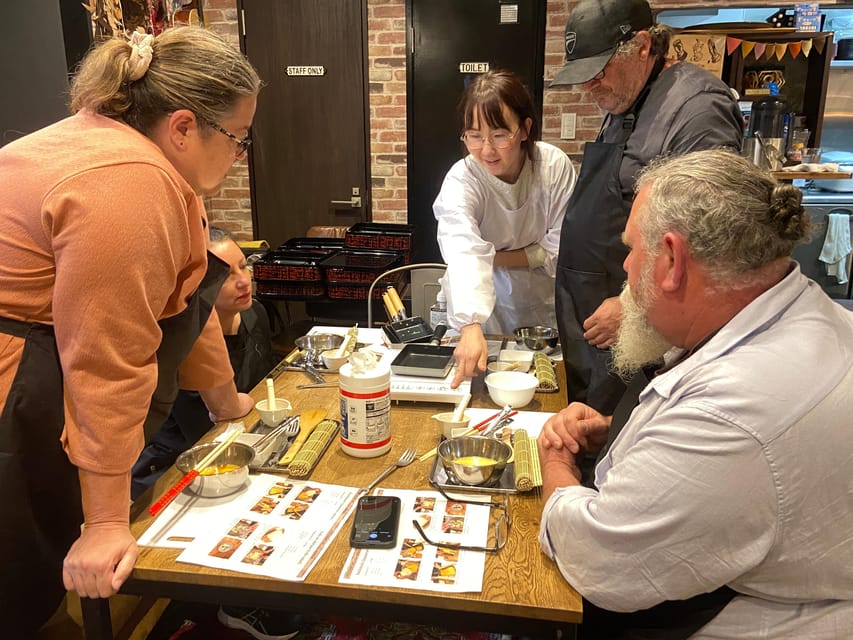
You can expect the chef to demonstrate the process before you try it yourself. The small group makes a difference here, since rolling and cutting can be awkward the first time. You will have room to ask for help instead of trying to copy a demonstration from across a crowded room.
A completely different kind of day out:
- PERFECT KYOTO 1-Day Bus Tour
★ 5.0 · 13,518 reviews - [Kyoto & Nara Day Tour] Sagano Scenic Railway & Nara Park & Fushimi Inari Taisha Thousand Torii Gates & Togetsukyo Bridge & Bamboo Grove & Kimono Forest (Departing from Osaka)
★ 4.9 · 10,942 reviews - Kyoto: Fushimi Inari, Kinkakuji, Bamboo Grove 1 Day Bus Tour
★ 4.8 · 4,316 reviews - Kyoto: Tea Ceremony in a Traditional Tea House in Kiyomizu
★ 4.9 · 3,519 reviews
Tempura and the practical side of frying
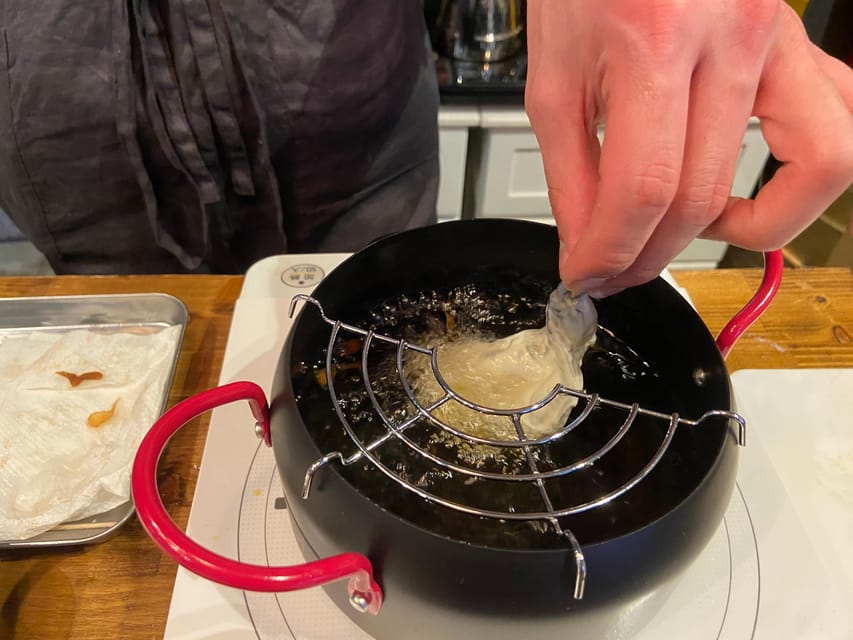
Tempura is one of the more useful techniques covered in the class because frying at home can feel intimidating. The chef shows you how to fry tempura and explains the approach used in Japanese cooking.
You get to work with the ingredients rather than simply eating a prepared sample. That makes the lesson more memorable, although it also means your first pieces may not look perfectly uniform. That is part of the fun. The class is aimed at learning, not producing competition-ready food.
If you are nervous around hot oil, pay close attention to the demonstration and follow the chef’s instructions closely. The supplied equipment and aprons are included, so you do not need to bring cooking gear with you.
Dashi stock and the foundation of flavor
Dashi is one of the most important lessons in the class. This stock forms a base for many Japanese dishes, and learning to make it gives you a way to repeat the flavors at home.
The chef explains the process as part of the cooking session rather than treating dashi as a mystery ingredient. Several people specifically praised this part because it made Japanese flavor easier to understand and reproduce.
This is also where the class offers value beyond the meal you eat in Kyoto. A bento disappears quickly, but a clear method for making dashi can become part of your regular cooking. One participant even continued making dashi and dashimaki, the rolled omelette, for lunch at home after returning from Japan.
Tofu salad and balance
The tofu salad adds a softer texture and a cooler, lighter element to the meal. It works beside the crisp tempura, rice-based sushi, and egg omelette.
This dish helps explain why washoku feels balanced. A bento is not simply a box filled with four heavy foods. Each component has a different role, and the finished meal becomes more satisfying because of those contrasts.
The rolled omelette may be the class highlight
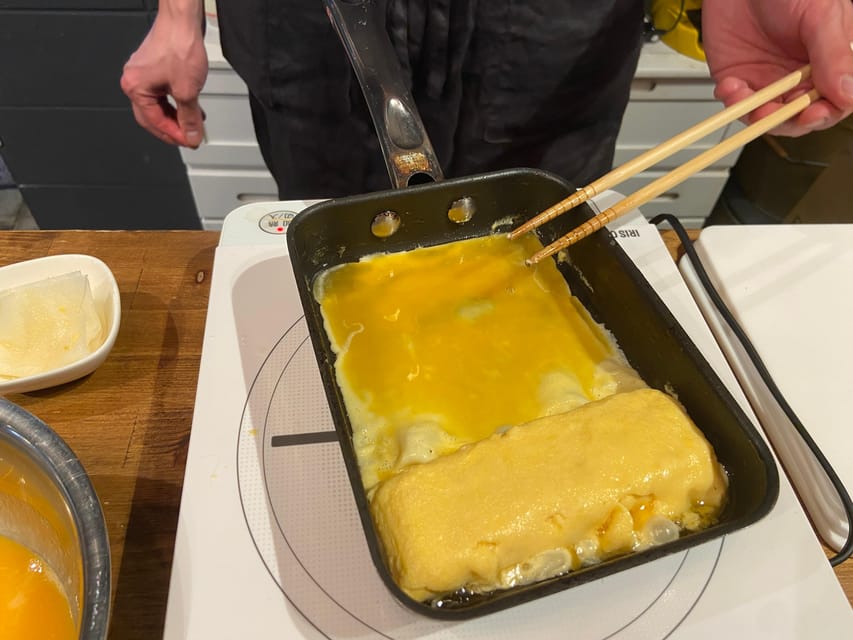
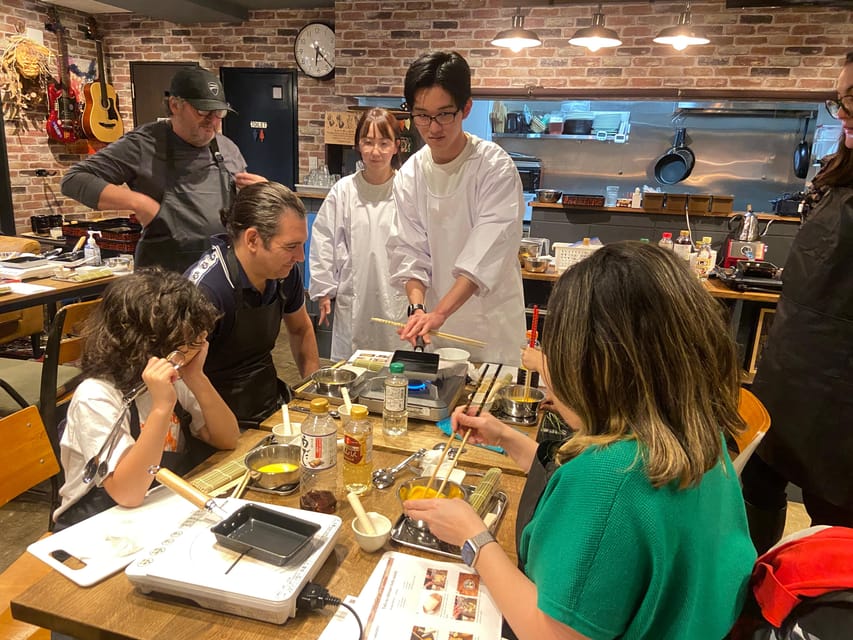
Japanese rolled omelette, often called dashimaki, looks simple until you try to make it. The technique involves cooking and rolling layers of egg, often with dashi contributing flavor and moisture.
It is a good lesson in patience and control. You may need a few attempts before the shape looks tidy, but the chef demonstrates the method and helps you correct your technique. The result becomes part of your finished bento, so you get an immediate reward for the effort.
I especially like that this is the sort of dish you can make again at home. It does not require an elaborate kitchen or a long list of hard-to-find ingredients. The class also provides recipes afterward according to several participants, which makes it easier to repeat the meal.
Knife skills and the Japanese approach to cooking
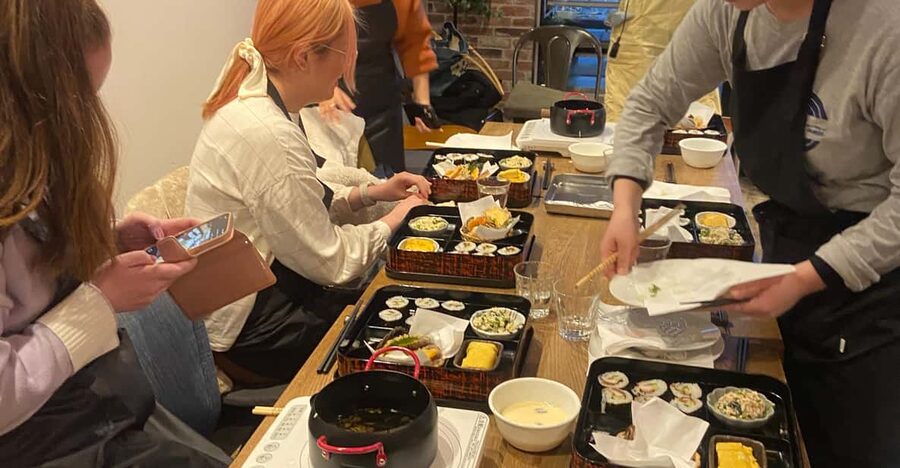
The class includes instruction in knife handling and cutting technique. This is not just a safety lesson. In Japanese cooking, the way food is cut affects how it cooks, how it feels in your mouth, and how it looks in the bento.
The chef shows you how to handle a knife skillfully and how to approach preparation in a Japanese kitchen. You can expect the instruction to be practical and closely connected to the dishes you are making.
The small group format is important here. With a maximum of five people, the chef can watch how you hold the knife and offer corrections. That kind of personal help is much harder to provide in a large class.
You should not book this expecting to sit back while someone else does the difficult work. The appeal is the opposite. You will be chopping, rolling, seasoning, frying, and arranging food throughout the session.
A friendly teaching style makes the difference
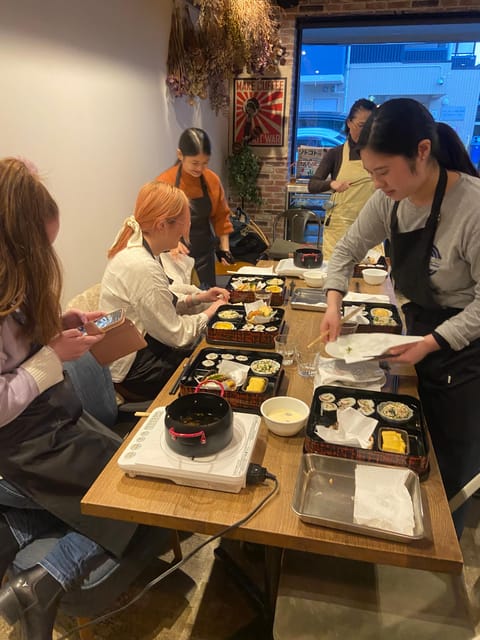
The chefs named in the experiences include Ai, Chef Rie, and Miyu. Each is praised for being patient, friendly, clear, and willing to answer questions. Ai receives particular praise for explaining Japanese food culture and the history of bento, while Rie is noted for careful demonstrations and encouragement. Miyu is praised for making the class both informative and relaxed.
The instruction is available in English and Japanese. English ability appears strong enough for explanations about ingredients, technique, and cultural background. That matters because cooking classes can become frustrating if you only understand the physical motions but not the reason behind them.
The tone also suits families and couples. A family of four found the class comfortable, and a parent and nine-year-old enjoyed preparing the meal together. Children under the listed age limits are not accepted, and the activity is not suitable for wheelchair users, so check those restrictions before booking.
Eating your own bento at the end
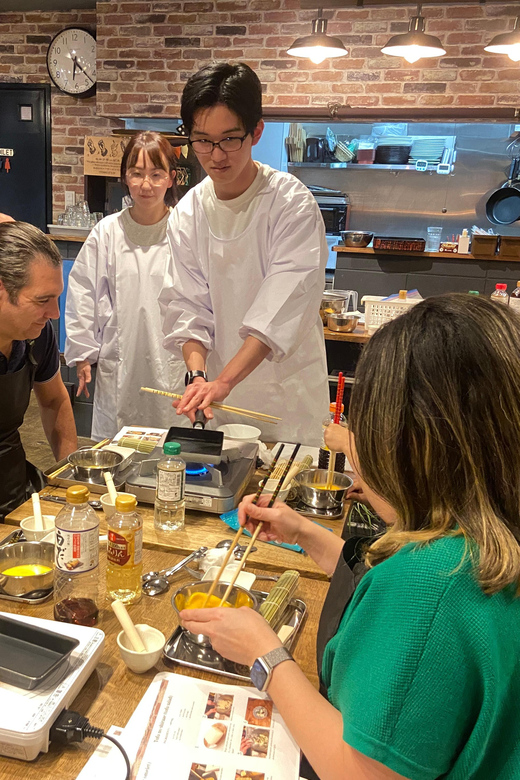
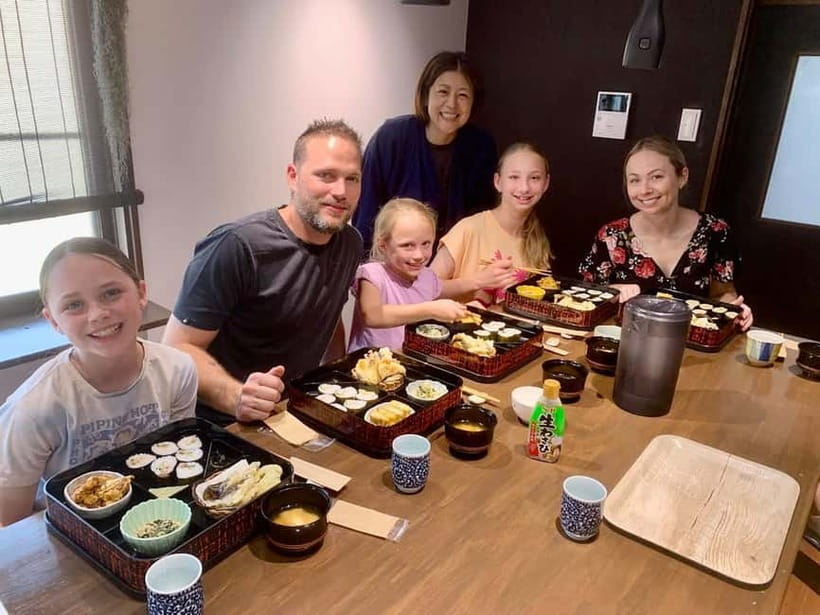
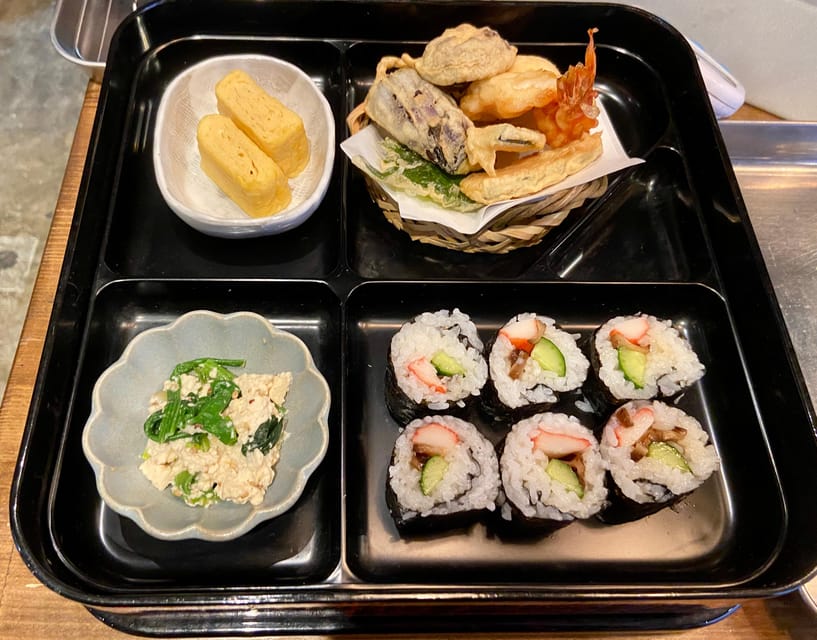
After the cooking is finished, you arrange your meal and eat together with the group. The final bento includes the dishes you prepared: sushi rolls, tempura, tofu salad, and rolled omelette.
Plan for a generous amount of food. Several people specifically advise arriving hungry, and one description calls the final meal massive. This makes the $58 price easier to assess. You are paying for a 150-minute lesson, an instructor, ingredients, equipment, four dishes, and a full meal, not just a small tasting.
The meal also gives you a chance to talk with the other participants and the chef. In a group of five or fewer, conversation is usually more natural than it would be in a large demonstration class. If you are traveling alone, this can be a pleasant way to meet people without committing to a long evening activity.
Is $58 a fair price?
At $58 per person, this is not the cheapest meal in Kyoto. You could buy a bento for far less. But the comparison is not quite fair, since this experience includes instruction, ingredients, equipment, cultural explanation, and the chance to prepare several dishes yourself.
I consider the price reasonable for anyone who values learning. You get four different recipes and several transferable techniques in one session. The small group size adds value because individual help is part of what you are buying.
The price is less appealing if you only want to eat Japanese food or take a quick cooking demonstration. In that case, a restaurant meal will be cheaper and simpler. Book this class when you want to understand how the meal comes together and hope to use the methods again.
Who will enjoy this class most?
This class suits you if you enjoy Japanese food and want to know how it is made. It is especially useful for first-time visitors who want an early introduction to Japanese ingredients, food customs, and home-style cooking.
It also works well for:
- Couples looking for a shared activity beyond sightseeing
- Families with children old enough to participate safely
- Solo visitors who like small social experiences
- Home cooks who want to learn dashi, tempura, omelette, and knife skills
- Anyone who wants a filling lunch or dinner during a Kyoto stay
You may want to choose another activity if you have limited mobility, are managing diabetes, or are bringing a very young child. The stated restrictions exclude wheelchair users, people with diabetes, and children below the listed age limits. If you have an allergy, contact the provider before booking. One participant with a shrimp allergy received a suitable substitution, but you should not assume every dietary need can be handled without advance notice.
Practical timing and booking advice
The class runs for 150 minutes, with starting times based on availability. Since it includes preparation and a sit-down meal, avoid scheduling a major attraction immediately afterward. Give yourself extra time for the return journey, especially if you are unfamiliar with Saiin and the cooking location.
The activity is offered in English and Japanese, and the group is limited to five. You can reserve now and pay later, which helps if you are still arranging a Kyoto itinerary. Free cancellation is available up to 24 hours in advance for a full refund.
The most important practical tip is simple: find Kyoto Laundry Cafe before the appointment day if possible. Use Google Maps, arrive early, and remember that the cafe is not necessarily the cooking room itself.
Should you book the Kyoto bento cooking class?
I would book this if you want a useful, social introduction to Japanese food rather than another passive sightseeing stop. The combination of dashi, tempura, knife work, sushi, tofu salad, and dashimaki gives you a wide sample of Japanese cooking in a manageable two and a half hours.
The strongest reason to go is the teaching. Ai, Rie, and Miyu are praised for clear English, patience, cultural explanations, and encouragement. The recipes and techniques can follow you home, which gives this experience more lasting value than a meal that ends when you leave the restaurant.
Skip it if you dislike hands-on cooking, have strict dietary needs that have not been confirmed, or cannot reliably reach the meeting point on time. For everyone else, $58 is a fair price for a small class, a substantial meal, and skills you can use long after your Kyoto visit.
FAQ
How long does the Kyoto bento cooking class last?
The class lasts 150 minutes, or two and a half hours.
How much does the experience cost?
The price is $58 per person.
Where do I meet the chef?
You meet at Kyoto Laundry Cafe, near Saiin Station on the Hankyu Railway. The cafe is about five minutes from the station, and the chef picks you up there.
Should I use Instagram Maps to find the meeting point?
No. The meeting instructions specifically recommend using Google Maps rather than Map on Instagram.
How many people can join the class?
The class is limited to five participants, making it a small-group experience.
Which languages are available?
Instruction is available in English and Japanese.
What food will I prepare?
You prepare sushi rolls, tempura, tofu salad, and a Japanese rolled omelette. You also learn how to make dashi stock.
Is the meal included?
Yes. Ingredients, the cooking class, four dishes, aprons, equipment, and the instructor are included. You eat the bento you prepare during the class.
What happens if I arrive late?
If you arrive more than 15 minutes after the scheduled meeting time, the reservation is automatically canceled. Late arrivals are not eligible for a refund or a same-day schedule change.
Can I cancel the booking?
You can cancel up to 24 hours in advance for a full refund. You can also reserve now and pay later, subject to availability and booking terms.
Just added in Kyoto
- The “Golden Route” and Ancient Japan by DIAMIR Erlebnisreisen – 14-Day Tour★ 2.0 · 2 reviews
- Japan: Castles & Cuisine by G Adventures – 6-Day Kyoto to Osaka Tour★ 4.5 · 4 reviews
- Cycle Japan by Explore! – 13-Day Kyoto to Tokyo Tour★ 4.7 · 12 reviews
- Cycle Japan by Intrepid Travel – 11-Day Kyoto to Tokyo Tour★ 4.8 · 2 reviews
- Classic Japan by Intrepid Travel – 11-Day Kyoto to Tokyo Tour★ 4.4 · 14 reviews
- Ancient & Modern Japan 14-Day Tour by Exodus Adventure Travels★ 4.4 · 40 reviews
- 5 Day Cultural Adventure of Kyoto, Nara & Osaka by Tourist Journey★ 2.5 · 2 reviews
- 12 Days Kinosaki Onsen Escape: A Journey Through Japan’s Timeless Towns by UME Travel★ 4.8 · 5 reviews
Cooking Classes, compared.
Sushi Making Tokyo Roll and Authentic Japanese Sushi Class
Read our review →
Roll and Authentic Sushi Making Class in Asakusa
Read our review →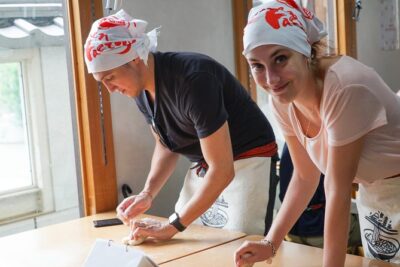
Ramen Cooking Class at Ramen Factory in Kyoto
Read our review →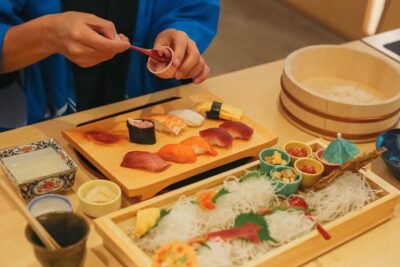
Sushi Making Class in a Happi Coat near a Famous Spot
Read our review →
Sushi Making Osaka Roll and Authentic Japanese Sushi Class
Read our review →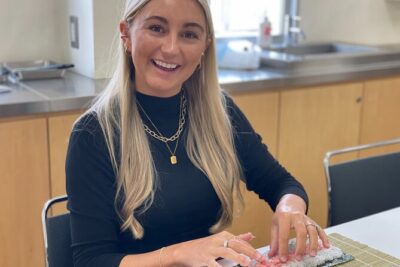
Tokyo Sushi Making Class in Tsukiji with Professional Chef
Read our review →
Ramen & Gyoza Cooking Class in Tokyo with Local Supermarket Visit
Read our review →Browse the lists this tour appears in