
Reviewed · COOKING CLASSES
Kyoto: Small-Group Authentic Sushi Making Workshop
Sushi is easier when someone patient shows you how. In Kyoto, this 90-minute class turns a famous meal into a calm, hands-on lesson inside a restored traditional townhouse. I especially like the eight-person limit, which gives you room to ask questions, and the use of fresh fish from Kyoto’s local market. The main consideration is that this is not suitable for vegetarians or wheelchair users.
I also like that you eat what you make, rather than watching a demonstration and leaving hungry. Kana and her team, including Aya, Ayumi, and Kana’s husband Karim at different sessions, are praised for clear English, warm conversation, and careful instruction. At $60 per person, the class offers good value if you want a cultural activity with lunch included, though it is more expensive than simply ordering sushi at a restaurant.
In This Review
- Key points at a glance
- Arriving near Kiyomizu-Gojō Station
- A warm welcome before the sushi begins
- Seasoning the rice, the foundation of the meal
- Making nigiri with fresh fish
- Rolling maki and building variety
- Eating your own sushi with miso soup
- The hosts add more than cooking tips
- What $60 per person really buys
- Who should book this Kyoto class?
- Final verdict: Is the sushi workshop worth booking?
- FAQ
- How long does the sushi-making workshop last?
- Where does the class take place?
- Is the workshop taught in English?
- What types of sushi will I learn to make?
- Is lunch included?
- What is included in the gift bag?
Key points at a glance
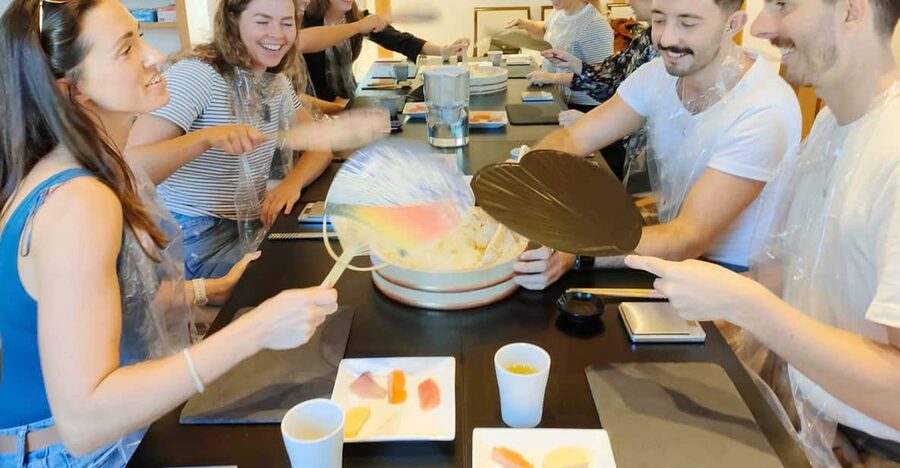
- Small class, personal help: The workshop is limited to eight participants, and some sessions have only two or three people.
- Nigiri, gunkan, and maki: You learn several sushi styles, not just one simple roll.
- Fresh Kyoto ingredients: Fish is sourced from Nishiki Market, while the rice has even come from the instructor Kana’s family farm.
- Traditional setting: The class takes place in the Kyoto Wand building, a restored townhouse near Kiyomizu-Gojō Station.
- Lunch and a useful gift: You eat your sushi with miso soup and take home a rolling mat, chopsticks, and recipe card.
- A cultural chat included: The English-speaking hosts are happy to discuss Japanese food, Kyoto, local history, and practical sightseeing tips.
Arriving near Kiyomizu-Gojō Station
The class takes place at the Kyoto Wand building, a short walk from Kiyomizu-Gojō Station on the Keihan Main Line. This is a useful location if you are already exploring eastern Kyoto, with Kiyomizu-dera Temple and Gion within walking distance.
The meeting point is central, but you should still allow time to find the building. The supplied Google Plus Code is XQVC+J7 Kyoto, which can help if your map app has trouble with the address. Hotel pickup and drop-off are not included, so you make your own way there.
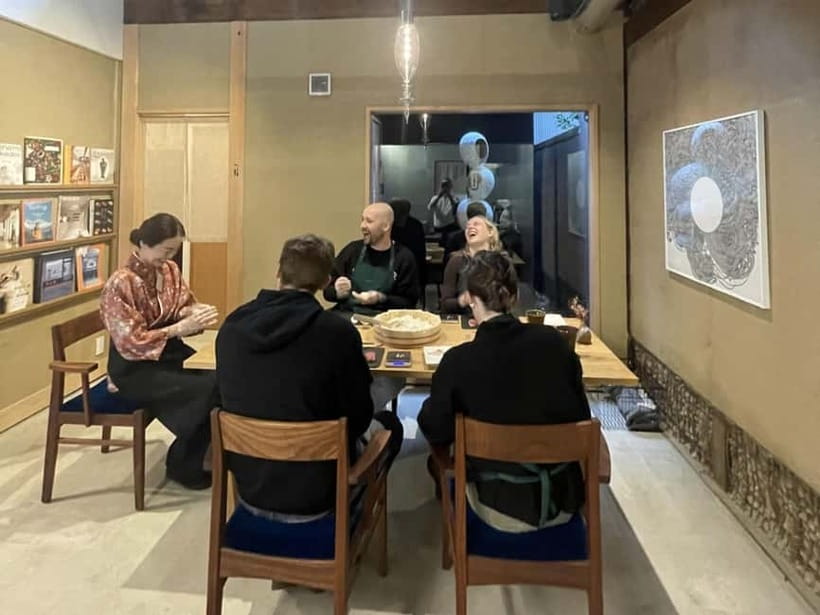
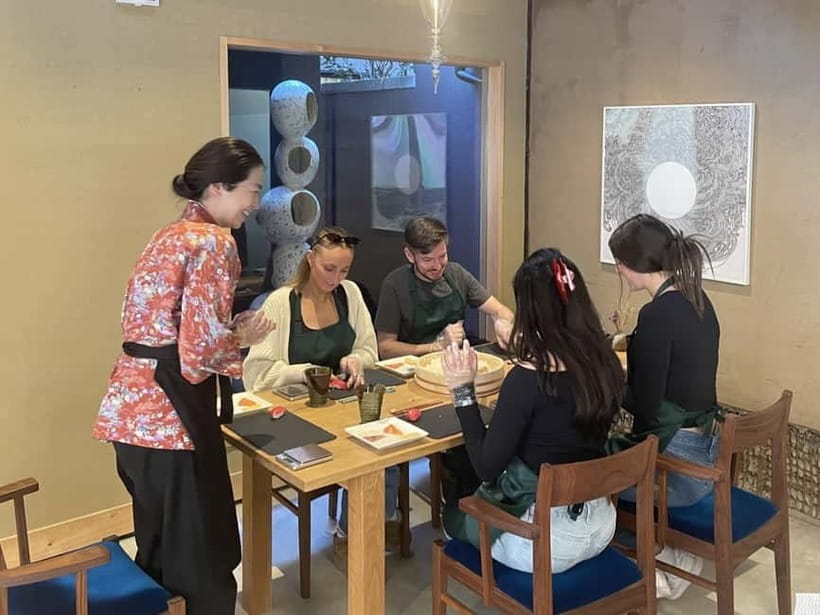
The setting matters. This is not a generic cooking studio with rows of modern workstations. The workshop uses a beautiful, restored Kyoto townhouse, giving the class a quieter feel that fits the food. Several participants have appreciated the clean, cozy space and the sense of entering a real neighborhood setting rather than a tourist-only venue.
If you are spending the morning at Kiyomizu-dera, the timing works nicely. You can visit the temple area, walk downhill toward the class, then enjoy a prepared lunch without making another major cross-city trip. Check the available start time when booking, since the schedule can vary.
More Cooking Classes in Kyoto
- Ramen Cooking Class at Ramen Factory in Kyoto
★ 5.0 · 1,937 reviews - Sushi Making in Kyoto! Same-day bookings welcome!
★ 5.0 · 713 reviews - Kyoto: Ramen Cooking Class at a Ramen Factory with Souvenir
★ 4.9 · 532 reviews
A warm welcome before the sushi begins
The class is conducted in English, and the hosts make a point of greeting participants personally. Kana is often the main instructor, while other team members help with preparation and individual questions. Her husband Karim and instructors such as Aya and Ayumi have also assisted during different sessions.
The welcome is part of the experience. You are not simply handed an apron and told to copy a recipe. The class has a relaxed pace, with time for conversation before and during the preparation. Kana has spoken about growing up in Osaka, moving to Kyoto, Japanese history, and local customs. That turns a basic cooking lesson into a friendly exchange about daily life in Japan.
This is especially helpful if you are new to sushi. The hosts explain each stage carefully and demonstrate more than once when needed. You can ask why a technique matters, how sushi is eaten, or what makes a particular ingredient suitable for a certain style.
The small format makes a real difference. With a maximum of eight participants, the instructor can watch your hands, correct your technique, and answer questions without holding up the entire room. When only two or three people attend, the lesson becomes almost private. Larger family groups can also fit, as one session accommodated seven people across several generations.
Seasoning the rice, the foundation of the meal
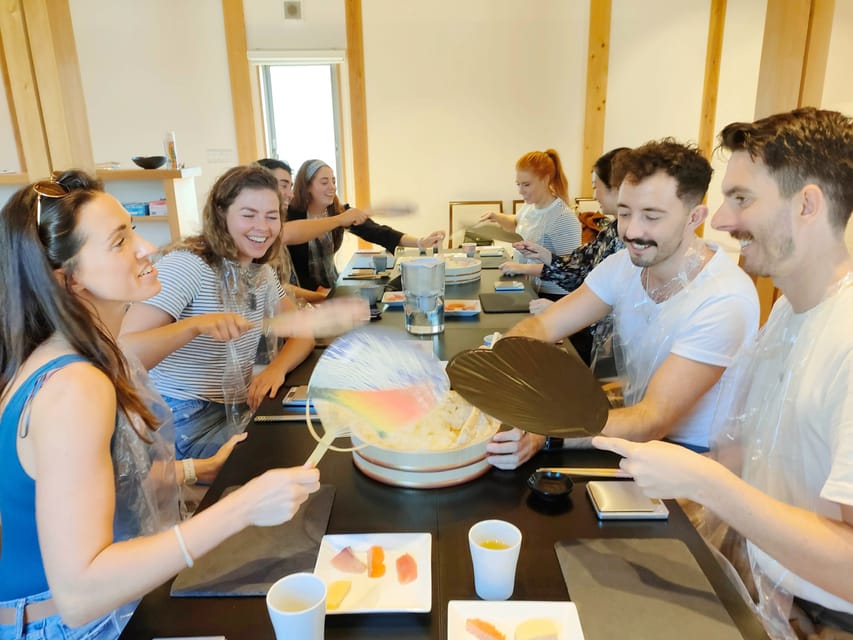
The first serious lesson concerns the rice. Good sushi depends on rice that is cooked and seasoned correctly, not just on attractive fish placed on top. You learn how to prepare the rice for sushi and how its texture supports each type of piece.
The workshop makes this step accessible for beginners. You are guided through the process rather than expected to know kitchen terms or professional techniques. The instructions are slow and clear, which is useful if you have never made sushi at home.
The quality of the rice is also a meaningful detail. In one family session, the rice was described as coming from Kana’s own family. That connection gives the class a more personal link to Japanese food production, even though you are not visiting a rice farm or preparing the rice from the field.
You should expect a practical lesson rather than a professional chef qualification. The class gives you methods you can repeat at home, along with a recipe card, but it will not turn you into a sushi chef in 90 minutes. That is a fair trade. You learn enough to make attractive, tasty sushi without spending half a day on specialist knife work.
Making nigiri with fresh fish
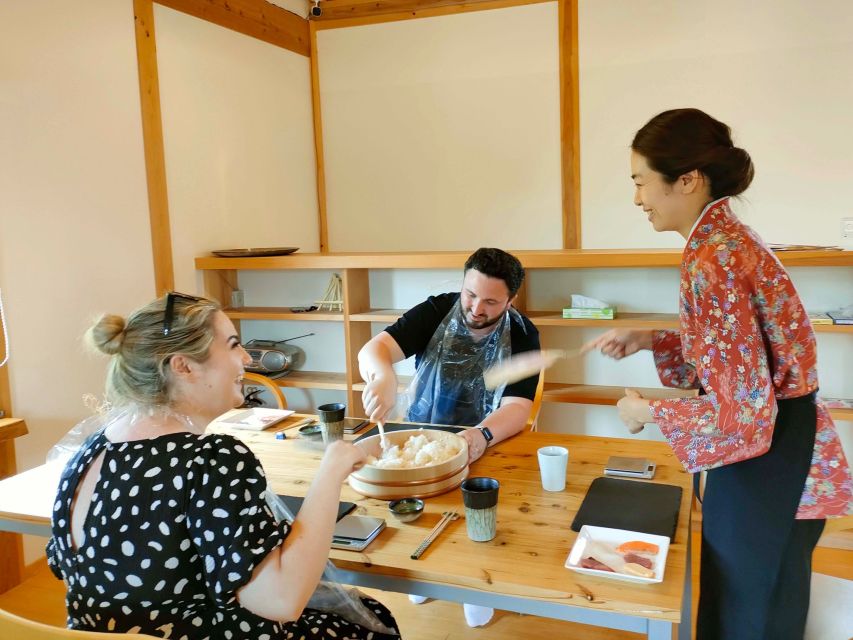
Nigiri is the most recognizable part of the class. You form a small portion of seasoned rice, then add a piece of fish on top. The challenge is making the rice hold together while keeping the piece light rather than compact and heavy.
The instructor demonstrates the hand position and rhythm, then lets you work through the process yourself. Expect a few imperfect pieces at first. That is part of the fun, and the close guidance means you can adjust your method before making the next one.
The fish selection can include salmon, tuna, squid, yellowtail, and egg omelet, based on the ingredients available for the session. This gives you several textures and flavors to work with. You may also prepare gunkan sushi, a seaweed-wrapped piece that holds softer toppings such as corn or tuna salad.
Freshness is one of the strongest points of the workshop. The fish is sourced from Nishiki Market in Kyoto, and the ingredients are carefully prepared before class. That means you are handling high-quality food without needing to shop for, clean, or portion raw fish yourself.
One practical limitation is that you do not cut the fish yourself. If your main goal is fish butchery or advanced knife technique, this class will feel introductory. The advantage is that more of the 90 minutes goes toward shaping, assembling, and eating the sushi, which suits most first-time participants.
A completely different kind of day out:
- PERFECT KYOTO 1-Day Bus Tour
★ 5.0 · 13,518 reviews - [Kyoto & Nara Day Tour] Sagano Scenic Railway & Nara Park & Fushimi Inari Taisha Thousand Torii Gates & Togetsukyo Bridge & Bamboo Grove & Kimono Forest (Departing from Osaka)
★ 4.9 · 10,942 reviews - Kyoto: Fushimi Inari, Kinkakuji, Bamboo Grove 1 Day Bus Tour
★ 4.8 · 4,316 reviews - Kyoto: Tea Ceremony in a Traditional Tea House in Kiyomizu
★ 4.9 · 3,519 reviews
Rolling maki and building variety
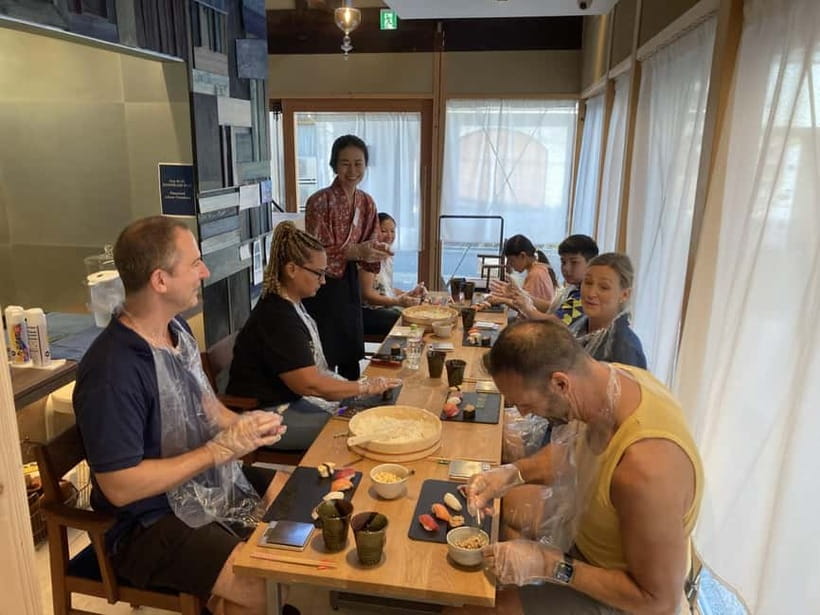
The maki section gives you a different set of skills. You spread rice over seaweed, add fillings, and roll everything into a neat cylinder with a bamboo mat. Pressure is important. Too little and the roll falls apart. Too much and the filling gets squeezed out.
The workshop includes a sushi rolling mat in the gift bag, so you can repeat the process at home. The recipe card is useful here because it helps you remember the order of the steps after your trip. Chopsticks are included as well.
The class may also include gunkan, depending on the session and available ingredients. Learning three forms of sushi, nigiri, maki, and gunkan, makes the meal feel more complete than a class focused on one basic roll.
I like this variety because it shows how Japanese sushi is built around balance. The rice, seaweed, fish, toppings, and shape all have a job. You are not just assembling ingredients for a photograph. You are learning why different fillings need different forms.
Still, do not expect an unlimited menu. The precise fish and toppings can vary, and dietary restrictions should be shared when booking. Vegetarians cannot join this activity, and the experience is not designed for people who need wheelchair access.
Eating your own sushi with miso soup
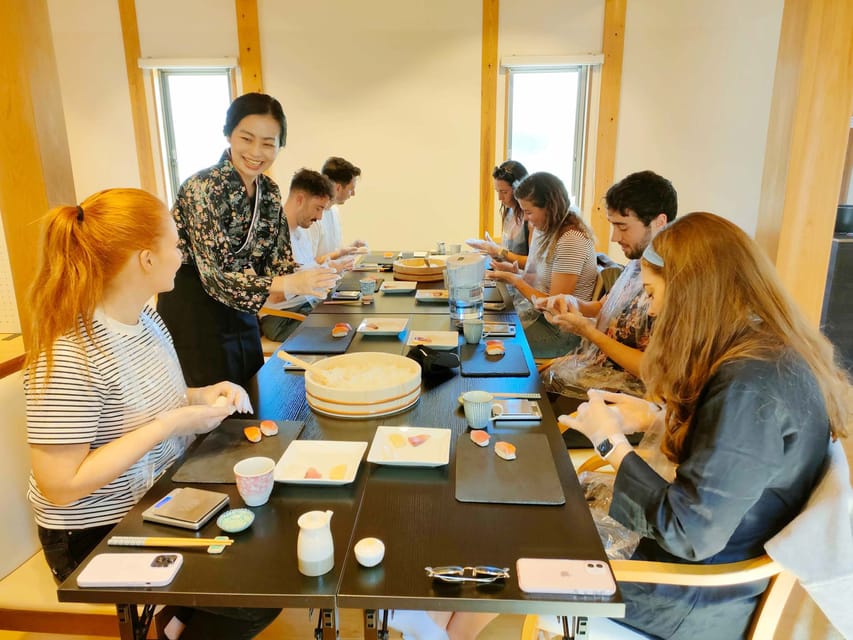
After the preparation, you sit down and eat the sushi you made. Miso soup is included, along with traditional accompaniments such as soy sauce, wasabi, and ginger when appropriate to the meal.
The portion is generous. Several participants have found the amount of sushi more than enough for lunch, and one family of two managed to eat 32 pieces between them. You should arrive hungry, especially if you have plans for a large meal soon afterward.
Eating your own work changes the mood of the class. You notice the texture of the rice because you handled it. You also see why the instructor emphasized the shape and pressure of each piece. A lopsided roll still tastes good, but a well-formed piece gives you a small sense of achievement.
The meal takes place in the same peaceful setting, so there is no sharp switch from lesson to restaurant. You can talk with the hosts and other participants while eating. The atmosphere suits solo visitors, couples, families, and people who enjoy meeting others during a trip.
The hosts add more than cooking tips
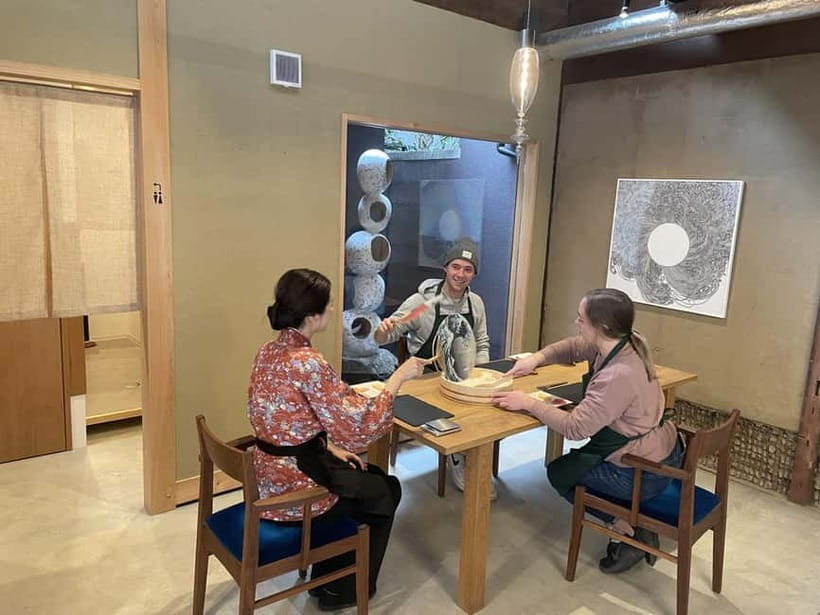
The food is the main reason to book, but the hosts add much of the class’s character. Kana is often praised for her patience, calm manner, and ability to explain techniques in easy English. The team is also happy to discuss Japanese culture and Kyoto beyond the kitchen.
That conversation can be useful. You may receive suggestions for restaurants or sightseeing, and you can ask questions that do not fit neatly into a guidebook. Topics have included local Kyoto history, Japanese food customs, and the hosts’ own experiences.
The tone is friendly without feeling rushed. Some sessions have continued beyond the scheduled 90 minutes because the group stayed to chat. You should not count on extra time, since the official duration is still 90 minutes, but the welcoming approach is clear.
This is a good choice if you want contact with local hosts rather than a lecture delivered to a large room. It is also a comfortable option after several days of temple visits and long walks. The activity lets you sit down, use your hands, and enjoy a meal while still learning something new.
What $60 per person really buys
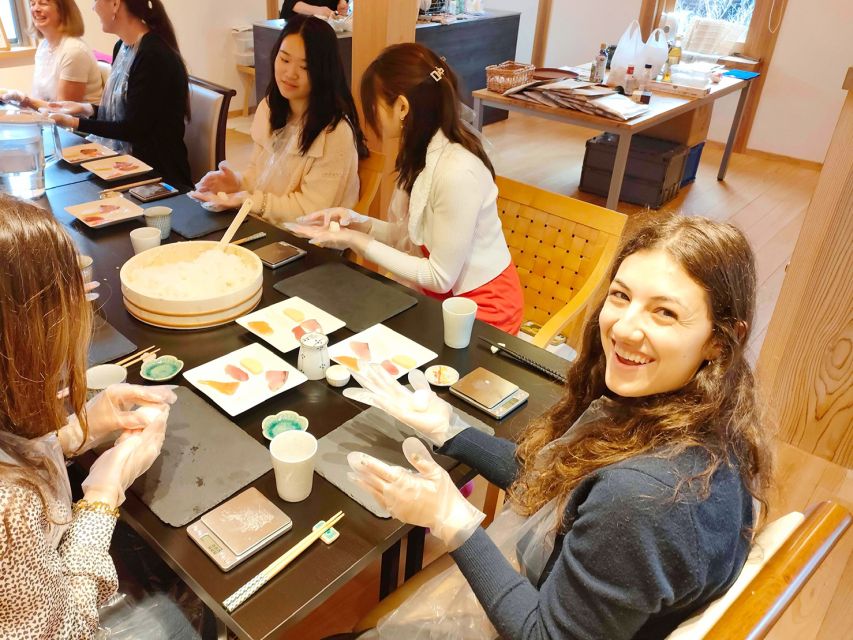
At $60, the workshop is not the cheapest way to eat sushi in Kyoto. A restaurant meal may cost less, especially if you choose a simple lunch. But the comparison is not quite fair, because this price includes instruction, ingredients, a full meal, miso soup, equipment for the session, and a take-home gift bag.
The rolling mat and recipe card give the class value after your trip. You also receive chopsticks, disposable gloves, and an apron during the workshop. The real benefit, though, is the chance to make several types of sushi with fresh fish while an English-speaking instructor guides you.
For a family, the price can add up quickly. The advantage is that the activity suits a wide age range, and a seven-person family group enjoyed making sushi together. Children need to be comfortable following food-preparation instructions, but the hands-on format gives everyone a role.
For couples or solo visitors, the cost buys a social and cultural experience as well as lunch. I would choose it over a standard sushi meal if you want to remember the activity later, not just the taste of the food.
Free cancellation is available up to 24 hours before the start time, and you can reserve now and pay later. Those terms help if your Kyoto plans are still shifting, but you should still check the exact start time and meeting instructions before confirming.
Who should book this Kyoto class?
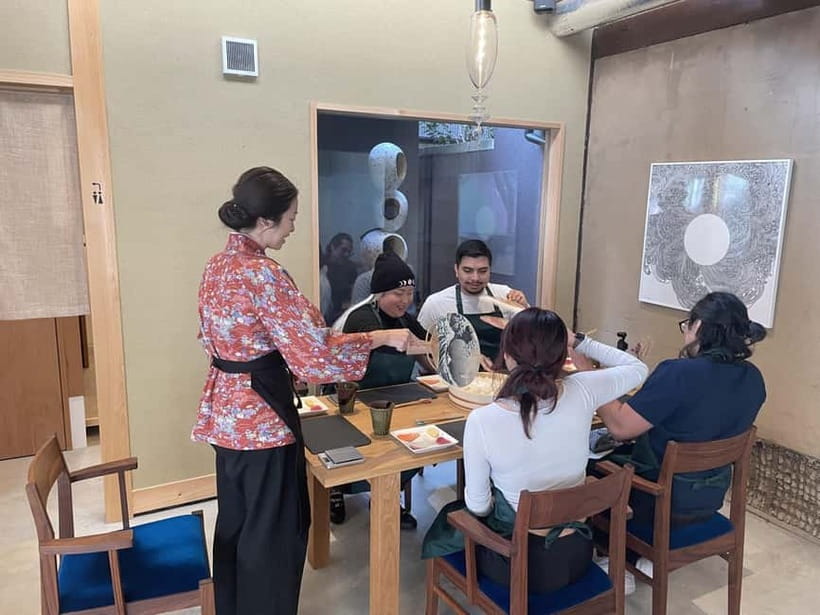
This workshop suits first-time sushi makers best. You receive enough guidance to feel supported, while the class still lets you do the work yourself. It also suits people who have made sushi at home and want to improve their handling of traditional styles.
Families are a strong match, especially if everyone can eat fish and follow the same lesson. Couples can enjoy the shared task, and solo visitors have a natural way to meet a small group without committing to a full-day tour.
Food lovers will appreciate the ingredient quality and the connection to Nishiki Market. People interested in Japanese culture will value the conversation with Kana and the other hosts.
You should think twice if you want advanced fish cutting, a long professional culinary course, or a vegetarian menu. Wheelchair users will need a different activity because this workshop is not suitable for them. Anyone with allergies or other dietary restrictions should provide that information when booking rather than waiting until arrival.
Final verdict: Is the sushi workshop worth booking?
I would book this class if you want a practical Kyoto activity with a meal at the end. The strongest reasons are the small group, patient English instruction, fresh local fish, and the chance to make nigiri, maki, and possibly gunkan yourself.
The restored townhouse gives the lesson a fitting sense of place, while Kana and her team add warmth and useful cultural context. At $60, you are paying for more than lunch, but the included food, instruction, and take-home tools make the cost reasonable.
Skip it if you are vegetarian, need wheelchair access, or mainly want advanced knife skills. For everyone else, this is a friendly, well-paced way to understand sushi from the inside out, with enough food to count as lunch and enough guidance to try it again at home.
FAQ
How long does the sushi-making workshop last?
The workshop lasts 90 minutes, including the hands-on preparation and time to eat the sushi you make.
Where does the class take place?
It takes place in the Kyoto Wand building, a restored Kyoto townhouse a few minutes on foot from Kiyomizu-Gojō Station on the Keihan Main Line.
Is the workshop taught in English?
Yes. The instructor and hosts conduct the workshop in English.
What types of sushi will I learn to make?
The class includes nigiri and maki rolls. Some sessions also include gunkan sushi, depending on the ingredients and lesson.
Is lunch included?
Yes. You eat the sushi you make, and miso soup is included.
What is included in the gift bag?
The gift bag includes a sushi rolling mat, chopsticks, and a recipe card. Disposable gloves and an apron are also provided for the workshop.
Just added in Kyoto
- The “Golden Route” and Ancient Japan by DIAMIR Erlebnisreisen – 14-Day Tour★ 2.0 · 2 reviews
- Japan: Castles & Cuisine by G Adventures – 6-Day Kyoto to Osaka Tour★ 4.5 · 4 reviews
- Cycle Japan by Explore! – 13-Day Kyoto to Tokyo Tour★ 4.7 · 12 reviews
- Cycle Japan by Intrepid Travel – 11-Day Kyoto to Tokyo Tour★ 4.8 · 2 reviews
- Classic Japan by Intrepid Travel – 11-Day Kyoto to Tokyo Tour★ 4.4 · 14 reviews
- Ancient & Modern Japan 14-Day Tour by Exodus Adventure Travels★ 4.4 · 40 reviews
- 5 Day Cultural Adventure of Kyoto, Nara & Osaka by Tourist Journey★ 2.5 · 2 reviews
- 12 Days Kinosaki Onsen Escape: A Journey Through Japan’s Timeless Towns by UME Travel★ 4.8 · 5 reviews
Cooking Classes, compared.
Sushi Making Tokyo Roll and Authentic Japanese Sushi Class
Read our review →
Roll and Authentic Sushi Making Class in Asakusa
Read our review →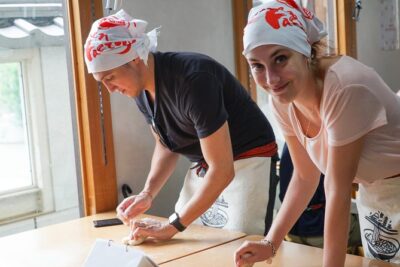
Ramen Cooking Class at Ramen Factory in Kyoto
Read our review →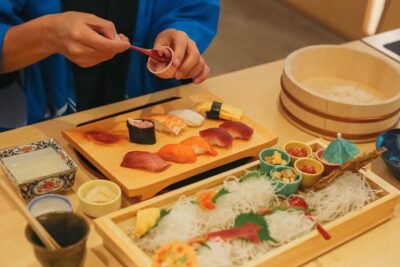
Sushi Making Class in a Happi Coat near a Famous Spot
Read our review →
Sushi Making Osaka Roll and Authentic Japanese Sushi Class
Read our review →
Tokyo Sushi Making Class in Tsukiji with Professional Chef
Read our review →
Ramen & Gyoza Cooking Class in Tokyo with Local Supermarket Visit
Read our review →Browse the lists this tour appears in