
Reviewed · COOKING CLASSES
Kyoto Sushi Making Experience with a Professional Sushi Chef
Make sushi, then eat it fresh. This Kyoto experience pairs hands-on nigiri and roll-making with a professional Taisho chef, sake tasting, tempura, matcha, and traditional sweets. I like the small maximum of eight people, which should give you room to follow the chef rather than watch from the back. I also like that an English-speaking guide, Ayuri, helps explain the food and customs along the way. The main consideration is price: at $163.30 per person, this is a special occasion activity rather than a cheap cooking class.
The schedule also asks you to commit a good part of your afternoon. You meet at 3:30 pm near public transportation and finish around seven, so this will shape your dinner plans. Still, the mix of food, instruction, and cultural activities gives the cost more weight than a simple sushi lesson.
In This Review
- Five details that make this Kyoto sushi class different
- Why this experience is more than a sushi lesson
- Meeting at 3:30 pm in central Kyoto
- Starting with traditional Japanese sweets
- Meeting the Taisho chef at the sushi restaurant
- Making nine nigiri and roll sushi
- Tempura adds a hot contrast
- Learning sake pairings with your sushi
- Finishing with matcha in a Kyoto-style garden
- The small group changes the experience
- Is the $163.30 price fair?
- What to know before you reserve
- Should you book this Kyoto sushi experience?
- FAQ
- Where does the Kyoto sushi-making experience begin?
- What time does the experience start?
- How long does the experience last?
- Where does the experience end?
- How many people can join?
- Is an English-speaking guide included?
- What sushi will I make?
- Are drinks included?
- Can children join the experience?
Five details that make this Kyoto sushi class different
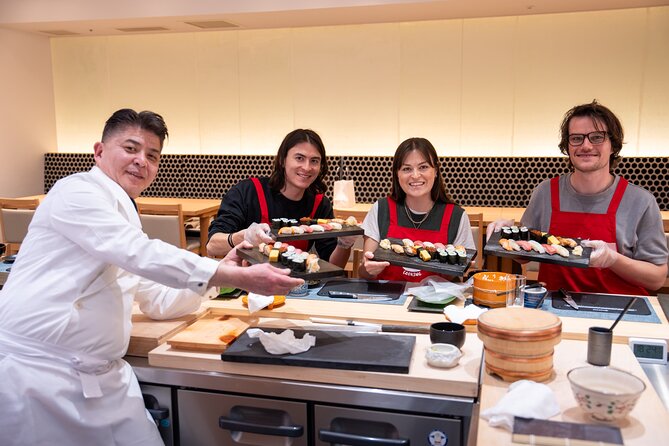
- Nine pieces of nigiri and roll sushi: You make sushi yourself, then eat the results during the class.
- A professional Taisho chef: The chef demonstrates knife work and nigiri technique while handling the slicing himself.
- Fresh fish and chef-prepared tempura: The meal includes sushi plus a tempura set, with fresh fish praised as a highlight.
- Sake tasting with pairing advice: You sample different types of sake and learn how they work with sushi.
- Matcha in a Kyoto-style garden: The final activity slows the pace with whisked tea and the traditional sweets chosen earlier.
- Small, family-friendly format: The class accepts children age four and older, has an English-speaking guide, and limits attendance to eight people.
Why this experience is more than a sushi lesson
Many cooking classes give you a recipe, a workstation, and a quick meal. This one uses sushi as a way into several parts of Japanese food culture. You learn how nigiri is shaped, taste sake with food, handle matcha, and sample traditional sweets.
That range matters in Kyoto. Sushi is the headline, but the class also gives you small cultural encounters that can be hard to arrange on your own. You visit a local shop for Japanese sweets, eat in an authentic sushi restaurant, and finish in a Kyoto-style garden. The result feels like an afternoon built around food rather than a single kitchen demonstration.
I especially like the balance between watching and doing. The chef performs the precise work, including slicing, while you focus on shaping and rolling. That is a sensible setup for a mixed group. You get the excitement of seeing professional technique without being handed a sharp knife and expected to copy it immediately.
More Cooking Classes in Kyoto
- Ramen Cooking Class at Ramen Factory in Kyoto
★ 5.0 · 1,937 reviews - Sushi Making in Kyoto! Same-day bookings welcome!
★ 5.0 · 713 reviews - Kyoto: Ramen Cooking Class at a Ramen Factory with Souvenir
★ 4.9 · 532 reviews
Meeting at 3:30 pm in central Kyoto
The experience begins at Diesel604 Banocho in Nakagyo Ward, Kyoto, at 3:30 pm. The meeting point is near public transportation, which makes it practical to reach from other parts of the city. You should still allow enough time to find the exact spot, since a punctual start matters when several food stops are linked together.
The afternoon timing is useful for two reasons. First, you can spend the morning sightseeing before turning to food. Second, the class runs into the evening, with an approximate duration of three hours and thirty minutes. Plan for the activity to finish around 7 pm, though the stated duration is approximate.
That timing also creates a small limitation. If you have a fixed dinner reservation, evening show, or train to catch, leave plenty of space after the class. You will already eat a substantial amount during the experience, so you probably will not need to rush to another restaurant afterward.
Starting with traditional Japanese sweets
Your first food stop is a local shop selling traditional Japanese sweets. An English-speaking guide introduces the sweets and helps you choose the items that return later during the matcha portion.
This is a smart opening. Rather than treating sweets as a random extra, the class connects the first stop with the final one. You make a choice early, then enjoy it after learning to whisk matcha. That gives the afternoon a clear arc and lets you notice how Japanese sweets are meant to work with tea.
The available information does not specify the shop, the exact sweets, or the number of items you select. You should treat this as a guided introduction rather than a full confectionery workshop. The value is in learning what you are looking at and tasting something tied to the tea ceremony later.
Meeting the Taisho chef at the sushi restaurant
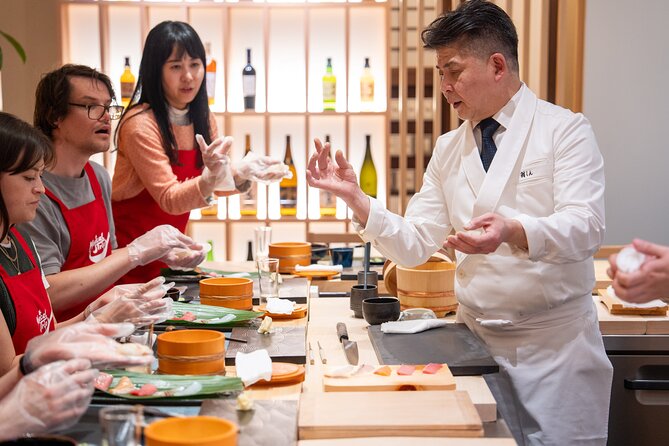
Next, you enter an authentic sushi restaurant and meet the professional Taisho chef. In a sushi setting, Taisho is a respectful title for the chef in charge, so this is not simply a class led by a general cooking instructor. The focus is on the craft of sushi as practiced in a working restaurant.
The chef demonstrates precise knife work and the careful shaping of nigiri. These movements can look simple until you try to repeat them. The class gives you a close look at the small details that make sushi different from ordinary rice topped with fish: proportion, pressure, shape, and handling.
One practical benefit is that you do not need Japanese language skills. The guide explains the process in English and helps keep the activity moving. That is important here because sushi technique depends on short instructions and visual demonstrations. You can watch the chef’s hands, then ask for help as you try the same basic actions.
A completely different kind of day out:
- PERFECT KYOTO 1-Day Bus Tour
★ 5.0 · 13,518 reviews - [Kyoto & Nara Day Tour] Sagano Scenic Railway & Nara Park & Fushimi Inari Taisha Thousand Torii Gates & Togetsukyo Bridge & Bamboo Grove & Kimono Forest (Departing from Osaka)
★ 4.9 · 10,942 reviews - Kyoto: Fushimi Inari, Kinkakuji, Bamboo Grove 1 Day Bus Tour
★ 4.8 · 4,316 reviews - Kyoto: Tea Ceremony in a Traditional Tea House in Kiyomizu
★ 4.9 · 3,519 reviews
Making nine nigiri and roll sushi
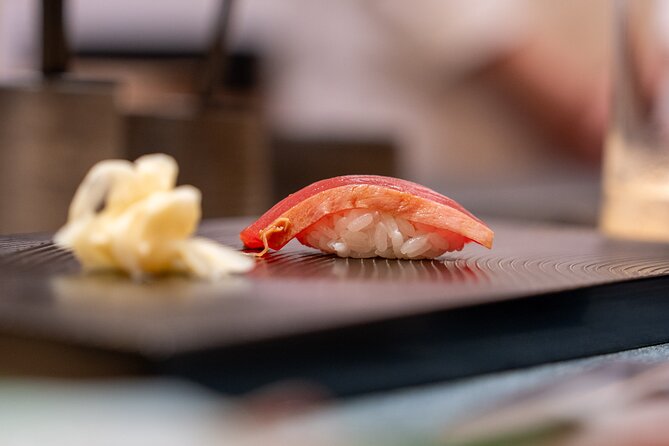
The main hands-on portion covers nine nigiri sushi and roll sushi. You shape and roll your own pieces, then taste them on the spot. I like the fact that the class includes both forms. Nigiri teaches control and presentation, while roll sushi gives you a more approachable technique to repeat at home.
The nine-piece amount is also enough to feel like a real meal component rather than a single sample. You should not expect to produce restaurant-perfect sushi immediately. The point is to learn the method, enjoy the attempt, and understand why the chef’s movements look so exact.
The chef handles the slicing, so the class keeps the difficult knife work in professional hands. That is reassuring for families and beginners. It also lets you concentrate on the parts that are enjoyable to practice without making safety the center of the lesson.
The quality of the fish matters greatly here. One detailed account specifically praised the freshness of the fish, which makes a difference in a meal where the ingredients are served plainly. You are not hiding the seafood under a heavy sauce. Freshness, rice, shape, and balance all show clearly.
Tempura adds a hot contrast
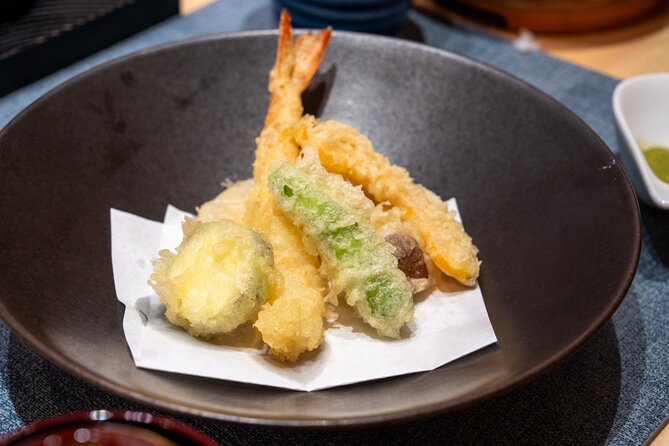
After the sushi work, the chef prepares a tempura set. This is a welcome change in texture and temperature. Sushi is cool, clean, and delicate. Tempura brings a hot, crisp element to the meal and gives you a fuller sense of Japanese restaurant cooking.
The tempura received especially strong praise, with one family calling it the best they had eaten in Japan. That is a high compliment, though it is still a personal judgment rather than a guarantee for every session. The useful point is that tempura is not treated as an afterthought. It is prepared by the chef and included as a proper part of the meal.
The combination also improves the value of the package. At $163.30, you are paying for instruction and a meal with several components, not just ingredients for a few pieces of sushi. If you only want to learn basic rolling, a less expensive class may suit you better. If you want a guided food experience with a professional chef, the tempura helps justify the higher price.
Learning sake pairings with your sushi
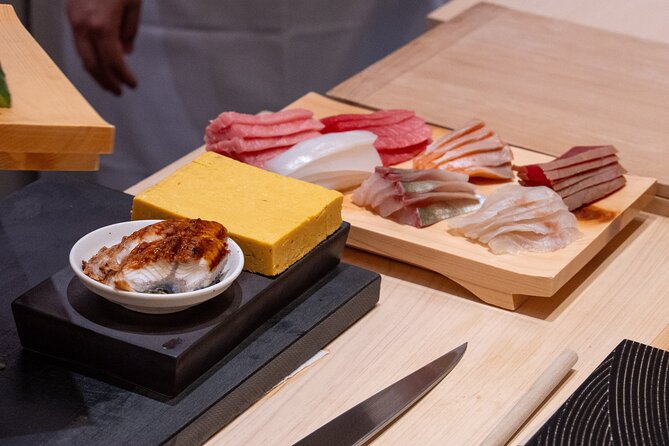
The class includes two drinks and sake tastings. You sample different types of sake and receive advice on pairing them with sushi. This is useful because sake can seem confusing when you first encounter it. The class gives you a simple way to connect the drink to the food instead of presenting it as a separate tasting.
The pairing advice is one of the more practical parts of the experience. You can take the basic idea into later meals in Japan, even if you forget the names of the individual sake styles. Notice how the guide describes the relationship between the drink and the fish, rice, or tempura.
Two drinks are included, along with the tasting portion. The supplied details do not specify the exact sake varieties or serving sizes, so you should not book this expecting a formal specialist tasting. Think of it as a friendly introduction that fits naturally into the sushi meal.
Families should note the alcohol component. The experience welcomes children age four and older, but the sake is for adults. The food and matcha activities still give younger participants plenty to do, yet parents should keep the drink portion in perspective.
Finishing with matcha in a Kyoto-style garden
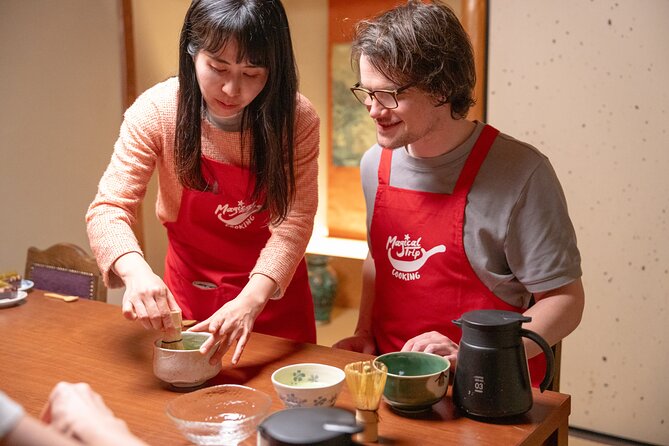
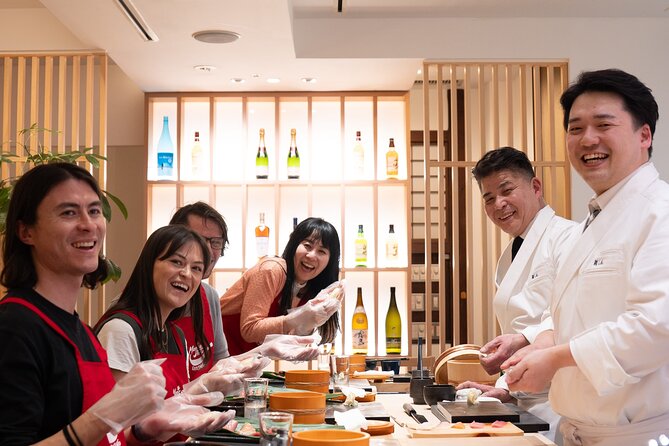
The final stage moves to a peaceful Kyoto-style garden. Here, the guide teaches you how to whisk matcha, which you drink with the traditional sweets chosen at the beginning.
This ending changes the mood. The sushi portion is active and focused. You handle food, watch the chef, and work through new techniques. Matcha asks you to slow down and pay attention to the movement of the whisk. It is a quiet finish after a full meal.
You do not need prior knowledge of tea preparation. The guide teaches the basic whisking process, so the activity is accessible even if you have never made matcha. The setting also gives the experience a clear Kyoto feel without requiring a separate tea ceremony booking.
The sweets make this part more meaningful. You are not simply handed a dessert at the end. You selected traditional Japanese sweets earlier, then return to them with matcha. That small link makes the afternoon feel planned rather than like a collection of unrelated add-ons.
The small group changes the experience
Attendance is limited to a maximum of eight people. That is a useful number for a cooking class because the chef and guide can give more direct attention than they could in a large workshop.
Small groups also help with questions. If you want to understand how the chef shapes nigiri or why a certain sake works with a particular bite, you have a better chance to ask without holding up a crowd. The English-speaking guide adds another layer of support, especially when the chef is focused on demonstration.
There is one tradeoff: a small class has less anonymity. You will be working near the same people for several hours, and the experience may feel more social than private. Solo visitors can meet others easily, while couples and families should expect to share the atmosphere rather than receive a private chef session.
The format suits families with children age four and older, solo visitors, and food-focused people who want more than a restaurant meal. It is also a good choice if you are curious about sushi but uneasy about handling knives. The chef takes care of slicing while you practice safer parts of the craft.
Is the $163.30 price fair?
The price is high for a three-and-a-half-hour activity, so you should decide based on the whole package. It includes nine nigiri, roll sushi, a tempura set, two drinks, sake tastings, traditional sweets, matcha instruction, a guide, and access to a professional sushi chef.
I would not compare it only with the cost of buying sushi in Kyoto. You are also paying for instruction, translation, cultural context, and the convenience of having every part arranged. The small group helps, too. A cheaper meal will not give you the same chance to shape sushi, ask questions, and learn a tea ritual in a garden.
Still, the value depends on your interests. If you already make sushi at home or care mainly about eating, the instructional portion may not justify the cost. If you want a polished Kyoto food afternoon with several tastes and activities, the price is easier to defend.
The activity is often booked about 24 days ahead. That suggests you should not leave it until the last moment, particularly if your Kyoto dates are fixed. Free cancellation is available up to 24 hours before the start time, but changes or cancellations inside that window are not refunded.
What to know before you reserve
The mobile ticket makes entry and meeting arrangements easier, but you still need to arrive at Diesel604 Banocho for the 3:30 pm start. The experience ends back at the meeting point, so you will not need to arrange a separate return location.
An English-speaking guide means Japanese ability is not required. The maximum group size is eight, and confirmation is provided at booking. The activity is near public transportation, which is helpful if you are coming from another Kyoto sight.
The listing does not provide details about dietary restrictions, vegetarian substitutions, allergies, or exact menu changes. If any of those matter to you, ask before booking rather than assuming the sushi or tempura can be altered. The supplied information also does not state the exact restaurant name, sweets shop name, sake types, or garden name.
Should you book this Kyoto sushi experience?
Book it if you want an intimate, food-centered afternoon that combines hands-on sushi making with sake, tempura, sweets, and matcha. The professional chef, fresh fish, highly praised tempura, and small group make this more substantial than a quick roll-making class.
I would especially recommend it to first-time visitors who want a guided cultural activity, families with children age four and older, and solo visitors who enjoy meeting people through food. The English-speaking guide removes a major barrier, while the chef handles the technical knife work.
Skip it if $163.30 feels too high for a meal and class, if you need a private experience, or if your schedule cannot comfortably absorb the 3:30 pm to roughly 7 pm commitment. For everyone else, this is a well-rounded Kyoto food experience with enough substance to make the afternoon worthwhile.
FAQ
Where does the Kyoto sushi-making experience begin?
It begins at Diesel604 Banocho, Nakagyo Ward, Kyoto, 604-8172, Japan.
What time does the experience start?
The start time is 3:30 pm.
How long does the experience last?
The activity lasts approximately three hours and thirty minutes.
Where does the experience end?
It ends back at the meeting point.
How many people can join?
The maximum group size is eight people.
Is an English-speaking guide included?
Yes. An English-speaking guide helps make the experience accessible without Japanese language skills.
What sushi will I make?
You will make nine pieces of nigiri sushi and roll sushi.
Are drinks included?
Yes. The package includes two drinks and sake tastings, with guidance about pairing sake with sushi.
Can children join the experience?
Yes. Families with children age four and older are welcome.
Just added in Kyoto
- The “Golden Route” and Ancient Japan by DIAMIR Erlebnisreisen – 14-Day Tour★ 2.0 · 2 reviews
- Japan: Castles & Cuisine by G Adventures – 6-Day Kyoto to Osaka Tour★ 4.5 · 4 reviews
- Cycle Japan by Explore! – 13-Day Kyoto to Tokyo Tour★ 4.7 · 12 reviews
- Cycle Japan by Intrepid Travel – 11-Day Kyoto to Tokyo Tour★ 4.8 · 2 reviews
- Classic Japan by Intrepid Travel – 11-Day Kyoto to Tokyo Tour★ 4.4 · 14 reviews
- Ancient & Modern Japan 14-Day Tour by Exodus Adventure Travels★ 4.4 · 40 reviews
- 5 Day Cultural Adventure of Kyoto, Nara & Osaka by Tourist Journey★ 2.5 · 2 reviews
- 12 Days Kinosaki Onsen Escape: A Journey Through Japan’s Timeless Towns by UME Travel★ 4.8 · 5 reviews
Cooking Classes, compared.
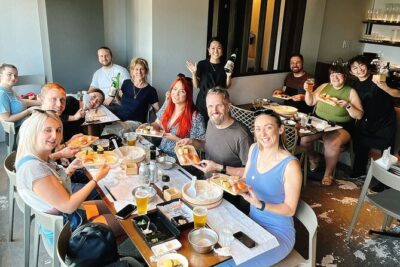
Sushi Making Tokyo Roll and Authentic Japanese Sushi Class
Read our review →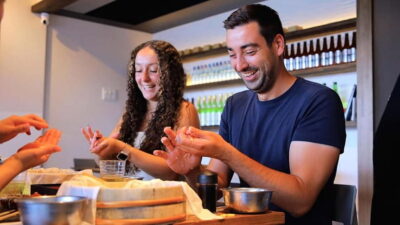
Roll and Authentic Sushi Making Class in Asakusa
Read our review →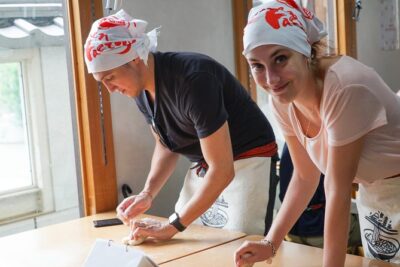
Ramen Cooking Class at Ramen Factory in Kyoto
Read our review →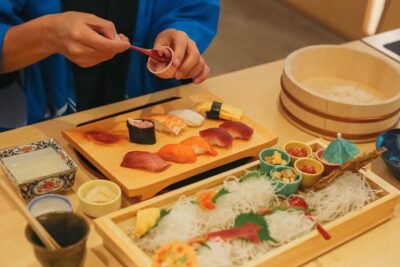
Sushi Making Class in a Happi Coat near a Famous Spot
Read our review →
Sushi Making Osaka Roll and Authentic Japanese Sushi Class
Read our review →
Tokyo Sushi Making Class in Tsukiji with Professional Chef
Read our review →
Ramen & Gyoza Cooking Class in Tokyo with Local Supermarket Visit
Read our review →Browse the lists this tour appears in