
Reviewed · COOKING CLASSES
Kyoto Udon and Tempura Cooking Class with Professional Chefs
Fresh noodles beat a souvenir. This Kyoto cooking class turns flour, water, rice, and vegetables into a full Japanese meal, with hand-cut udon as its main event. I like the friendly help from udon master Nakajima-san and English-speaking guide Josh, plus the small maximum of eight people. The one catch is timing: at two and a half hours, the class packs several dishes and eating into one morning.
I also like that you do not simply watch a chef work. You knead, roll, cut, shape, fill, and fry the food yourself. The included drinks, downloadable recipes, and tour photos add useful value at $85.39 per person, though transportation to the meeting point is not included.
In This Review
- Key reasons to consider this Kyoto cooking class
- Why hand-made udon is the star
- A 10 a.m. start in central Kyoto
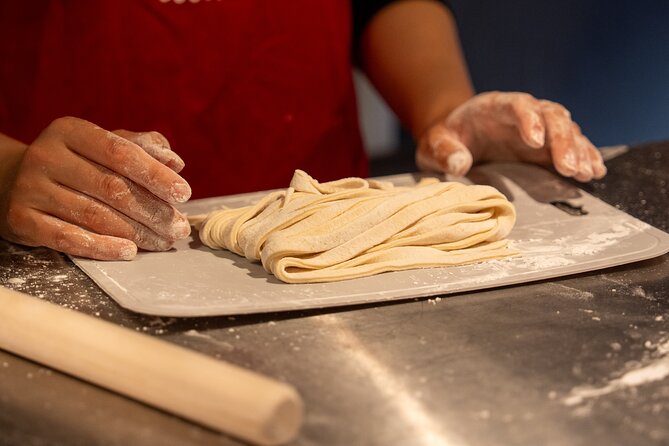
- Kneading, rolling, and cutting your noodles
- Four Japanese dishes in one lesson
- Tempura
- Onigiri
- Inari sushi
- Eating the meal you prepared
- Josh, Nakajima-san, and the small group format
- Recipes and photos you can use afterward
- Who should book, and who should think twice
- Booking value and cancellation timing
- Should you book this Kyoto cooking class?
- FAQ
- How long does the cooking class last?
- What time does the experience begin?
- Where does the class start and finish?
- Which dishes will I learn to make?
- Are drinks included?
- Is previous cooking experience required?
- How many people can join the class?
Key reasons to consider this Kyoto cooking class
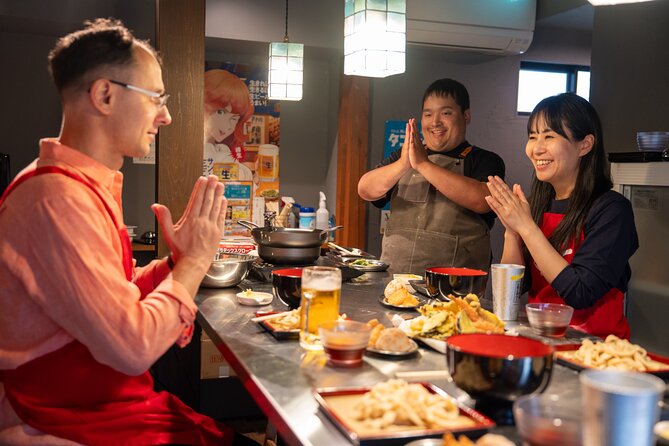
- You make udon from flour and water: Knead the dough, roll it, and cut your own noodles by hand.
- Four Japanese dishes are part of the meal: Prepare udon, tempura, onigiri, and inari sushi.
- The group is capped at eight people: That keeps the class small enough for personal instruction.
- Josh and Nakajima-san lead the lesson: You receive help from an English-speaking guide and a local udon master.
- You eat what you make: The class ends with fresh food, two drinks, and a mini sake tasting.
- You leave with recipes and photos: Downloadable English recipes help you repeat the dishes at home.
Why hand-made udon is the star
Many cooking classes give you a prepared ingredient and ask you to assemble dinner. This one begins with the basics: flour and water. That simple start makes the udon lesson useful, because you can see how a few ordinary ingredients become thick, springy noodles.
The process includes kneading, rolling, and cutting. Each stage calls for a little care. The dough has to be worked by hand, rolled evenly, and cut into noodle shapes. You do not need prior cooking experience, and the instruction is designed around learning by doing rather than getting every noodle perfect.
I like this approach because udon is more than a dish you eat in Kyoto. It is a clear lesson in texture. The way you handle the dough affects the bite, and hand-cut noodles can have small differences in width that make the final bowl feel homemade.
Nakajima-san is identified as the local udon master, while Josh provides English-language guidance. That pairing matters. You get instruction connected to the food itself, along with help understanding what to do and when to do it.
The available details do not specify the exact broth or toppings, so you should not book expecting a particular regional udon recipe. The dependable part is the noodle-making work, followed by fresh udon as part of the meal.
More Cooking Classes in Kyoto
- Ramen Cooking Class at Ramen Factory in Kyoto
★ 5.0 · 1,937 reviews - Sushi Making in Kyoto! Same-day bookings welcome!
★ 5.0 · 713 reviews - Kyoto: Ramen Cooking Class at a Ramen Factory with Souvenir
★ 4.9 · 532 reviews
A 10 a.m. start in central Kyoto
The class begins at 10 a.m. at the 7-Eleven at 599 Uraderacho, Nakagyo Ward, Kyoto, 604-8041. The activity ends back at the same meeting point, which makes the morning easy to plan around if you are spending the rest of the day in central Kyoto.
You need to arrange your own way to the start. Transportation to and from the meeting point is not included, so check your route before booking and allow time to find the exact convenience store. A mobile ticket is provided, which is handy for showing your booking without printing paperwork.
The morning schedule has a practical advantage. You can cook, eat a substantial meal, and still have much of the day available. It also means breakfast deserves some thought. A family review specifically advised skipping breakfast and bringing an appetite because the class includes several dishes, including hot and cold udon, shrimp and vegetable tempura, and more.
That advice is worth taking seriously. You will not be making a single small sample. You prepare multiple foods and then eat them, so a large breakfast could make the final meal feel like work instead of a reward.
Kneading, rolling, and cutting your noodles
The udon lesson should be the most hands-on part of the experience. You start with flour and water, then work the dough until it is ready to roll. The value here is not only the finished bowl. You learn the physical steps that make udon different from dried noodles bought at a store.
Rolling the dough evenly takes patience. Cutting it into noodles also rewards a steady hand. If your strips are not identical, that is part of the fun rather than a serious problem. The class is built for beginners, so you can focus on learning the movements instead of worrying about restaurant-level presentation.
The provided family feedback gives a useful clue about the meal: you may try both hot and cold udon. That adds a nice comparison. Hot udon lets you notice the comfort of the soup and noodles together, while cold udon puts more attention on the noodle texture itself.
Because the session lasts only about two and a half hours, the instruction has to keep moving. You will not get a long culinary lecture on every step. If you prefer a slow, deeply technical workshop focused on one noodle style, this may feel busy. If you want to make food, eat it, and keep the morning moving, the pace should suit you better.
Four Japanese dishes in one lesson
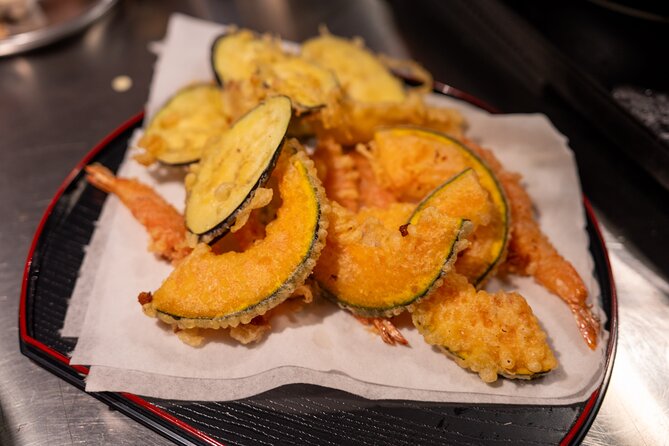
After the udon work, you prepare three other Japanese foods: tempura, onigiri, and inari sushi. This broad menu is one of the strongest reasons to consider the class. You get several different cooking tasks rather than repeating one recipe for the entire session.
A completely different kind of day out:
- PERFECT KYOTO 1-Day Bus Tour
★ 5.0 · 13,518 reviews - [Kyoto & Nara Day Tour] Sagano Scenic Railway & Nara Park & Fushimi Inari Taisha Thousand Torii Gates & Togetsukyo Bridge & Bamboo Grove & Kimono Forest (Departing from Osaka)
★ 4.9 · 10,942 reviews - Kyoto: Fushimi Inari, Kinkakuji, Bamboo Grove 1 Day Bus Tour
★ 4.8 · 4,316 reviews - Kyoto: Tea Ceremony in a Traditional Tea House in Kiyomizu
★ 4.9 · 3,519 reviews
Tempura
Tempura gives you a chance to practice frying, with the goal of producing a light, crisp coating. The family feedback specifically mentions shrimp and vegetable tempura, so you can expect both seafood and produce in the meal.
Frying is the part that may feel most intimidating to a beginner. Hot oil requires attention, and the result depends on timing. The benefit of a chef-led class is that you receive direction while working instead of trying to judge every step from a recipe at home.
Still, do not expect to master restaurant tempura in one quick lesson. The useful takeaway is learning the basic method and seeing how batter and frying time affect texture. You also get to eat the results right away, which is the best kind of test kitchen.
Onigiri
Onigiri is a practical rice dish shaped by hand. It is familiar, portable, and easier to recreate at home than many elaborate Japanese dishes. Making it during the class gives you a simple skill you can use for lunches and snacks after your trip.
The supplied information does not specify the fillings or exact shapes, so those details may depend on the class plan. What you can count on is learning to prepare onigiri as one of the four main dishes.
Inari sushi
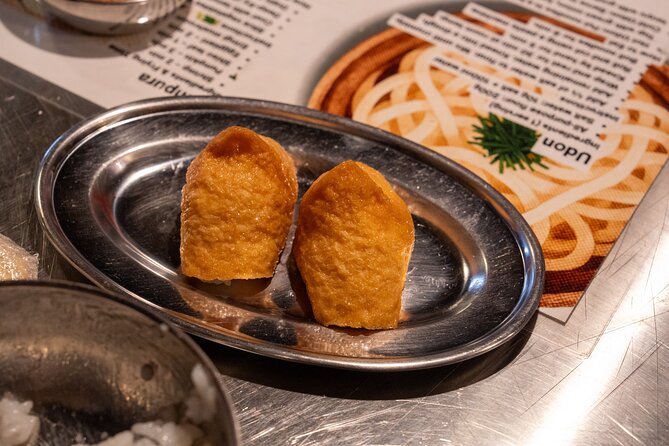
Inari sushi adds another rice preparation, but with a different format and texture from onigiri. It is a good choice for a class menu because it introduces a classic Japanese food without requiring advanced sushi knife work.
You are not signing up for a raw fish lesson. Inari sushi is a more approachable introduction to sushi-making, especially for families or first-time cooks who want to work with prepared rice and seasoned tofu pouches.
Together, onigiri and inari sushi show two everyday sides of Japanese cooking. One is shaped directly by hand, and the other is tucked into a sweet-savory pouch. That variety gives the meal more interest and gives you recipes with different uses at home.
Eating the meal you prepared
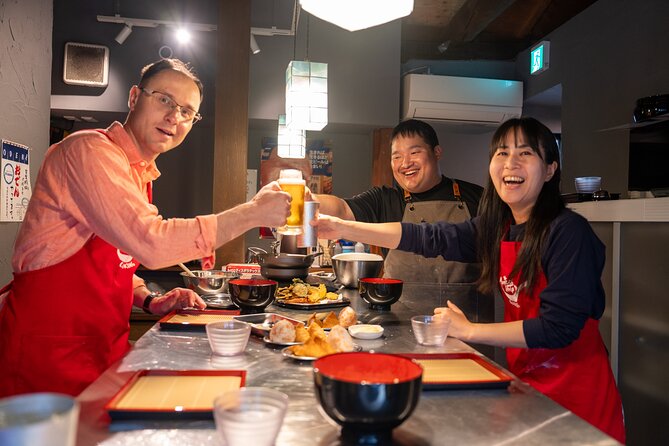
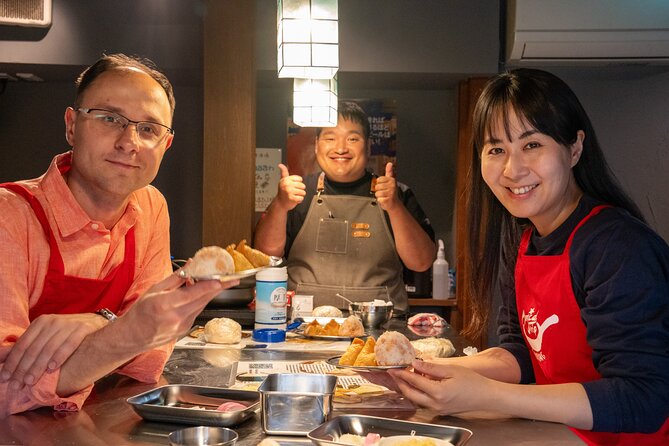
The class concludes with the food you made: udon, tempura, onigiri, and inari sushi. This shared meal is not an afterthought. It lets you compare your work, taste the noodles while they are fresh, and see how separate dishes fit together as a Japanese-style spread.
Two drinks are included, with alcoholic and non-alcoholic options available. Sake is part of the drink experience, described as a mini tasting. If you do not drink alcohol, you can choose a non-alcoholic option, which makes the class easier to recommend to mixed groups.
The drink inclusion helps the price feel more reasonable, but the main value remains the food and instruction. You are paying for a guided activity and a full meal, not simply a tasting. If you would rather spend $85.39 on a restaurant dinner, this class may not be the best match. If you value learning a skill and eating several freshly prepared dishes, the price is easier to justify.
The meal may also be filling. This is another reason to arrive hungry but not rushed. The food list is long for a 150-minute session, and the family feedback suggests the portions and range of dishes make it easy to leave satisfied.
Josh, Nakajima-san, and the small group format
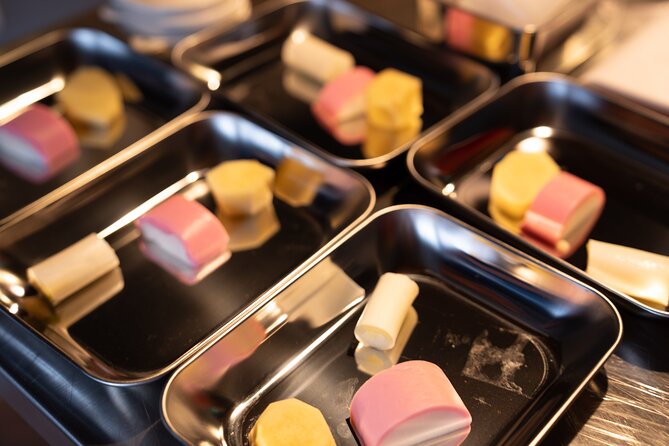
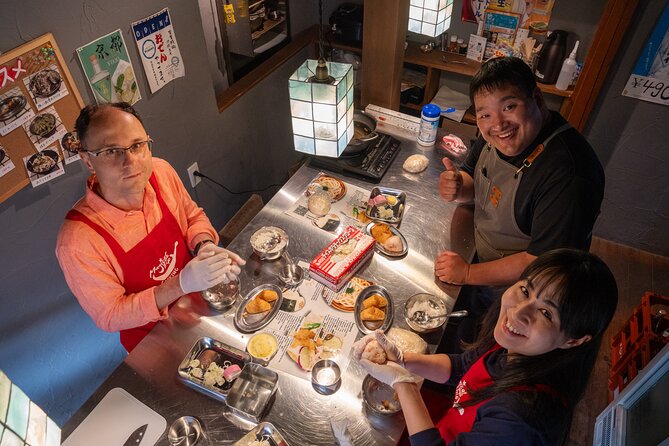
The class is limited to a maximum of eight people. That is a meaningful detail for a hands-on lesson. When you are kneading dough or frying tempura, you want a chance to see the demonstration and ask for help without being lost in a crowd.
Josh is the English-speaking guide, and Nakajima-san is the local udon master. A family specifically praised both instructors as kind and friendly, saying the cooking worked well for the entire family. That is a strong sign for parents and groups with different cooking abilities.
Small does not mean private. You will still share the session with other participants, and the exact amount of individual attention can depend on the group. But eight is a manageable number for this type of activity, especially compared with a large demonstration where you only watch.
The class seems best suited to people who enjoy active participation. Children can take part with family help, and adults who rarely cook should not feel shut out by the menu. The instruction is intended for beginners, but anyone hoping for advanced culinary training should keep expectations realistic.
Recipes and photos you can use afterward
You receive downloadable English recipes after the experience. This is one of the most useful extras because the class covers four separate dishes. Without written instructions, the details of dough handling, rice preparation, and tempura batter can fade quickly once you return home.
The recipes also extend the value beyond the morning in Kyoto. Udon may require a few practice attempts, but onigiri and inari sushi are especially practical dishes to repeat. You can use the recipes as a starting point and adjust portions or fillings later.
Your guide will also take photos during the class and send them by email afterward. These are a pleasant record of the activity, particularly for families. Since you are busy cooking, having someone else take photos means you can stay involved instead of keeping your phone beside the cutting board.
The timing of the photos and recipes is not specified, so treat them as follow-up materials rather than items you receive during the class. Make sure the email address connected with your booking is correct.
Who should book, and who should think twice
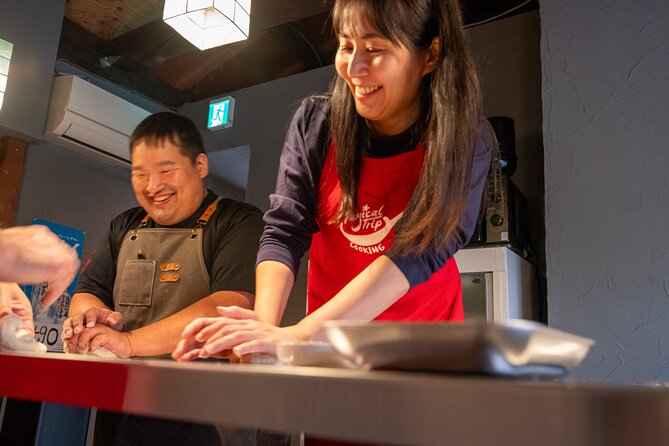
I would recommend this class to you if you want a food activity with real participation, not a seated demonstration. It is a good fit for families, couples, first-time cooks, and small groups who want to make several recognizable Japanese dishes in one morning.
It also works well if you want an activity that does not consume the whole day. The 10 a.m. start and return to the same meeting point leave room for sightseeing afterward, though you should account for your own transportation before and after the class.
The class may not suit you if you dislike group activities, have very little time in Kyoto, or want a narrow focus on professional technique. Two and a half hours is enough for a satisfying introduction, but not enough for a lengthy study of udon, sushi, and tempura separately.
You should also consider your appetite and food preferences. The menu includes shrimp, vegetables, rice dishes, noodles, and drinks, but the supplied details do not explain substitutions, allergies, or dietary accommodations. Ask the provider before booking if you need changes to the menu.
Booking value and cancellation timing
At $85.39 per person, the cost covers instruction from a local udon master and English-speaking guide, four dishes, two drinks, recipes, and photos. For me, that is fair value if you want both a meal and a hands-on cultural activity. The small group cap strengthens the case.
The experience has a 5.0 rating from 17 reviews, with 100 percent recommending it. That is encouraging, especially alongside the specific praise for Josh and Nakajima-san, but the sample is still small. I would treat the strong rating as a positive signal rather than a guarantee that every cooking style or dietary need will be covered.
Free cancellation is available up to 24 hours before the 10 a.m. start time for a full refund. Changes or cancellations made less than 24 hours before the start are not accepted for a refund, and the cut-off follows local Kyoto time.
Should you book this Kyoto cooking class?
Book it if you want to make your lunch, not just photograph it. The combination of hand-cut udon, shrimp and vegetable tempura, onigiri, inari sushi, drinks, recipes, and a small group gives you a lot to do in 150 minutes.
I especially like the balance between one skill-heavy dish, udon, and three more approachable foods. Josh and Nakajima-san add the local and English-language support a first-time cook needs. Just arrive at the correct meeting point, skip the heavy breakfast, and confirm any dietary questions before paying.
FAQ
How long does the cooking class last?
The class lasts approximately two hours and 30 minutes.
What time does the experience begin?
It begins at 10 a.m.
Where does the class start and finish?
The class starts at the 7-Eleven at 599 Uraderacho, Nakagyo Ward, Kyoto, 604-8041, Japan, and ends back at the same meeting point.
Which dishes will I learn to make?
You will learn to make udon, tempura, onigiri, and inari sushi.
Are drinks included?
Yes. Two drinks are included, with alcoholic and non-alcoholic choices available, including sake.
Is previous cooking experience required?
No. The class is designed for beginners and includes guidance from a local udon master and an English-speaking guide.
How many people can join the class?
The activity has a maximum of eight participants.
Just added in Kyoto
- The “Golden Route” and Ancient Japan by DIAMIR Erlebnisreisen – 14-Day Tour★ 2.0 · 2 reviews
- Japan: Castles & Cuisine by G Adventures – 6-Day Kyoto to Osaka Tour★ 4.5 · 4 reviews
- Cycle Japan by Explore! – 13-Day Kyoto to Tokyo Tour★ 4.7 · 12 reviews
- Cycle Japan by Intrepid Travel – 11-Day Kyoto to Tokyo Tour★ 4.8 · 2 reviews
- Classic Japan by Intrepid Travel – 11-Day Kyoto to Tokyo Tour★ 4.4 · 14 reviews
- Ancient & Modern Japan 14-Day Tour by Exodus Adventure Travels★ 4.4 · 40 reviews
- 5 Day Cultural Adventure of Kyoto, Nara & Osaka by Tourist Journey★ 2.5 · 2 reviews
- 12 Days Kinosaki Onsen Escape: A Journey Through Japan’s Timeless Towns by UME Travel★ 4.8 · 5 reviews
Cooking Classes, compared.
Sushi Making Tokyo Roll and Authentic Japanese Sushi Class
Read our review →
Roll and Authentic Sushi Making Class in Asakusa
Read our review →
Ramen Cooking Class at Ramen Factory in Kyoto
Read our review →
Sushi Making Class in a Happi Coat near a Famous Spot
Read our review →
Sushi Making Osaka Roll and Authentic Japanese Sushi Class
Read our review →
Tokyo Sushi Making Class in Tsukiji with Professional Chef
Read our review →
Ramen & Gyoza Cooking Class in Tokyo with Local Supermarket Visit
Read our review →Browse the lists this tour appears in