
Reviewed · WALKING TOURS
Private Customizable Walking Tour of Tokyo
Tokyo rewards a plan, but not a rigid one. This private tour lets you shape the day around your interests, from Shibuya fashion and anime in Akihabara to temples, markets, and palace gardens. I like the hotel pickup and the freedom to choose a half-day or full-day outing. I also like that your guide teaches you to use Tokyo’s subway, rather than simply moving you around in a vehicle. The main drawback is distance: this is still a walking tour, and you pay your own transit costs.
You can begin at a time that suits your group and adjust the route as you go. Guides such as Paiva, Laura, and Miko have earned especially warm praise for being friendly, flexible, and good with families. A six-hour day can give you a useful first look at Tokyo, but you cannot see all 15 suggested areas in one outing.
In This Review
- Key points to know before booking
- Why a private Tokyo day can be worth the price
- Hotel pickup, subway lessons, and the real pace of the day
- Shibuya, Harajuku, and Meiji Jingu
- Shinjuku and Tokyo from above
- Asakusa and Senso-ji: Tokyo’s traditional side
- Akihabara for anime, manga, and electronics
- Marunouchi, Nihonbashi, and the Imperial Palace East Gardens
- Tsukiji and Yanaka for food and older Tokyo
- Tokyo Skytree, Tokyo Tower, and Shibuya Sky
- What the strongest guide experiences have in common
- Booking, cancellation, and weather details
- Should you book this private Tokyo tour?
- FAQ
- How long does the private Tokyo walking tour last?
- Does the guide pick me up at my hotel?
- Is public transportation included in the price?
- Can I choose the places I visit?
- Can I see all 15 suggested stops in one tour?
- Are Tokyo Skytree, Tokyo Tower, and Shibuya Sky included?
- Are children charged for this tour?
- Is food included?
- What happens if bad weather cancels the tour?
Key points to know before booking
- Your guide meets you at your hotel: Pickup and drop-off make the first day in Tokyo less stressful, especially if you are still learning the subway.
- The route is genuinely flexible: Choose your start time, preferred neighborhoods, tour length, and pace.
- You use public transportation: Subway fares are not included, but your guide can help you buy a day pass and learn the system.
- The suggested stops cover many sides of Tokyo: You can mix modern Shibuya and Akihabara with Asakusa, Yanaka, Tsukiji, and the Imperial Palace area.
- Observation decks cost extra: Tokyo Skytree, Tokyo Tower, and Shibuya Sky can be added, but their admission fees are separate.
- Children 11 and under are free: You still need to tell the operator they are joining your group.
Why a private Tokyo day can be worth the price
The price is $202.18 per person, which is not a budget sightseeing stroll. The value comes from the private format. Your guide is working only with your group, so you do not have to match the pace of strangers or spend time at places that do not interest you.
I see the strongest value for first-time visitors. Tokyo can feel like several cities stitched together by trains, with each district offering a different mood. A local guide can help you choose between an extra temple, a food stop, a shopping street, or a viewpoint instead of leaving you to guess how much time each area deserves.
The tour lasts about four to eight hours. That range matters. A half-day works well for a first orientation or a focused neighborhood visit. A full day gives you more room to combine districts, though you will still spend part of the day walking between stations and stops.
The price does not include subway fares, food, drinks, or tickets for paid observation decks. Those costs are easy to overlook, so budget for them separately. You may also want to ask about any paid add-ons before the day begins.
More Walking Tours in Tokyo
- Tokyo Tsukiji Fish Market Food and Culture Walking Tour
★ 5.0 · 3,184 reviews - Tokyo: Imperial Palace and Shogun Historical Walking Tour
★ 5.0 · 2,251 reviews - Tokyo: Shinjuku Local Bar and Izakaya Guided Walking Tour
★ 4.9 · 1,794 reviews
Hotel pickup, subway lessons, and the real pace of the day
Pickup is convenient, but it does not mean a private car will carry you around Tokyo. This is a walking tour, and transport between districts is by subway. Your guide can help you purchase a travel pass for the day, which is useful if you are unfamiliar with Tokyo’s ticket machines and routes.
That practical help may be one of the best parts of the experience. A private guide can show you how to get through the system, make transfers, and find your way back later in the trip. One family specifically valued gaining confidence with Tokyo transportation during the tour.
The route should be planned with geography in mind. Shibuya, Harajuku, and Meiji Jingu make a natural cluster. Asakusa, Senso-ji, and perhaps Tokyo Skytree fit together better. Marunouchi, the Imperial Palace East Gardens, and Nihonbashi form another sensible group.
Trying to cover Shibuya, Asakusa, Yanaka, Tsukiji, and Akihabara in one short outing would leave little time at each place. I would tell your guide what matters most before setting out, then keep the plan loose enough to allow for food, photos, and slower walking.
Shibuya, Harajuku, and Meiji Jingu
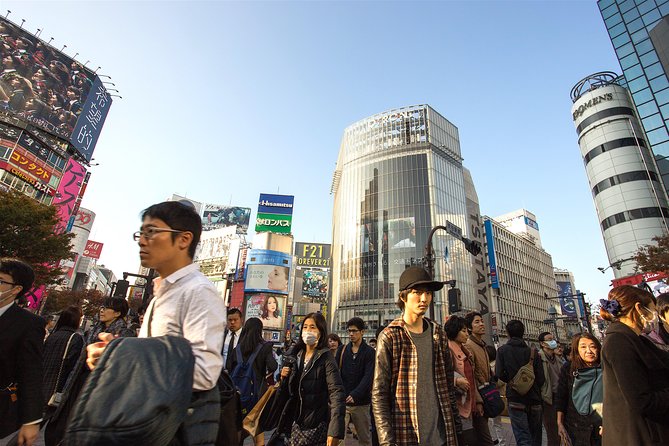
Shibuya is the energetic modern face of Tokyo. You can cross the famous Shibuya Crossing with the crowds, then visit the bronze statue of Hachiko, the loyal dog remembered for waiting at the station for his owner.
The stop is brief in the suggested plan, so I would not expect a long neighborhood walk unless you request one. Shibuya works best if you want a quick taste of Tokyo’s street life, fashion, and giant-city scale.
Nearby Harajuku changes the mood. Its backstreets are known for youth fashion, street art, unusual cafes, and colorful food. The area can be a good choice for families and younger visitors, although food needs should be discussed early. One guide, Paiva, received particular praise for adjusting a day around children’s interests and meal needs.
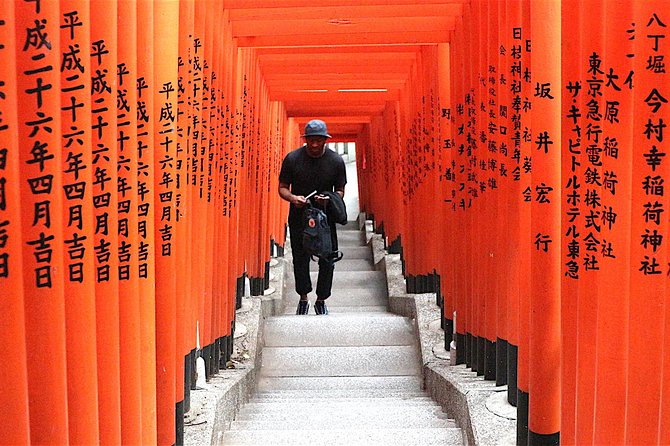
Meiji Jingu offers a quiet contrast. The shrine sits in a 700,000-square-meter forest and gives your guide a chance to explain Shinto, Japan’s indigenous religious tradition. I like this pairing because it shows Tokyo’s range without requiring a long subway ride between two distant districts.
The shrine is free to visit, as are the Shibuya and Harajuku stops. If you want a slower walk through the forest or more time in Harajuku’s side streets, say so. The suggested 30-minute blocks are starting points, not promises that you must rush through each area.
Shinjuku and Tokyo from above
Shinjuku is Tokyo at its most vertical and theatrical, with tall buildings, neon, restaurants, and entertainment streets. The suggested route includes the Tokyo Metropolitan Government Building observatory on the 45th floor, where you can look across the metropolitan area.
This is a useful stop for orientation. Seeing Tokyo from above helps you understand how far the districts stretch, and the observatory is listed as free. Still, weather affects the view, and the broader city can look quite different on a rainy day.
The tour can operate in poor weather only if conditions allow. A previous outing continued through rain and included a boat ride and tea service, which shows that the day may sometimes be adjusted. Do not assume those additions are standard inclusions, though. Ask what can be arranged for your date.
A completely different kind of day out:
- Tokyo Disney Resort – Tokyo Disneyland & Tokyo DisneySea Park Tickets
★ 4.8 · 99,488 reviews - SHIBUYA SKY Ticket
★ 4.7 · 46,509 reviews - JR Whole Japan Rail Pass
★ 4.8 · 29,150 reviews - Mt Fuji and Hakone 1-Day Bus Tour Return by Bullet Train
★ 5.0 · 26,383 reviews
Asakusa and Senso-ji: Tokyo’s traditional side
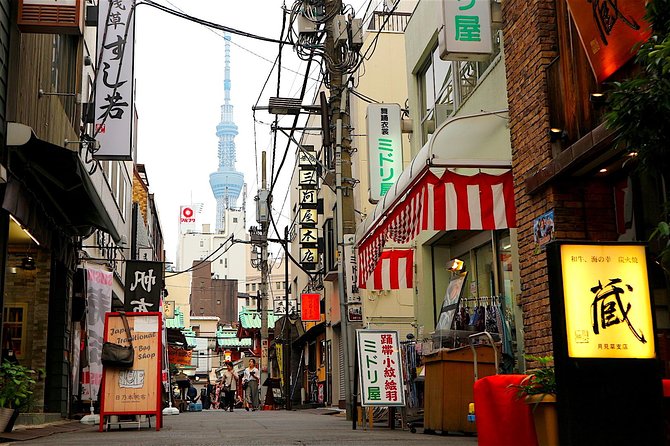
Asakusa is one of the best choices if you want old Tokyo atmosphere. It is home to Senso-ji, the city’s oldest temple, said to date from 628, and Nakamise Shopping Street, a 250-meter approach lined with souvenir and craft stalls.
The shopping street is useful for browsing traditional gifts, but you should distinguish souvenir shopping from buying rare handicrafts. Your guide can help explain what you are seeing and point out food or craft items that fit your interests.
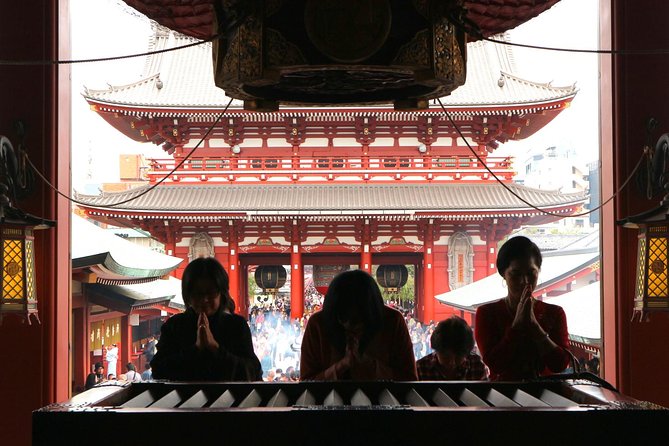
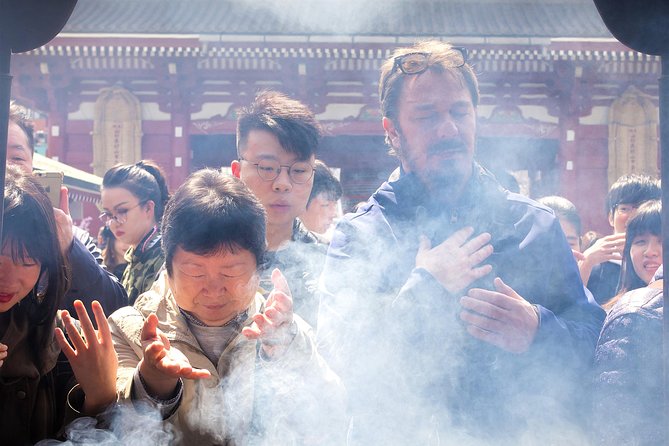
Senso-ji gives the day a religious and historical center. Here, your guide can explain Buddhism and the customs connected with the temple. The suggested time is only about 30 minutes at the temple, which is enough for an introduction but not for a slow visit during a crowded period.
Asakusa is a better choice than trying to force every modern district into one itinerary. If you are interested in temples, traditional neighborhoods, or family-friendly sights, tell your guide to give this area more time.
Akihabara for anime, manga, and electronics
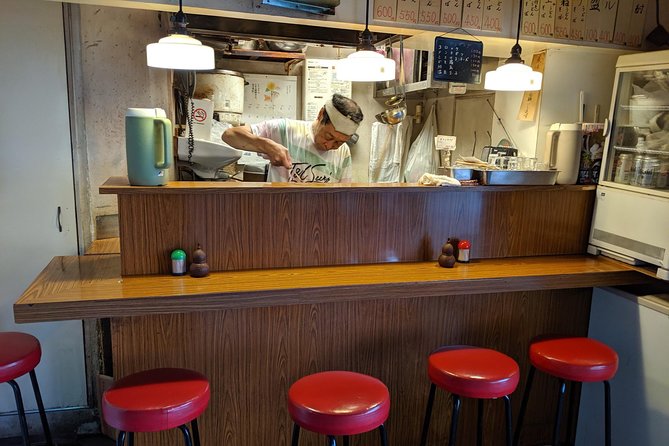
Akihabara is the most specialized stop on the route. It is Tokyo’s center for anime, manga, video games, and electronics, with a sensory overload of signs, shops, and pop culture.
The suggested visit is only about 20 minutes, so think of it as a quick introduction. Dedicated fans may need a separate visit to explore properly. If your group includes someone who has come to Tokyo mainly for anime or gaming, Akihabara should receive more time than the standard outline allows.
This is another place where the private format helps. You can tell the guide whether you want broad sightseeing or a focused look at a particular part of the district. You can also skip it entirely if pop culture is not a priority.
Marunouchi, Nihonbashi, and the Imperial Palace East Gardens
Marunouchi gives you Tokyo’s polished business-district side. The area around Tokyo Station and the Tokyo International Forum is known for modern architecture, food, and broad city views. It is a good stop for people who enjoy buildings as much as temples.
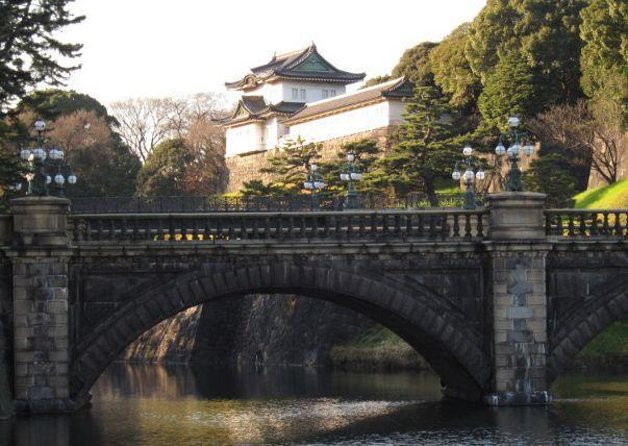
Close by, the Imperial Palace East Gardens offer a different kind of experience. You can see remnants of Edo Castle, including moat walls, while learning about the site’s place in Tokyo’s past. Admission is listed as free.
One useful caution comes from the tour’s flexible design: if you begin near the palace gardens, do not assume your guide will automatically add them. Make your wishes clear at the start. A family’s only regret was not realizing the gardens were an available option when they started nearby.
Nihonbashi was the center of trade and commerce during the Edo period, from 1603 to 1868. Traditional food and craft shops remain the draw, and your guide can connect the area with the foundations of Japanese cooking. I would choose this district if you want a less obvious stop with a strong connection to daily life and commerce.
Tsukiji and Yanaka for food and older Tokyo
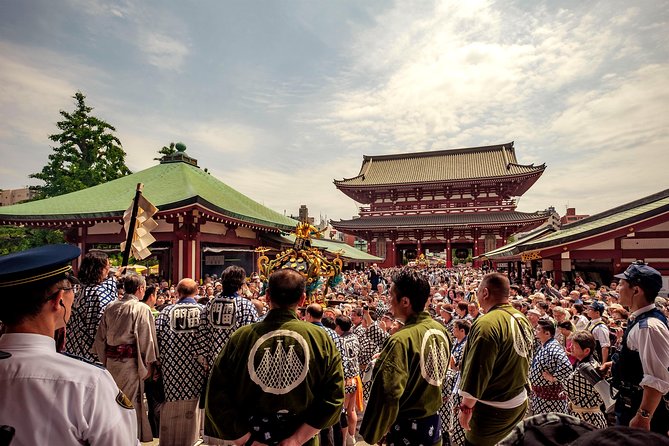
Tsukiji’s former inner market and tuna auction have moved to Toyosu, but the outer market remains. It is still a practical place to see fresh fish, food stalls, and ingredients connected with Japanese cooking.
You should set expectations correctly. This is not a visit to the old wholesale market or auction. It is a look at the remaining outer-market area, and the experience will be most useful if you enjoy food and want your guide to explain what you are seeing.
Yanaka offers a quieter, more nostalgic side of the city. The area has many temples, sweets shops, and a tea house where you can experience a traditional tea ceremony. The cemetery also gives your guide room to explain Japanese customs surrounding memorial spaces and remembrance.
Yanaka is a strong choice for you if you prefer atmosphere to famous landmarks. It is less immediately dramatic than Shibuya Crossing or Tokyo Tower, but it can feel more personal and reflective. Since the tour is customizable, you can ask for a slower neighborhood walk here.
Tokyo Skytree, Tokyo Tower, and Shibuya Sky
Three paid viewpoints can be added to the tour. Tokyo Skytree reaches 634 meters and is described as the world’s tallest tower. Tokyo Tower, completed in 1958, became a symbol of Japan’s postwar economic growth and remained the country’s tallest structure until Skytree surpassed it in 2012.
Shibuya Sky offers a 360-degree view over Tokyo. It is a natural addition if you are already spending time in Shibuya, while Skytree fits better with Asakusa. Tokyo Tower can work well for a central Tokyo route.
Tickets are not included, and the listed itinerary only allocates about 30 minutes to each viewpoint. That may be enough for a quick stop, but if you want to enjoy the view without rushing, confirm how much time your tour length allows.
I would not try to add all three. Pick one based on the neighborhoods you most want to visit, the weather, and your interest in architecture or city views.
What the strongest guide experiences have in common
The most praised part of this tour is not a single landmark. It is the guide’s ability to adapt the day. Paiva is noted for being fun, friendly, and accommodating, even in rainy weather. Laura helped make a couple’s first day in Japan feel welcoming and introduced them to good places for food and drinks. Miko guided a first-time visitor through markets, a tea house, temples, and the transport system.
Those details point to the tour’s real purpose: it is an introduction to Tokyo that can make the rest of your trip easier. You are not just ticking off sights. You are learning how districts connect, how to ride the subway, and what kinds of places deserve a return visit.
Families may benefit especially from the private setup. Children 11 and under are free, and the route can be adjusted around attention spans and food needs. Still, the walking and subway travel may be tiring for very young children, so discuss the pace before starting.
Booking, cancellation, and weather details
Confirmation is provided at booking, and the tour is private for your group. Service animals are allowed, and the meeting areas are near public transportation.
The cancellation information supplied for this experience is inconsistent. One set of terms describes partial or full refunds based on how early you cancel, while another says the experience is non-refundable and cannot be changed. I would verify the current policy before paying, especially because the price is substantial.
The tour requires good weather. If the operator cancels because of poor conditions, you are offered another date or a full refund. Your own food, drink, subway fares, and optional observation-deck tickets remain separate expenses.
Should you book this private Tokyo tour?
I would book it for a first visit, especially if you want a calm start, need help with the subway, or have a family with mixed interests. It is also a good fit if you would rather spend time in two or three districts than follow a fixed coach itinerary.
I would skip it if you prefer exploring alone, already understand Tokyo’s transport system, or want a specialist tour focused on only one subject. At $202.18 per person, the tour earns its price through personal attention and route flexibility, not through included tickets or luxury transportation.
For the best value, choose your top priorities before the guide arrives. Pair nearby areas, reserve one main viewpoint at most, and tell the guide clearly if you want food, temples, shopping, anime, gardens, or architecture. That is how this flexible tour becomes a useful first day rather than a hurried attempt to see the whole city.
FAQ
How long does the private Tokyo walking tour last?
You can choose a tour lasting approximately four to eight hours. The exact length depends on whether you select a half-day or full-day experience.
Does the guide pick me up at my hotel?
Yes. Hotel meet-up and drop-off are included. The tour remains a walking tour, with subway travel used between areas.
Is public transportation included in the price?
No. Subway costs are excluded. Your guide can help you purchase a travel pass for the day.
Can I choose the places I visit?
Yes. The tour is customizable. You can choose your start time, preferred destinations, and pace, and your guide helps arrange the route.
Can I see all 15 suggested stops in one tour?
No. The tour description specifically notes that it is not possible to see all of Tokyo in one outing. You should choose the neighborhoods that matter most to you.
Are Tokyo Skytree, Tokyo Tower, and Shibuya Sky included?
No. Admission tickets for these observation decks are not included, but they can be added to the tour.
Are children charged for this tour?
Children aged 11 and under are free of charge. You need to tell the tour provider that they are joining your group.
Is food included?
No. Food and drinks are not included. You can discuss food needs and possible stops with your guide.
What happens if bad weather cancels the tour?
If the tour is canceled because of poor weather, you are offered a different date or a full refund. The experience requires good weather.
Just added in Tokyo
- Private Unforgettable Mt Fuji Tour with English Speaking Driver★ 5.0 · 142 reviews
- Japanese Cooking and Udon Making Class in Tokyo with Masako★ 5.0 · 35 reviews
- Private Kamakura plus Yokohama Tour – English Speaking Driver★ 4.5 · 28 reviews
- Luxury van Ride to famous car meet up spot Daikoku★ 4.5 · 148 reviews
- Private Tour to Mt Fuji and Hakone with English Speaking Driver★ 5.0 · 133 reviews
- Private Harajuku Omotesando Architecture Walking Tour★ 5.0 · 67 reviews
- Japanese Food Cooking Class in Asakusa, Tokyo★ 5.0 · 39 reviews
- Private Departure Transfer : Central Tokyo City to Haneda Airport★ 4.5 · 22 reviews
Walking Tours, compared.
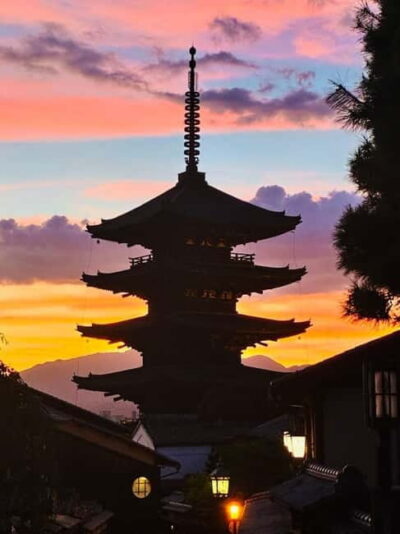
Kyoto Geisha Walking Tour: Gion District & Hidden Gems
Read our review →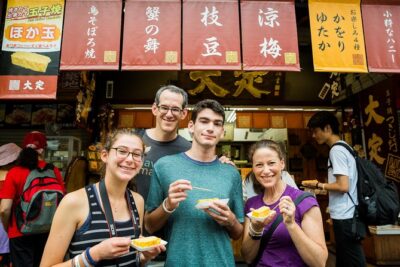
Tokyo Tsukiji Fish Market Food and Culture Walking Tour
Read our review →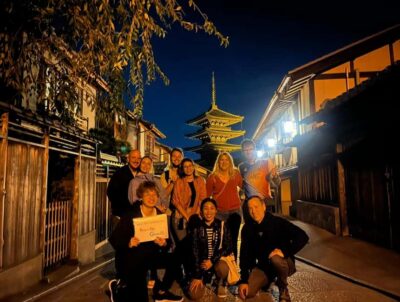
Gion Magical Night Walking Tour with Geisha Trivia
Read our review →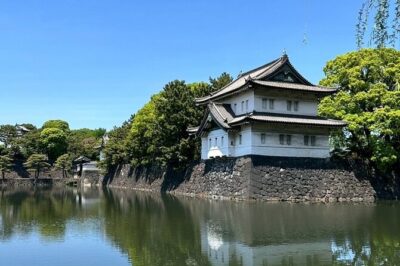
Imperial Palace and Shogun Historical Walking Tour
Read our review →
Gion Geisha District Walking Tour – Stories of Geisha
Read our review →
Shinjuku Local Bar and Izakaya Guided Walking Tour
Read our review →
Browse the lists this tour appears in