
Reviewed · COOKING CLASSES
Sushi – Authentic Japanese Cooking Class – the best souvenir from Kyoto!
Come hungry, leave with a new kitchen skill. This two-hour class at Japanese Cooking Class Roujiya gives you hands-on practice making several kinds of sushi, soup, and pickled ginger, while instructor Kaori explains the food customs behind each dish. It feels more personal than a standard demonstration class.
I especially like the useful recipe handout and the chance to learn Japanese table manners alongside the cooking. The aperitif and green tea add a pleasant touch, too. One thing to consider is the meeting point: Kyoto addresses can be tricky, and one poor experience involved a taxi driver struggling to find the location and a delayed reply from the operator.
In This Review
- Key Points Before You Book
- What This Kyoto Sushi Class Really Teaches
- Arriving at Roujiya at 11:30 am
- The First Tastes: Umami, Dashi, and Japanese Food Culture
- Making Sushi Rice and Several Types of Sushi
- Dining Manners Beyond Chopsticks
- Eating Your Work With Tea and an Aperitif
- A Take-Home Souvenir That Fits in Your Kitchen
- How Much Value Do You Get for $72.67?
- Group Size, Language, and Pace
- Practical Details Before You Commit
- Who Will Enjoy This Class Most?
- Should You Book Sushi Cooking Class Roujiya?
- FAQ
- Where does the sushi cooking class take place?
- What time does the class start?
- How long does the experience last?
- What food will I learn to prepare?
- Is the class taught in English?
- What is included in the price?
- Can I cancel for a full refund?
Key Points Before You Book
- You make and eat several dishes: The class covers sushi, sushi rice, dashi soup, and pickled ginger, not just one simple roll.
- Kaori teaches in English: Her clear explanations cover technique, food culture, umami, and dining etiquette.
- You receive recipes to use at home: A four-page guide includes manners, food information, and recipes for sushi rice, soup, and pickled ginger.
- The class takes place at Roujiya in Nakagyo Ward: You meet at 22-58 Nishinokyo Ikenouchicho, Kyoto, at 11:30 am and return to the same place.
- It suits families and beginners: Children and adults can take part, and you do not need prior sushi-making skills.
- Check the group-size details carefully: The experience is presented as a small-group class, but the published capacity information ranges from eight to 12 participants, with up to 13 people per booking.
What This Kyoto Sushi Class Really Teaches
Many cooking classes give you a recipe, a few minutes at a cutting board, and a plate to photograph. This one aims to teach the ideas behind Japanese food as well as the steps.
You begin with basic flavor concepts, including umami. That matters because Japanese cooking often depends on balance and restraint rather than a long list of strong seasonings. Understanding where savory flavor comes from makes the dashi lesson more useful, and it gives you a better sense of why the finished dishes taste the way they do.
The class also covers dashi, a Japanese stock made with ingredients such as seaweed and bonito flakes. You learn how this simple broth forms part of the foundation for Japanese cooking. The soup portion gives you something warm and immediate to taste before you move on to sushi.
Then comes sushi rice, which is more important than many beginners expect. The rice must have the right texture and seasoning. One useful tip highlighted during the class is to fan the rice. That helps it cool while preserving the desired consistency. Small details like this are what make a home attempt more likely to work.
You also prepare pickled ginger. It is easy to treat gari as a decoration on a sushi plate, but making it yourself helps you understand its role in refreshing your palate between different bites.
More Cooking Classes in Kyoto
- Ramen Cooking Class at Ramen Factory in Kyoto
★ 5.0 · 1,937 reviews - Sushi Making in Kyoto! Same-day bookings welcome!
★ 5.0 · 713 reviews - Kyoto: Ramen Cooking Class at a Ramen Factory with Souvenir
★ 4.9 · 532 reviews
Arriving at Roujiya at 11:30 am
The class begins at 11:30 am at Roujiya, located at 22-58 Nishinokyo Ikenouchicho in Kyoto’s Nakagyo Ward. It is near public transportation, and the activity ends at the same meeting point.
The location is part of the experience. Kaori welcomes you into a clean, attractive home kitchen rather than a large commercial studio. That setting creates a friendly tone and helps the class feel like an invitation into someone’s cooking space.
Still, Kyoto navigation can test your patience. The address is not always easy for drivers to interpret, so use the Google Maps location link supplied after booking rather than relying only on the written address. The one serious complaint about the experience concerned a taxi driver who could not find the place and a long wait for a response. It appears to be an unusual problem, but it is a useful warning: plan your route before class day and allow enough time to arrive.
Because the start time is fixed, getting lost can cost you more than a few minutes. You should also confirm any food requirements when booking. The operator asks you to provide specific dietary needs in advance.
The First Tastes: Umami, Dashi, and Japanese Food Culture
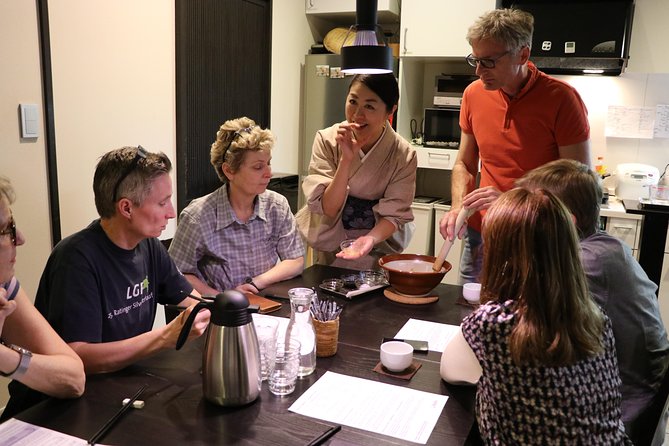
Kaori does more than hand you ingredients. She explains how Japanese cuisine developed its flavor principles and connects those ideas to the food you are preparing.
The umami discussion gives the class a cultural and practical base. You learn why dashi has such an important place in Japanese cooking and how seaweed and bonito flakes create a savory broth. This is not a lecture detached from the meal. You taste and use the ingredients as the session progresses.
The soup is one of the early parts of the meal, and it helps break up the instruction. You are not standing for two hours waiting for the final plate. Instead, the class moves between watching, preparing, tasting, and asking questions.
That pace earned strong praise for being well balanced. You get enough explanation to understand the reason behind each step, but you also spend plenty of time doing the work yourself. If you prefer a rapid, restaurant-style lesson, the amount of cultural background may feel slower. For most beginners, it adds useful context.
Making Sushi Rice and Several Types of Sushi
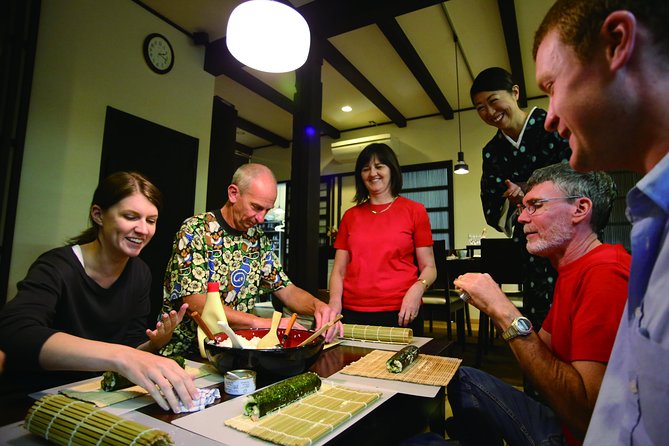
The central part of the class is hands-on sushi preparation. You learn how to make sushi rice and then use it to prepare several types of sushi.
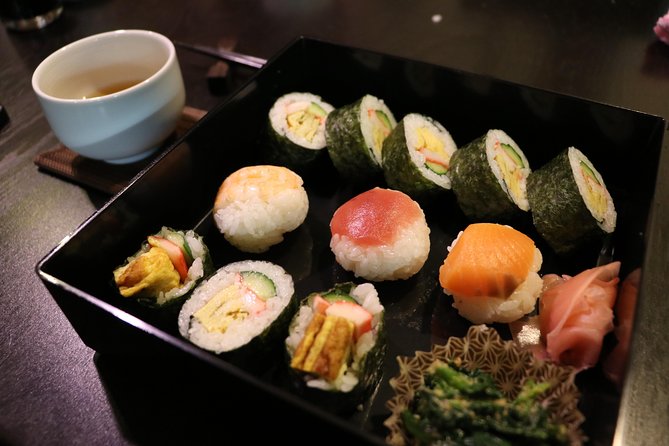
The precise menu can depend on the class, but the supplied details confirm several kinds of sushi rather than one basic roll. That variety gives you a better introduction to the subject. You see how rice, fillings, shape, and presentation can change from one style to another.
Kaori guides you through each stage and checks that you are putting the instruction into practice correctly. That personal correction is a major advantage over watching an online video. A video cannot see whether your rice is too loose, your portions are uneven, or your hands need a different technique.
The class is designed for people starting from zero. You do not need to arrive with sushi skills. One participant began knowing nothing about sushi-making and left feeling able to make it. That is the right standard for a short class: not professional knife work, but enough confidence to try again at home.
You should expect to work with the food rather than simply watch Kaori perform. Families particularly seem to fit the format well. Children can follow the stages, and the finished meal gives them a clear reward for paying attention.
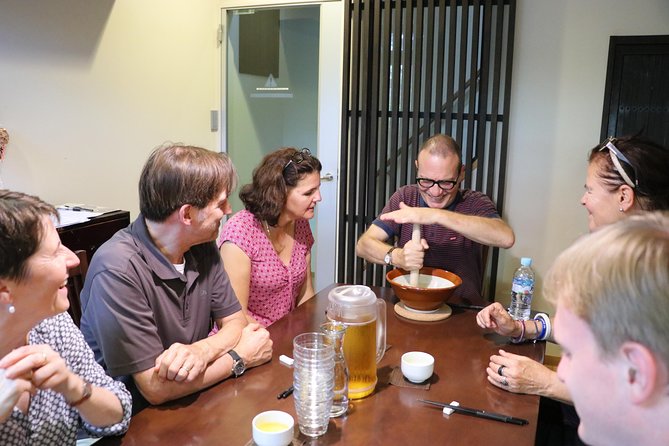
There is also a social side. Small mistakes are part of the fun, and the class allows room for laughs while you learn. If you are taking the class with a partner, friends, or children, the shared process becomes as memorable as the meal.
A completely different kind of day out:
- PERFECT KYOTO 1-Day Bus Tour
★ 5.0 · 13,518 reviews - [Kyoto & Nara Day Tour] Sagano Scenic Railway & Nara Park & Fushimi Inari Taisha Thousand Torii Gates & Togetsukyo Bridge & Bamboo Grove & Kimono Forest (Departing from Osaka)
★ 4.9 · 10,942 reviews - Kyoto: Fushimi Inari, Kinkakuji, Bamboo Grove 1 Day Bus Tour
★ 4.8 · 4,316 reviews - Kyoto: Tea Ceremony in a Traditional Tea House in Kiyomizu
★ 4.9 · 3,519 reviews
Dining Manners Beyond Chopsticks
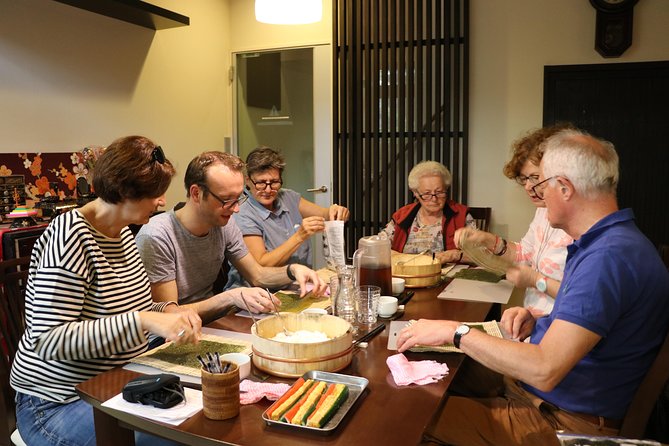
The etiquette lesson is one of the most distinctive parts of the experience. Japanese sushi dining has customs that can be easy to miss if you only focus on the food.
Kaori discusses table manners and provides written guidance on Japanese manners and food. Topics include the proper use of chopsticks and the cultural background of dining practices. One particularly interesting point concerns why Japanese chopsticks are shorter than Chinese chopsticks.
This information adds value because it changes how you look at an ordinary meal later in your trip. You are not only learning to assemble sushi. You are learning how Japanese food is served, approached, and appreciated.
The etiquette segment should appeal to anyone who wants more than a souvenir photo. It is also helpful if you feel uncertain at a sushi counter or traditional restaurant. The class does not promise expert-level dining instruction, but it gives you a practical foundation without making manners feel stiff or intimidating.
Eating Your Work With Tea and an Aperitif
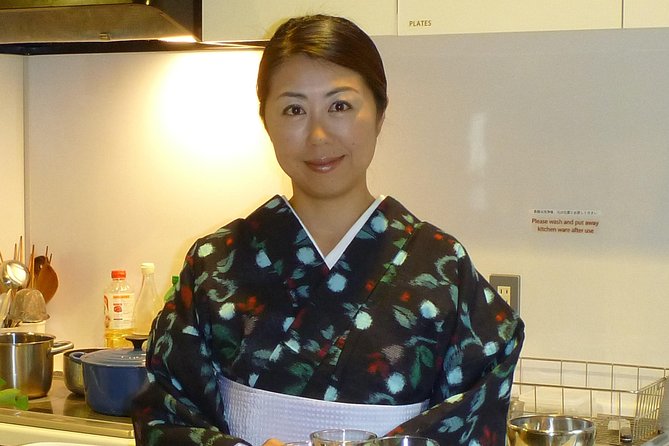
Once the cooking is done, you sit down to eat what you made. This is the best payoff of the class, especially because the food has been prepared by your own hands.
The included meal, aperitif, and Japanese green tea help turn the lesson into a complete midday activity. You are not paying for a short kitchen demonstration and then searching for lunch elsewhere. The food you prepare becomes lunch, and the tea gives you time to enjoy it.
One detail deserves clarification. The experience includes an aperitif and green tea, but one class account notes that tea, sake, and beer may be offered after the cooking, with some drinks costing extra. If having alcohol is important to you, confirm what is included at the time of booking rather than assuming every drink is covered.
The food quantity also appears generous. You are advised to come hungry, and several people finished the class with full stomachs. That makes the $72.67 price easier to assess. You are paying for instruction, ingredients, a meal, recipes, and a cultural lesson, not just a plate of sushi.
A Take-Home Souvenir That Fits in Your Kitchen
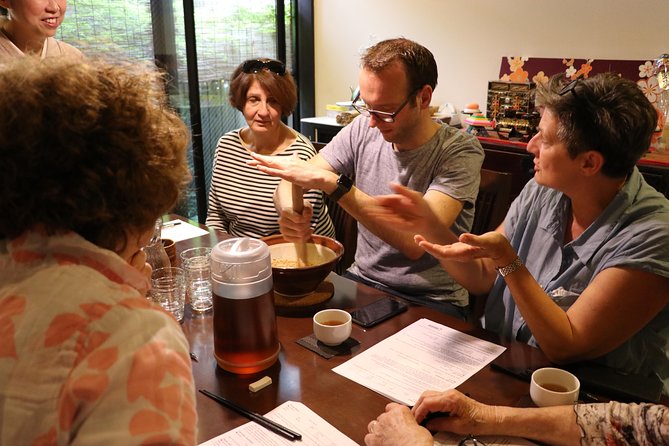
The recipes are a strong part of the value. A four-page guide covers Japanese manners, food information, sushi rice, soup, and pickled ginger.
That handout means the class continues after you leave Kyoto. You can buy ingredients at home and repeat the meal while the method is still fresh. A recipe alone can be vague, but the practical session gives you a memory of texture, timing, and order.
This is especially useful for a partner who loves sushi but does not cook it. One person can enjoy sushi while both of you learn how the dishes are built. The class also makes a good family activity because children can take home a skill rather than another small object.
You should keep your expectations realistic. A two-hour lesson will not turn you into a sushi chef, and it will not cover every style of sushi or every Japanese regional dish. What you get is a clear introduction to core techniques and flavor ideas that you can repeat in an ordinary home kitchen.
How Much Value Do You Get for $72.67?
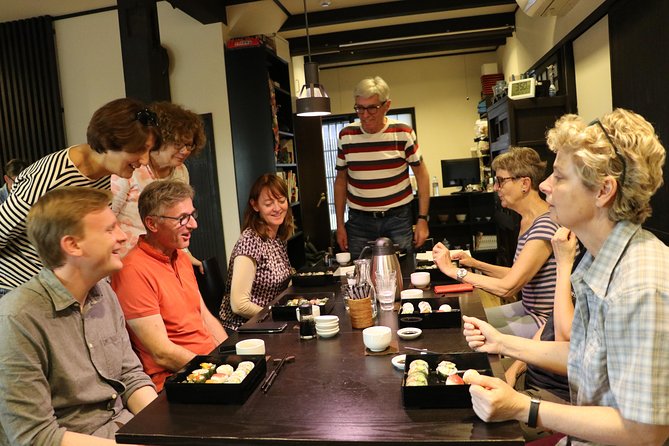
At $72.67 per person, this is not the cheapest meal in Kyoto. You can eat excellent sushi for less, especially if your only goal is lunch.
The price makes more sense if you value participation. You receive all cooking ingredients, an English-speaking instructor, the meal, recipes, an aperitif, and Japanese green tea. You also spend time in a home kitchen and learn food customs that a restaurant meal cannot explain.
I would compare it with the cost of a simple sushi meal plus a separate class or cultural activity. The class combines those elements in roughly two hours. For someone who wants a practical souvenir and a meal, that is a fair package.
The value is strongest for beginners, families, couples, and people who enjoy cooking with other people. It is weaker for experienced sushi makers or anyone mainly seeking a formal chef-led workshop with advanced knife skills.
The class is booked about 40 days ahead on average, so popular dates may disappear early. If you have a tight Kyoto schedule, reserve once your sightseeing plans are firm.
Group Size, Language, and Pace
The class is taught in English, and clear communication is one of its strongest features. The instructor explains not only what to do but why you are doing it. That distinction matters when you want to repeat the dishes later.
The experience is described as a small-group class, with a relaxed kitchen setting. However, the published capacity information is not fully consistent. One description refers to a maximum of eight people, while the additional details say up to 13 people per booking and a maximum of 12 participants.
You should ask about the expected group size if an intimate class is essential to your plans. Even with more participants, the format is built around guided practice rather than a distant demonstration, but the amount of individual attention may vary.
The pace suits a wide range of ages. Adults and younger children have been able to follow the instructions, and the class has received praise for being patient and well organized. If your children are very young, you may need to stay actively involved, since the available information does not provide a minimum age or a child-care arrangement.
Practical Details Before You Commit
The tour lasts about two hours and starts at 11:30 am. It begins and ends at Roujiya, with no hotel pickup or drop-off.
A mobile ticket is provided, which keeps the booking simple. Confirmation arrives within 48 hours, subject to availability. Since the class often fills well before the date, do not leave it until the last morning of your Kyoto stay.
Tell the operator about dietary requirements when you book. The available information does not spell out every possible substitution, so early notice is the sensible approach.
Free cancellation is available if you cancel at least 24 hours before the local start time. Cancellations made inside that window are not refunded, and late changes are not accepted. If your Kyoto plans are uncertain, keep that deadline in mind.
Who Will Enjoy This Class Most?
You should consider booking if you fit one of these profiles:
- You want to learn a repeatable Japanese recipe, not just eat lunch.
- You are new to sushi-making and prefer patient guidance in English.
- You enjoy food culture, table manners, and the stories behind ingredients.
- You are traveling with children who like practical, hands-on activities.
- You want a couple’s activity or a shared experience with friends.
- You appreciate a home setting more than a polished culinary school.
You may want another option if you already make sushi confidently, need a highly advanced chef course, or care only about tasting restaurant-quality sushi. You should also be cautious if you cannot manage a fixed meeting time or if finding a residential Kyoto address would cause stress.
Should You Book Sushi Cooking Class Roujiya?
I would book this class if you want a warm, useful introduction to Japanese food and plan to cook at home after Kyoto. Kaori’s teaching covers sushi, soup, dashi, pickled ginger, umami, and manners, so the experience offers much more than rolling rice.
The strongest reasons to go are the hands-on format, clear English instruction, welcoming home kitchen, family-friendly pace, and recipes you can use later. The main cautions are the unclear group-size information, the lack of hotel transport, and the need to use the supplied map carefully.
If you have room in your Kyoto schedule, this is a good midday activity with lunch built in. You leave with a full stomach, a better understanding of Japanese dining, and a souvenir that does not need room in your suitcase.
FAQ
Where does the sushi cooking class take place?
The class takes place at Japanese Cooking Class Roujiya, at 22-58 Nishinokyo Ikenouchicho, Nakagyo Ward, Kyoto, 604-8375, Japan.
What time does the class start?
The class starts at 11:30 am.
How long does the experience last?
The cooking class lasts approximately two hours.
What food will I learn to prepare?
You will learn to prepare several types of sushi, sushi rice, Japanese soup, dashi, and pickled ginger.
Is the class taught in English?
Yes. An English-speaking cooking instructor leads the class.
What is included in the price?
The price includes the meal, all cooking ingredients, the instructor, recipes, an aperitif, and Japanese green tea.
Can I cancel for a full refund?
Yes. You can receive a full refund if you cancel at least 24 hours before the experience start time. Late cancellations and changes made within 24 hours are not accepted.
Just added in Kyoto
- The “Golden Route” and Ancient Japan by DIAMIR Erlebnisreisen – 14-Day Tour★ 2.0 · 2 reviews
- Japan: Castles & Cuisine by G Adventures – 6-Day Kyoto to Osaka Tour★ 4.5 · 4 reviews
- Cycle Japan by Explore! – 13-Day Kyoto to Tokyo Tour★ 4.7 · 12 reviews
- Cycle Japan by Intrepid Travel – 11-Day Kyoto to Tokyo Tour★ 4.8 · 2 reviews
- Classic Japan by Intrepid Travel – 11-Day Kyoto to Tokyo Tour★ 4.4 · 14 reviews
- Ancient & Modern Japan 14-Day Tour by Exodus Adventure Travels★ 4.4 · 40 reviews
- 5 Day Cultural Adventure of Kyoto, Nara & Osaka by Tourist Journey★ 2.5 · 2 reviews
- 12 Days Kinosaki Onsen Escape: A Journey Through Japan’s Timeless Towns by UME Travel★ 4.8 · 5 reviews
Cooking Classes, compared.
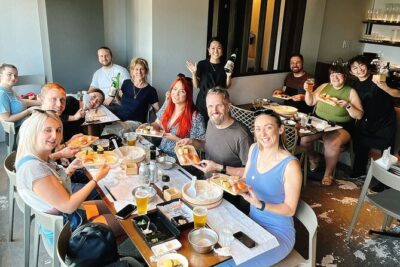
Sushi Making Tokyo Roll and Authentic Japanese Sushi Class
Read our review →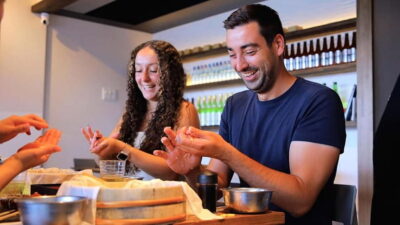
Roll and Authentic Sushi Making Class in Asakusa
Read our review →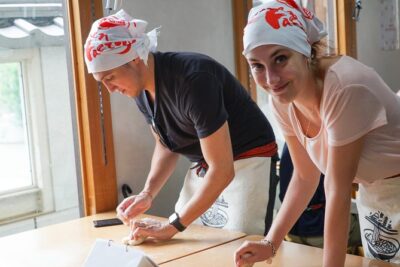
Ramen Cooking Class at Ramen Factory in Kyoto
Read our review →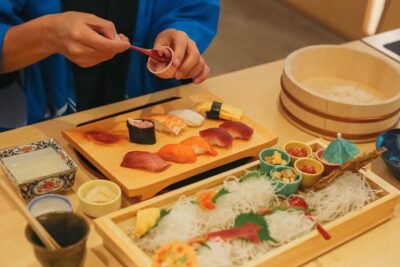
Sushi Making Class in a Happi Coat near a Famous Spot
Read our review →
Sushi Making Osaka Roll and Authentic Japanese Sushi Class
Read our review →
Tokyo Sushi Making Class in Tsukiji with Professional Chef
Read our review →
Ramen & Gyoza Cooking Class in Tokyo with Local Supermarket Visit
Read our review →Browse the lists this tour appears in