
Reviewed · WALKING TOURS
Tokyo Private Walking Tour With Fresh Eyes, Local Hearts
Tokyo rewards curiosity. This private walking tour makes curiosity easier by putting a local guide in charge of the day while still leaving room for your requests. You can focus on temples, gardens, food areas, pop culture, shopping, or the city’s famous districts instead of trying to plan every train ride and sightseeing stop yourself. I especially like the one-to-one format and the broad choice of places, from Senso-ji and the Imperial Palace to Akihabara and Golden Gai.
I also like that the guides are born and raised in Tokyo. That matters in a city where a short walk can shift you from imperial grounds to a market lane or from quiet shrine steps to neon-lit streets. The main consideration is time: a one-hour booking cannot reasonably cover the entire menu of stops, and admission fees, meals, and public transport fares are extra.
In This Review
- Key things to know before booking
- Why a private Tokyo walk can save your first day
- Choosing your Tokyo theme
- Imperial Palace and Tokyo’s old foundations
- Tsukiji: market food and the old fish district
- Shibuya, Harajuku, and Meiji Jingu
- Kabukiza and Tokyo’s traditional arts
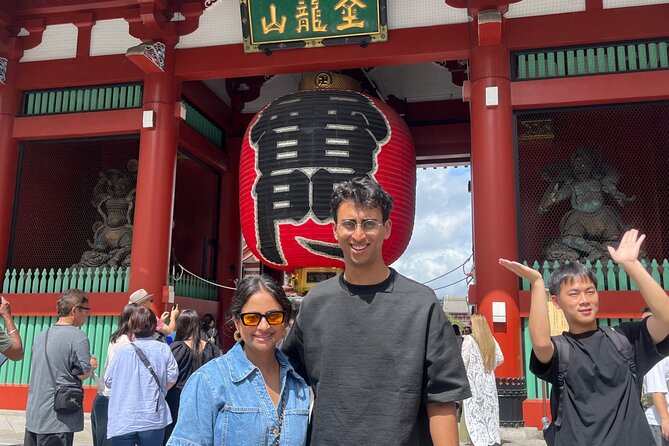
- Asakusa and Senso-ji Temple
- Shinjuku’s garden and tiny bar lanes
- Gardens for a slower side of Tokyo
- Akihabara, Ueno, and Kanda
- Gotokuji, Nezu, Zojo-ji, and Tokyo Tower
- What the price includes, and what it does not
- Who should book this experience
- Should you book the Tokyo private walking tour?
- FAQ
- How long does the private Tokyo walking tour last?
- Is the tour private?
- Can I customize the itinerary?
- Is hotel pickup available?
- Are public transportation costs included?
- Are admission tickets and meals included?
Key things to know before booking
- Your guide builds the day around you: You can request famous sights, local neighborhoods, gardens, food stops, or a mix.
- The guide is fully private: Only your group participates, so you can ask questions freely and adjust the pace.
- Tokyo’s major contrasts are all possible: The suggested choices range from Meiji Jingu and Senso-ji to Shibuya, Akihabara, and Tsukiji.
- Hotel pickup is offered: Walking and public transportation are included as the basic ways to move around, but fares are not.
- Short visits are designed as introductions: Many listed stops are shown with about 15 minutes, so think orientation and selection rather than full museum visits.
- The strongest praise is for personal planning and value: Toko received warm feedback for learning a family’s interests, creating a first-day plan, and adding history, culture, and local treats.
Why a private Tokyo walk can save your first day
Tokyo can leave you with too many choices. Do you begin at a shrine, a market, a garden, a department store, or a crossing where thousands of people move at once? This experience takes away some of that planning pressure without locking you into a fixed group schedule.
Before the meeting, the guide contacts you to learn what you want from the day. That early conversation is one of the tour’s best features. A first-time visitor may want a broad introduction, while a repeat visitor may prefer smaller shrines, gardens, or neighborhoods away from the standard route.
The private setup also makes the pace more practical. You can stop to ask why a shrine has a particular layout, pause for food, or skip a sight that does not fit your interests. With a group, those small decisions can slow everyone down. Here, they shape the experience.
The tour lasts approximately one to eight hours. That range is important. At the shorter end, you are choosing one area or a compact introduction. At the longer end, your group can link several districts using Tokyo’s public transport system. The listed sites are best understood as a large menu, not a promise that every place will fit into one day.
More Private Tours in Tokyo
- Tokyo 6hr Private Tour with Government-Licensed Guide
★ 5.0 · 3,902 reviews - Private Tour to Mt. Fuji and Hakone (Fully Licenced Operator)
★ 5.0 · 1,910 reviews - Tokyo Customized Private Tour (Must See Places in 1 Day)
★ 5.0 · 1,499 reviews
Choosing your Tokyo theme
The smartest way to book this tour is to pick two or three priorities before you arrive. Tokyo is too large for a sensible attempt at everything, and crossing the city repeatedly can eat up your time.
For a first visit, I would consider a combination such as Senso-ji, Asakusa, Meiji Jingu, and Shibuya Crossing. That gives you old Tokyo, modern Tokyo, a major Shinto shrine, and one of the city’s most famous public spaces.
If food interests you most, ask about Tsukiji Outer Market. If you prefer traditional culture, consider the Imperial Palace area, Kabukiza Gallery, Zojo-ji, or one of the historic gardens. Anime, manga, gaming, and electronics fans should put Akihabara near the top of their list.
You can also build a quieter day. Nezu Shrine, Rikugien Garden, Koishikawa Korakuen, Kiyosumi Garden, or Hamarikyu Gardens offer a slower look at Tokyo. These choices make sense if the city’s crowds and noise are likely to wear you down.
Imperial Palace and Tokyo’s old foundations
The Imperial Palace area offers a useful first lesson in Tokyo’s past. The current palace occupies the former site of Edo Castle, with broad grounds and moats that hint at the power once centered here.
Your guide can explain the setting and show the public areas available to visitors. Do not book this expecting a full tour inside the Imperial Palace. Access to the interior is limited, and this stop is mainly about the grounds, setting, and connection to the city’s former castle town.
The suggested visit lasts about 15 minutes, so it works well as part of a wider historical route. I would pair it with nearby gardens or another traditional site rather than make it the sole focus of a short booking.
Tsukiji: market food and the old fish district
Tsukiji Outer Market is one of the most useful stops for a food-minded visitor. More than 400 shops and stalls line the streets, offering fresh foods and a chance to pause for breakfast or a small bite.
The outer market is active and easy to combine with other central Tokyo sights. Ask your guide to help you understand what you are seeing, especially if unfamiliar foods or Japanese market customs leave you unsure where to begin.
The tour also lists the inner Tsukiji Market as a separate stop. The description presents it as a place that even some Japanese people do not know well, while the outer market is more openly associated with street food and shopping. Since the two entries are distinct, clarify what you will visit and how much time you want to spend there.
Both Tsukiji stops are shown at about 15 minutes. That is enough for an introduction and perhaps a quick food stop, but not a leisurely market meal. Food and personal spending are not included, so budget separately if tasting local items is part of your plan.
More Walking Tours in Tokyo
- Tokyo Tsukiji Fish Market Food and Culture Walking Tour
★ 5.0 · 3,184 reviews - Tokyo: Imperial Palace and Shogun Historical Walking Tour
★ 5.0 · 2,251 reviews - Tokyo: Shinjuku Local Bar and Izakaya Guided Walking Tour
★ 4.9 · 1,794 reviews - Tokyo: Tsukiji Fish Market Food and Walking tour
★ 5.0 · 1,724 reviews
Shibuya, Harajuku, and Meiji Jingu
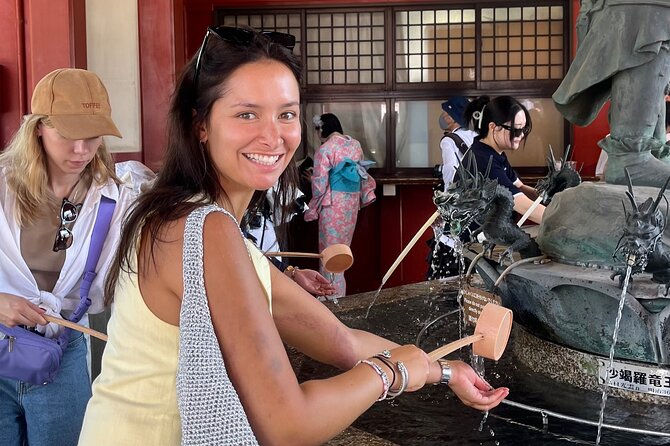
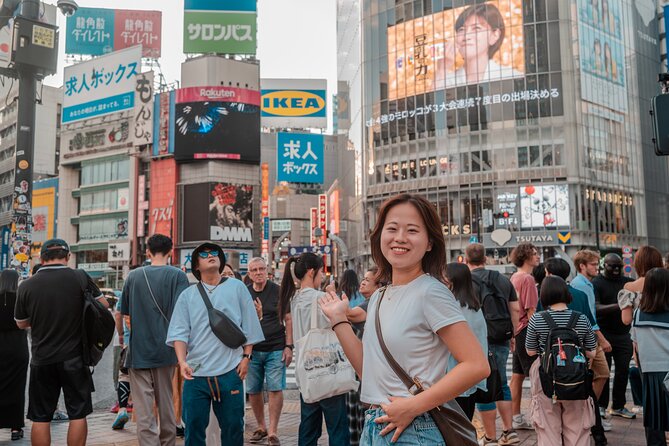
Shibuya Crossing gives you Tokyo at full speed. The district is known for youth culture, fashion, and entertainment, and the crossing itself is the quick visual symbol most first-time visitors expect.
Fifteen minutes is enough to see the crossing and get your bearings, but it is not enough for a full exploration of Shibuya’s shops and streets. If fashion, cafés, or nightlife matter to you, request additional time here.
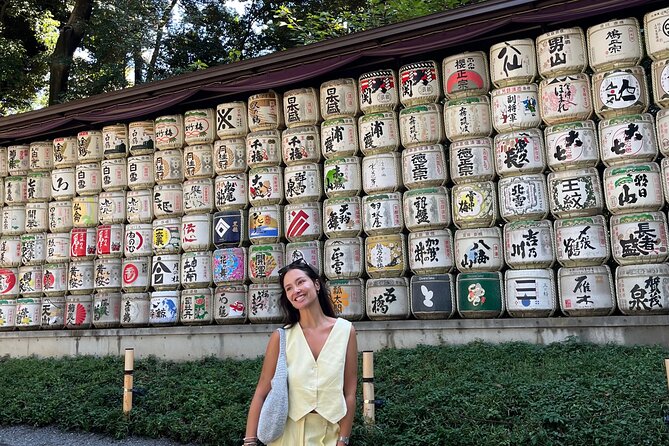
Meiji Jingu offers a sharp change of mood. Built in 1920 to honor Emperor Meiji and Empress Shoken, the shrine is not ancient by Japanese standards, yet it carries major cultural importance. Its setting makes it a useful contrast to Shibuya’s bright commercial energy.
Yoyogi Park and Takeshita Street can extend this part of the city. Yoyogi Park provides open space for walking, picnics, jogging, and events. Takeshita Street, outside Harajuku Station, is associated with kawaii culture, fashion, accessories, sweets, and character goods.
I would not try to give all four places equal attention during a short tour. Shibuya and Meiji Jingu alone make a strong half-day pairing, while Takeshita Street adds shopping and pop culture if that is your priority.
Kabukiza and Tokyo’s traditional arts
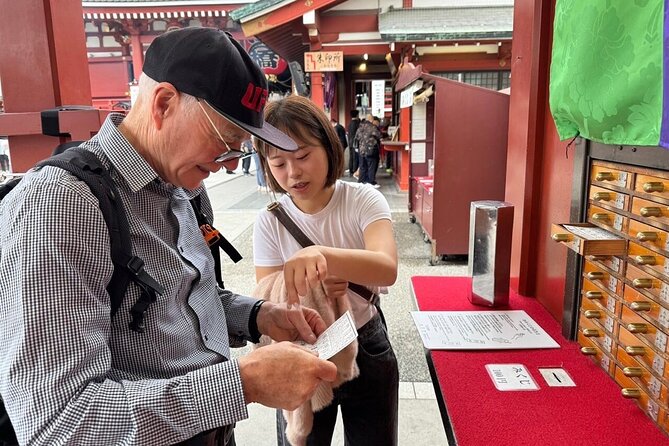
Kabukiza Theater is included as a possible stop, but the tour does not provide entry to the main theater itself. Instead, the visit goes to the gallery on another floor in the same building.
That distinction matters if you are hoping to watch a kabuki performance. This is an introduction to one of Japan’s best-known traditional art forms, not a theater ticket. A guide can give the building and the art more context than a quick photograph outside, but you should ask for current details when planning your day.
Asakusa and Senso-ji Temple
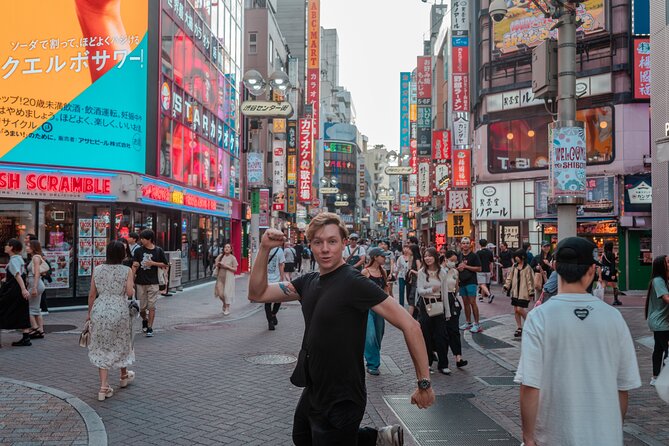
Senso-ji is one of Tokyo’s essential historical stops. Located in Asakusa, it is the city’s oldest temple and is tied to the story of two fishermen who discovered a statue that led to the temple’s founding legend.
The temple grounds are lively, and Asakusa preserves a stronger sense of old Tokyo than many central districts. Streets around the temple offer local character, shopping, and food, while the temple itself gives the area its focus.
The suggested stop is 30 minutes, twice the length shown for many other locations. That makes sense. Senso-ji needs time for the approach, the main grounds, and a little explanation. Asakusa is listed separately for about 15 minutes, so you can ask to treat the temple and neighborhood as one longer visit.
For first-time visitors, this is one of the best uses of the tour. A private guide can explain what you are seeing and help keep the visit from becoming just a quick photograph at the gate.
Shinjuku’s garden and tiny bar lanes

Shinjuku Gyoen National Garden offers a calm break in the middle of Tokyo. It began as an imperial garden and is now open to the public, with greenery that provides a clear pause from the surrounding city.
Admission is not included. The suggested 15-minute visit is brief for a large garden, so ask for more time if you want a proper walk rather than a quick look.
Golden Gai offers the opposite experience. More than 300 small bars occupy narrow lanes in Shinjuku, with many buildings made as traditional two-story structures. The area is visually distinctive, but a short stop is mainly for seeing the lanes and understanding the district. If you want to enter a bar, check how that fits with the tour and your group’s plans.
These two stops pair well for contrast, but they suit different moods. The garden is quiet and open. Golden Gai is tight, urban, and oriented toward nightlife.
Gardens for a slower side of Tokyo
The garden choices are a strong feature for anyone who wants more than major city sights.
Hamarikyu Gardens sits along Tokyo Bay and began as a villa for the shogun. Its ponds, tidal gardens, and seasonal flowers create an unusual meeting of old garden design and modern city surroundings. Admission is extra.
Koishikawa Korakuen dates from the early Edo period. Ponds, bridges, and hills shape the grounds, making it a good choice for a calm walk with historical context. Rikugien is another feudal-era garden, especially known for cherry blossoms in spring and autumn color later in the year.
Kiyosumi Garden also centers on a pond and offers a peaceful stroll despite its city location. Admission is not included here either.
These gardens are not interchangeable. Ask your guide to recommend one based on the season, your location, and the kind of walk you want. Trying to visit all four would use too much time and transport.
Akihabara, Ueno, and Kanda
Akihabara is Tokyo’s main district for electronics, anime, manga, gaming, and related pop culture. It is a natural choice if you want stores and entertainment rather than temples and gardens.
Ueno Park combines open space with museums, art galleries, and a zoo. It is also famous for cherry blossoms in spring, when crowds increase. Since the park covers a large area, your guide can help you decide whether to focus on nature, cultural institutions, or seasonal scenery.
Kanda Myojin, also called Kanda Shrine, has more than 1,300 years of history and serves as a guardian shrine for central parts of Tokyo, including Kanda and Nihonbashi. Admission is listed as not included, so confirm any costs before visiting.
These sites work well for different interests. Akihabara suits pop culture fans, Ueno suits museum and park lovers, and Kanda suits visitors seeking a historic Shinto setting near the city center.
Gotokuji, Nezu, Zojo-ji, and Tokyo Tower
Gotokuji Temple is associated with the maneki-neko, or beckoning cat. Its traditional buildings and gardens offer a quieter cultural stop, especially if you want a temple experience away from the major crowds.
Nezu Shrine is known for its azalea flowers and peaceful grounds. Seasonal timing matters here, since the flowers are a major reason to visit.
Zojo-ji is an Edo-period temple and the family temple of the Tokugawa clan. Several Tokugawa shoguns are enshrined there, giving the site a strong connection to the political history of old Japan. The nearby Tokyo Tower is listed as another possible sight, though the itinerary does not assign it a numbered stop or state an admission fee.
Tokyo Tower is especially striking when illuminated at night. If you want an observation visit rather than an exterior view, ask about available time and costs before finalizing the route.
What the price includes, and what it does not
At $26.36 per person, this tour offers good value when you are traveling with a small private group and want help shaping your first day. The main value is not admission to paid sights. It is the guide’s time, planning, local perspective, and ability to adjust the route around your interests.
Walking and public transportation are included as ways of touring, but the actual public transport fares are not included. Private transportation is also excluded. Meals, food, and personal expenses are yours to cover.
The price makes the most sense when you use the guide for orientation and decisions you would otherwise spend hours researching. It is less compelling if you already know Tokyo well and only want entry tickets or a fixed sightseeing package.
Hotel pickup is offered, which can make the first meeting easier. Since the tour is private, only your group takes part. Service animals are allowed, and the experience is near public transportation. Most people can participate, according to the supplied practical information.
Who should book this experience
I would recommend it most strongly to first-time Tokyo visitors who feel overwhelmed by the city’s size. Families can also benefit because the day can be adjusted around different ages and interests. One especially strong example involved Toko learning a family’s interests before the tour, creating an itinerary for first-time visitors, and including history, culture, and local treats.
Solo visitors and couples who dislike fixed group tours should also consider it. You get undivided guide attention and can ask for a route that matches your pace.
The tour is less suitable if you want a deep visit inside the Imperial Palace, a full kabuki performance, or extended time at every listed attraction. It is also not the best pick for someone who wants all admission fees and transport included in one price.
Should you book the Tokyo private walking tour?
Book it if you want a flexible introduction shaped by a Tokyo local, especially during your first day in the city. Tell the guide your top interests before meeting, then limit the plan to a realistic number of districts.
The strongest reasons to choose it are the born-and-raised Tokyo guides, private format, hotel pickup option, and proven praise for personal planning. The main caution is simple: the $26.36 price does not cover public transport fares, food, personal spending, or paid garden admissions.
For the best value, choose one connected area for a short booking, or two nearby themes for a longer one. If you want help making sense of Tokyo rather than simply collecting photographs, this is a smart and fairly priced starting point.
FAQ
How long does the private Tokyo walking tour last?
The experience lasts approximately one to eight hours. The suitable length depends on how many districts and interests you want to include.
Is the tour private?
Yes. Only your group participates, and the guide provides private attention.
Can I customize the itinerary?
Yes. The itinerary is customizable, and the guide contacts you after booking to learn about your interests and requests.
Is hotel pickup available?
Yes. Hotel pickup is offered.
Are public transportation costs included?
No. Walking and public transportation are included as touring methods, but transportation fees are not included.
Are admission tickets and meals included?
No. Meals, food, personal expenses, and paid admissions are not included. The listed paid garden stops include Shinjuku Gyoen National Garden, Hamarikyu Gardens, Koishikawa Korakuen Garden, Rikugien Garden, and Kiyosumi Garden.
Just added in Tokyo
- A One-of-a-Kind Sushi Experience in a Special Place of Japan★ 5.0 · 15 reviews
- Tokyo Cute Bento Cooking Class – Make a Kawaii Character Lunchbox★ 5.0 · 126 reviews
- Japanese Home Cooking Class & Walk in Todoroki Temple Tokyo★ 5.0 · 88 reviews
- Japan Tokyo Tower Observatory Deck E-Ticket★ 4.0 · 34 reviews
- Catch a Baseball Game in Tokyo with a Local – Tickets Included★ 5.0 · 24 reviews
- JDM Experience with Fast&Furious RX-7 (English speaking Driver)★ 5.0 · 57 reviews
- Tokyo Private Day Tour by Car with English speaking Driver Guide★ 4.0 · 29 reviews
- Japan Classic 10 Day – One Life Adventures★ 5.0 · 129 reviews
Walking Tours, compared.
Kyoto Geisha Walking Tour: Gion District & Hidden Gems
Read our review →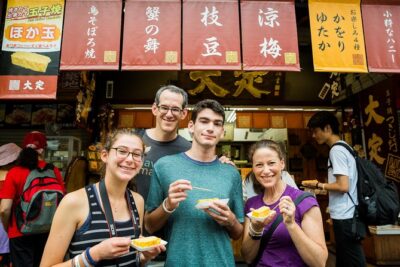
Tokyo Tsukiji Fish Market Food and Culture Walking Tour
Read our review →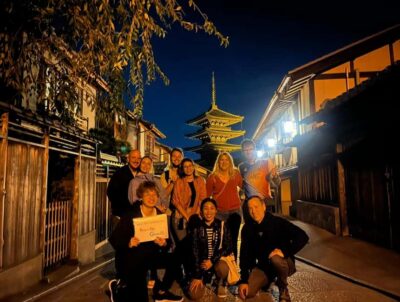
Gion Magical Night Walking Tour with Geisha Trivia
Read our review →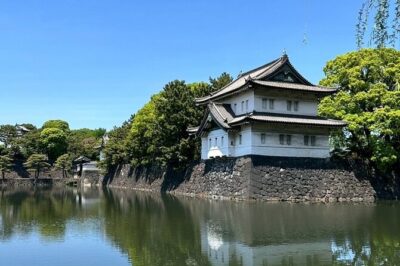
Imperial Palace and Shogun Historical Walking Tour
Read our review →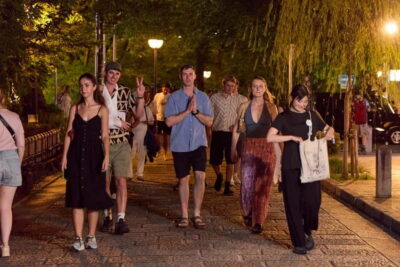
Gion Geisha District Walking Tour – Stories of Geisha
Read our review →
Shinjuku Local Bar and Izakaya Guided Walking Tour
Read our review →
Browse the lists this tour appears in