Reviewed · MORNING
Traditional Japanese Washi Papermaking- Kyoto morning
Paper can be a souvenir with a pulse. This one-hour Kyoto class lets you make washi from raw materials, decorate it with cherry blossoms, maple leaves, grasses, and paper cut-outs, then take home something you shaped yourself. I especially like the tiny groups of up to four people and the patient bilingual teaching from Hiro, Junko, and their assistants. The main drawback is simple: one hour passes quickly, and the basic price covers only a limited finished project unless you pay extra for larger designs or more making time.
You make your own way to a traditional Japanese-style house in central Kyoto, where the workshop feels calm and personal rather than slick or crowded. The process is easy enough for children and first-time crafters, but it also gives adults a useful look at the care behind one of Japan’s best-known traditional arts.
In This Review
- Key points to know before you book
- Why Kyoto washi making is worth an hour
- Finding 紙TO和 in central Kyoto
- Meeting Hiro and Junko in a four-person workshop
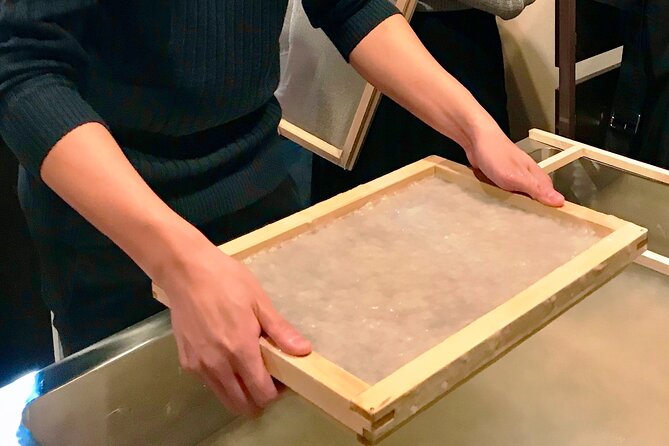
- Making the washi sheet from raw materials
- Decorating with cherry blossoms, maple leaves, and cut paper
- Choosing postcards, a table mat, a lantern, or a wall panel
- The finished souvenir and carrying it through Kyoto
- What the $33.03 price really covers
- Who will enjoy this Kyoto craft class most
- Practical tips for a smoother visit
- Should you book the washi workshop?
- FAQ
- How long does the washi papermaking experience last?
- Where does the workshop begin and end?
- How do I reach the workshop by public transportation?
- Is the instruction available in English?
- How many people can join the class?
- What is included in the price?
Key points to know before you book
- You make paper from raw materials, then design the surface before it is finished.
- Seasonal decorations include cherry blossoms and maple leaves, along with grasses and paper cut-outs.
- The class is capped at four people, so you get close guidance at each stage.
- Hiro and Junko teach in Japanese and English, with clear demonstrations and help as you work.
- The base session lasts about 60 minutes, with an optional extra hour of unlimited paper making for an additional cost.
- Your finished work becomes a personal souvenir, with choices such as postcards, a table mat, a wraparound lampshade, or a wall panel.
Why Kyoto washi making is worth an hour
Kyoto can fill your day with temples, shrines, markets, and busy streets. A short craft class gives you a different view of the city. Instead of only looking at finished Japanese art, you handle the materials and follow the basic stages yourself.
Washi is not simply ordinary paper with a Japanese label. The process involves preparing fibers, forming a sheet, arranging decorative pieces, and pressing or drying the result. You will not become a master papermaker in an hour, but you will leave with a better sense of how much care goes into a sheet that may look effortless.
That shift in perspective is the real value. A handmade paper product in a Kyoto shop can seem like a small object. After this class, you understand more about the labor behind it because you have made one yourself.
The workshop also works well as a change of pace. The atmosphere is quiet, and the small room keeps the focus on the activity. Several participants describe the class as calming, which makes sense after a morning of navigating Kyoto’s crowded sightseeing areas. It is also a useful rainy-day plan because the entire activity takes place indoors.
A few more options to weigh up in Kyoto
- PERFECT KYOTO 1-Day Bus Tour
★ 5.0 · 13,518 reviews - [Kyoto & Nara Day Tour] Sagano Scenic Railway & Nara Park & Fushimi Inari Taisha Thousand Torii Gates & Togetsukyo Bridge & Bamboo Grove & Kimono Forest (Departing from Osaka)
★ 4.9 · 10,942 reviews - Kyoto: Fushimi Inari, Kinkakuji, Bamboo Grove 1 Day Bus Tour
★ 4.8 · 4,316 reviews
Finding 紙TO和 in central Kyoto
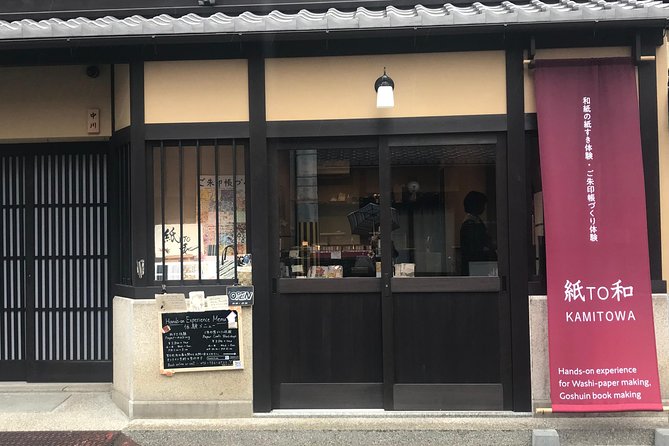
The workshop is at 345 Sanjōchō in Nakagyo Ward. You will need to make your own way there, and that is one of the few practical points to plan carefully before setting out.
The location is convenient by train and subway. It is about a nine-minute walk from Exit 24 of Shijo Station on the Kyoto Metro Karasuma Line or from Karasuma Station on the Hankyu Line. It is also about a six-minute walk from Exit 6 of Karasuma Oike Station on the Kyoto Metro Karasuma Line.
For an easy morning, I would allow a little extra time to find the house and arrive without rushing. A mobile ticket is provided, and confirmation comes at booking. Since the class is held in a small traditional-style house rather than a large visitor center, having the address ready on your phone is sensible.
The activity ends where it begins. That helps with planning, especially if you want to continue toward the covered market, nearby shopping streets, or another central Kyoto sight afterward.
Meeting Hiro and Junko in a four-person workshop
The small group size changes the feel of the class. With a maximum of four people, the instructors can watch how you handle each stage and step in when you need help. You are not left trying to copy a demonstration from the back of a crowded room.
Hiro is frequently praised for his calm, easy-to-follow explanations. Junko and the other staff add to the warm, welcoming tone. The workshop is operated in Japanese and English, so you can ask questions and follow the instructions without needing to know Japanese craft vocabulary.
This is especially helpful when you are working with wet fibers and delicate decorations. A small adjustment in how you handle the material can affect the final sheet. The instructors guide you patiently, but the finished design still feels like your own work.
The class is suitable for families, too. Children must be accompanied by an adult, and the activity has worked well for children as young as seven, teenagers, and adults. A seven-year-old may need more hands-on help, while an older child or teenager can make more of the design choices independently.
Making the washi sheet from raw materials
After introductions, you begin learning the paper-making process. The class moves quickly, but it is not merely a quick craft demonstration followed by a souvenir handed to you at the door.
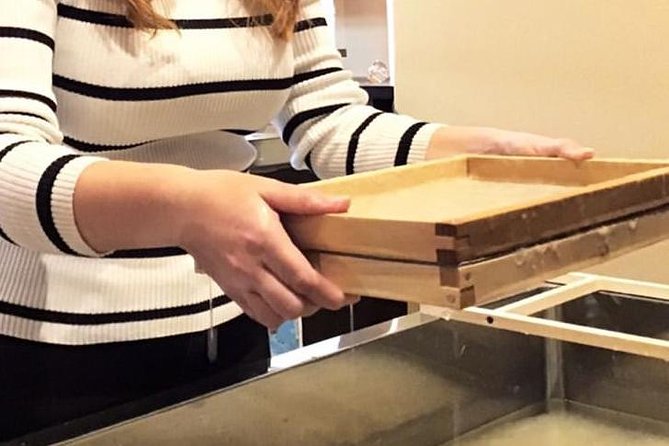
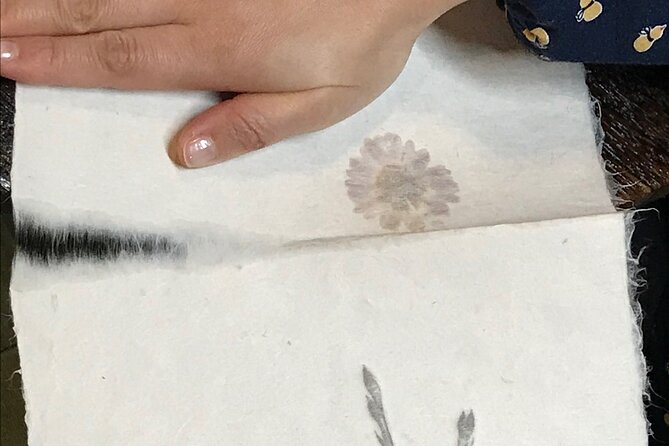
You take part in the process of forming the paper. The exact number of steps can feel surprising for a one-hour activity, and the instructor keeps things moving so you can complete a finished piece within the session. You will handle the material, form a sheet, and prepare its surface for decoration.
The result may not be perfectly even, and that is part of the point. Handmade paper has character. Small variations help show that you made it yourself rather than selected it from a shelf.
The instruction is structured enough for beginners. You do not need previous craft experience, and most people can participate. If you are nervous about making a mistake, the instructors are close by to help.
A short educational video may be shown during drying time. It explains more about the paper-making process and its background, giving you information that would be difficult to cover while your hands are busy. This pause also helps the class feel more complete rather than rushed from one manual step to the next.
A completely different kind of day out:
- Kyoto: Tea Ceremony in a Traditional Tea House in Kiyomizu
★ 4.9 · 3,519 reviews - Kyoto: Gion Make Your Own Chopsticks with Engraving Option
★ 5.0 · 3,465 reviews - Kyoto Nara Day Trip │ Kiyomizu-dera Temple + Fushimi Inari-taisha Shrine + Nara Park (Departing from Osaka/Kyoto)
★ 4.7 · 3,408 reviews - Kyoto Geisha Walking Tour: Gion District & Hidden Gems
★ 4.7 · 3,273 reviews
Decorating with cherry blossoms, maple leaves, and cut paper
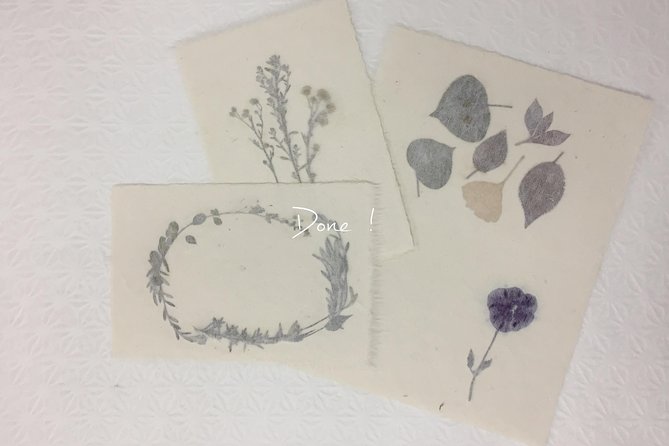
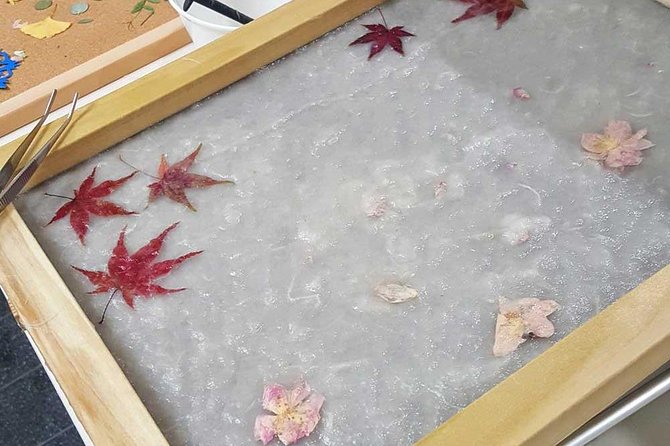
The design stage is where the class becomes personal. You choose from seasonal pressed flowers and leaves, including cherry blossoms and maple leaves, then arrange them on your paper. Paper cut-outs add another way to build a pattern without relying only on natural materials.
This is a good point to slow down. You can create something simple and balanced, or make a more playful arrangement. The instructors help with the process, but they do not turn every finished piece into the same product.
Seasonal materials make the souvenir especially suited to Kyoto. A maple leaf design suggests autumn, while cherry blossoms recall spring. Even if you visit during another season, the decorative choices connect your finished paper to familiar Japanese imagery.
The design options also help different age groups enjoy the class. Children can focus on color and shape. Adults who like careful craft work can spend more time arranging the details. You do not need to be artistic to have a good result, but you will get more from the activity if you enjoy making small choices with your hands.
Choosing postcards, a table mat, a lantern, or a wall panel
The basic session includes a finished project, but the exact choice affects both the look and the cost. A set of four regular postcards is one standard option. You can also make a table mat, a wraparound lampshade, or a larger wall panel.
Some choices require an additional fee. A lampshade, for example, costs extra, but it gives you a more substantial object to display at home. If you want a practical souvenir rather than a flat paper keepsake, the upgrade may be worth considering.
A postcard set is the sensible choice if you are packing light or have several activities planned afterward. It also gives you multiple finished pieces to share with family or friends. A table mat offers more surface area for decoration, while a lampshade turns the paper into something you can use or display.
The workshop also offers an optional additional hour of unlimited paper making at your own expense. This is useful if you want to make more gifts or need more time to experiment. For a one-hour visit, though, you should expect to complete a modest project rather than a large collection of handmade goods.
The finished souvenir and carrying it through Kyoto
One of the strongest reasons to book this class is that you leave with something you made from start to finish. It is not just a craft activity followed by a photo. You take home the paper and design that came from your own work.
The finished pieces are packaged well, which helps protect them during the rest of your trip. Still, you should plan to carry them carefully. A handmade sheet can be more awkward than a small shop-bought trinket, especially if you spend the afternoon walking through markets or taking public transportation.
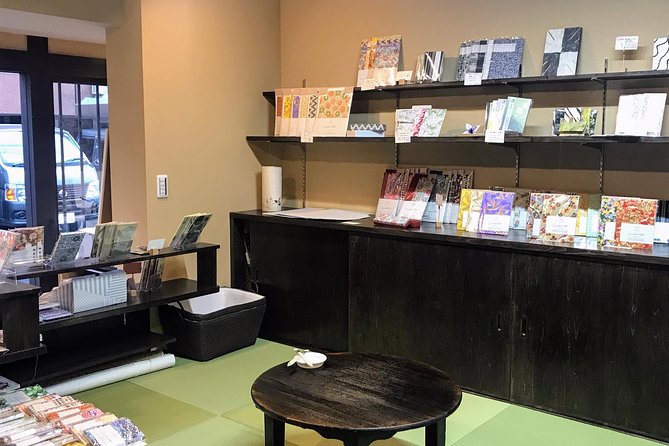
One useful detail is that the shop also sells locally made paper goods and other items. You can browse after the class, but there is no pressure to buy anything. That makes the shop a pleasant extension of the workshop rather than a sales stop disguised as a cultural activity.
If you accidentally leave something behind, the staff are helpful about sorting it out. That is reassuring when you are managing bags, phones, tickets, and a fresh paper project all at once.
What the $33.03 price really covers
At $33.03 per person, the workshop is reasonably priced for a small-group cultural activity in central Kyoto. The fee includes taxes, handling charges, instruction, and the materials used in the class. You are paying for direct teaching, not only for access to a table of supplies.
The strongest value comes from the personal instruction. A larger class might cost less, but you would likely get less attention while forming and decorating the paper. Here, a group of no more than four makes the hour feel closer to a private lesson.
The price is less attractive if you want a large number of finished items. The standard session is short, and larger projects or extra making time cost more. If you are hoping to produce gifts for an entire family, check the additional charges before you arrive and consider adding the optional second hour.
For one memorable Kyoto souvenir, the basic fee makes sense. You get a cultural lesson, a practical craft experience, and a handmade object that cannot be exactly duplicated. If your priority is the cheapest possible souvenir, a paper shop will cost less in time and effort. If your priority is understanding how the object is made, this class offers better value.
Who will enjoy this Kyoto craft class most
I would recommend the workshop to several kinds of visitors:
- Families looking for an activity that works across age groups
- Teenagers who prefer making something to simply viewing another monument
- Couples or friends who want a quiet shared experience
- Craft lovers who enjoy paper, flowers, and careful design
- First-time visitors needing an indoor plan for a rainy morning
- Anyone who wants a personal souvenir rather than a mass-produced item
It is also a good fit if you have already seen several temples and need a gentler hour. You do not need to dress for strenuous activity, and the class does not require previous knowledge.
I would hesitate only if your schedule is packed tightly or you dislike carrying fragile handmade items. The class lasts about an hour, but central Kyoto transit and walking still require planning. You should also avoid booking it immediately before a far-away reservation unless you have allowed enough time to finish and leave calmly.
Practical tips for a smoother visit
Book with the group size in mind. The maximum is four people, so a family or friend group larger than that may not fit into one session. Children must have an adult with them.
Arrive with the address and meeting point saved on your phone. The workshop is near public transportation, but a small traditional house may not be as obvious as a large commercial building.
Think about your souvenir before you begin. If you want postcards, the standard session should suit you. If you prefer a lampshade, larger paper design, or extra gifts, ask about the supplement and the additional hour.
Leave room in your day for the finished paper. The work is packaged, but you will still need to carry it. A visit near central shopping areas makes sense because you can continue through the covered market or nearby streets rather than crossing Kyoto with the project.
The cancellation policy is flexible up to 24 hours before the start time, when you can receive a full refund. Changes or cancellations inside that 24-hour window are not accepted for a refund.
Should you book the washi workshop?
Yes, if you want a small, friendly cultural activity with a real takeaway. The class offers far more than a quick souvenir-making stop because you learn the basic process, decorate the paper yourself, and hear about the craft’s background in a setting capped at four people.
I would book the standard hour for a first visit, especially if you want four postcards or a modest project. Choose the extra hour if you enjoy crafts and want to produce more gifts. For families, the patient guidance from Hiro and Junko is a major advantage. For adults, the quiet pace and handmade result make a welcome break from Kyoto’s busy sights.
The best reason to go is simple: you leave with a paper object that carries your decisions in every flower, leaf, and cut-out. That is a much better souvenir than something you could have bought anywhere.
FAQ
How long does the washi papermaking experience last?
The standard activity lasts approximately one hour. You can pay for an additional hour of unlimited paper making if you want more time or more finished items.
Where does the workshop begin and end?
It begins and ends at 345 Sanjōchō, Nakagyo Ward, Kyoto, 604-8205, Japan.
How do I reach the workshop by public transportation?
It is about a nine-minute walk from Exit 24 of Shijo Station on the Kyoto Metro Karasuma Line or Karasuma Station on the Hankyu Line. It is also about a six-minute walk from Exit 6 of Karasuma Oike Station on the Kyoto Metro Karasuma Line.
Is the instruction available in English?
Yes. The workshop is operated by bilingual instructors who speak Japanese and English.
How many people can join the class?
The activity has a maximum of four participants.
What is included in the price?
The price includes the workshop materials, instruction, taxes, fees, and handling charges. Transportation to and from the workshop is not included.
Just added in Kyoto
- The “Golden Route” and Ancient Japan by DIAMIR Erlebnisreisen – 14-Day Tour★ 2.0 · 2 reviews
- Japan: Castles & Cuisine by G Adventures – 6-Day Kyoto to Osaka Tour★ 4.5 · 4 reviews
- Cycle Japan by Explore! – 13-Day Kyoto to Tokyo Tour★ 4.7 · 12 reviews
- Cycle Japan by Intrepid Travel – 11-Day Kyoto to Tokyo Tour★ 4.8 · 2 reviews
- Classic Japan by Intrepid Travel – 11-Day Kyoto to Tokyo Tour★ 4.4 · 14 reviews
- Ancient & Modern Japan 14-Day Tour by Exodus Adventure Travels★ 4.4 · 40 reviews
- 5 Day Cultural Adventure of Kyoto, Nara & Osaka by Tourist Journey★ 2.5 · 2 reviews
- 12 Days Kinosaki Onsen Escape: A Journey Through Japan’s Timeless Towns by UME Travel★ 4.8 · 5 reviews
Morning, compared.
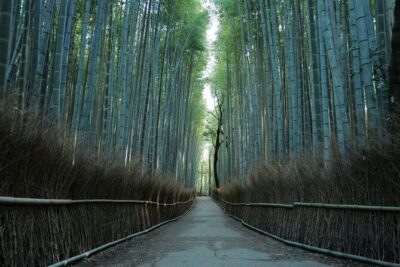
Kyoto Early Morning Tour with English-Speaking Guide
Read our review →Early Morning Tour with English-Speaking Guide
Read our review →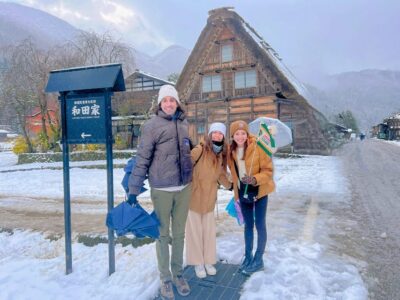
World Heritage Shirakawa-go Morning Guided Tour
Read our review →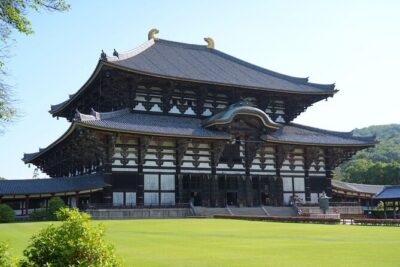
Nara Early Morning Tour (Kyoto or Osaka Departure Available)
Read our review →

Hiroshima in a Nutshell: Morning Bike Adventure
Read our review →