
Reviewed · TEA CEREMONIES
2 Types of Japanese Sweets making and Tea Ceremony
Sweet-making tells you plenty about Japan. This Kyoto workshop combines seasonal nerikiri, traditional wasanbon ohigashi, and matcha in one tidy 125-minute session. I like the use of bean paste from long-established Kyoto shops, and I like that you do not merely watch the tea portion: you grind matcha and make your own cup.
The price is a strong point. At $28 per person, you get three related activities rather than one short demonstration. The main consideration is the style of the tea experience. It is casual and instructional, not a formal, highly ritualized tea ceremony, and the room may feel more like a classroom than a quiet teahouse.
In This Review
- Key points to know before booking
- Why this Kyoto sweets workshop is worth your time
- Finding the venue beside Gojo Station
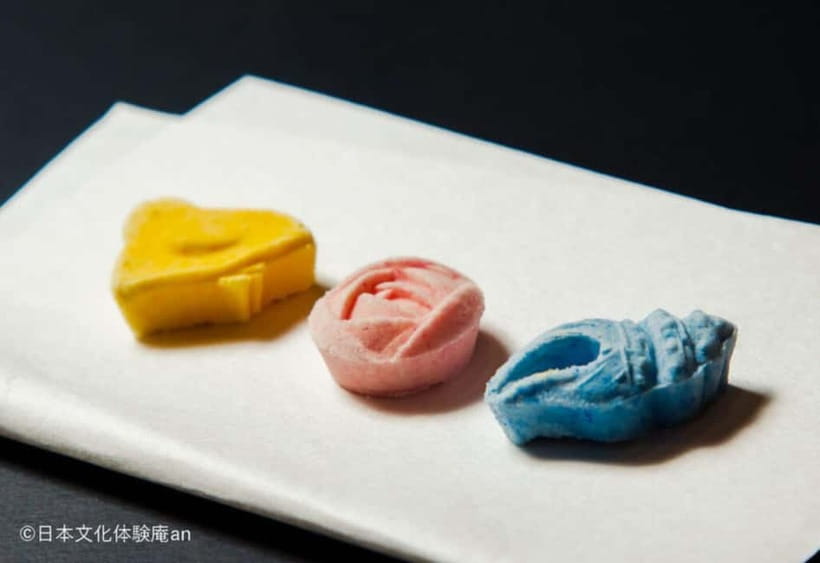
- Starting with wasanbon ohigashi
- Shaping two seasonal nerikiri sweets
- Grinding and preparing your own matcha
- The teaching style and English support
- Atmosphere: workshop rather than quiet tearoom
- Is $28 a good value?
- Who will enjoy this experience most?
- Booking, cancellation, and timing tips
- Should you book the Gojo sweets and matcha workshop?
- FAQ
- Where is the Japanese sweets and tea experience located?
- How long does the experience last?
- What sweets will I make?
- Will I make matcha myself?
- Is this a formal Japanese tea ceremony?
- Is English available?
- Is the venue wheelchair accessible?
- What optional extras cost additional money?
- Can I cancel for a full refund?
Key points to know before booking
- Three hands-on activities: Make wasanbon ohigashi, two seasonal nerikiri sweets, and your own matcha.
- Kyoto ingredients: The white and red bean pastes come from long-established Kyoto shops.
- Seasonal designs: Your nerikiri shapes change with the season, adding a small connection to Japanese nature and the calendar.
- Convenient location: The venue is one minute from Exit 1 of Gojo Station on the Subway Karasuma Line.
- English help is available: The instructor teaches in Japanese, with English translation provided as much as possible.
- Allow the full 125 minutes: The schedule includes short breaks, explanations, preparation, a photo period, and time to eat and drink.
Why this Kyoto sweets workshop is worth your time
I like this experience because it joins two parts of Japanese food culture that are often separated. You learn how sweets support tea, then prepare the tea itself. The result is more useful than simply eating a pretty confection and moving on.
The workshop also gives you three different kinds of making. Ohigashi is a dry sweet formed from wasanbon, a traditional Japanese sugar. Nerikiri uses white and red bean paste and is shaped into seasonal designs. Matcha brings a different task altogether, since you grind the tea and whisk your own drink.
That variety helps justify the $28 cost. A shorter sweets class might leave you with one item and a quick explanation. Here, you spend about two hours learning, shaping, tasting, and taking pictures. The experience is not built around a grand historic setting, but it gives you plenty to do.
The score of 4.6 from 17 ratings suggests a generally strong experience, with the best response focused on the friendly teaching, the amount of hands-on work, and the price. The main split is about atmosphere. Some people find the session warm and informative, while others find the room somewhat clinical or noisy.
More Tea Ceremonies in Kyoto
- Kyoto: Tea Ceremony in a Traditional Tea House in Kiyomizu
★ 4.9 · 3,519 reviews - Kyoto: Tea Ceremony Ju-An at Jotokuji Temple
★ 4.9 · 3,207 reviews - Kyoto: 45-Minute Tea Ceremony Lesson Experience
★ 4.3 · 2,378 reviews
Finding the venue beside Gojo Station
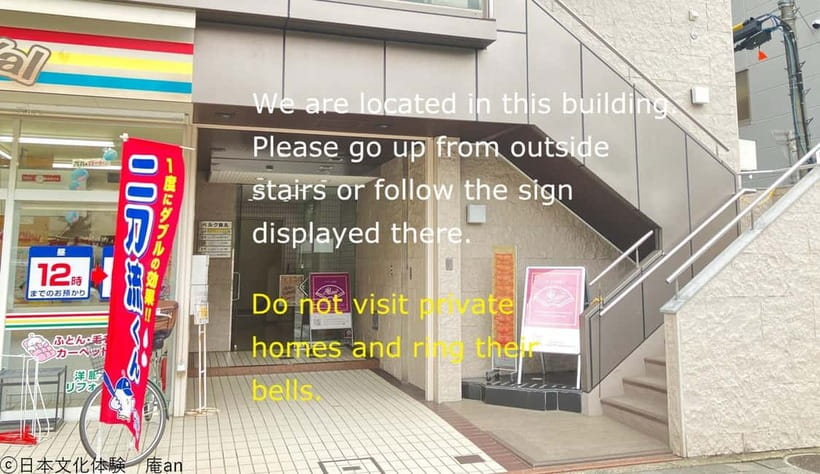
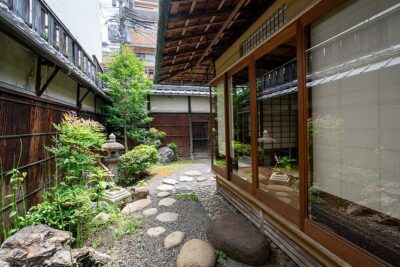
The location is one of the easiest parts of the plan. The venue is a one-minute walk from Exit 1 of Gojo Station on the Subway Karasuma Line, and the entrance faces Gojo-dori, the main street.
That detail matters in Kyoto, where small businesses can be easy to miss on side streets. After leaving Exit 1, look for the entrance facing the main road rather than assuming the activity is hidden in a quiet lane.
You should arrive on time. The provider says the event will not be held for late arrivals, even when the delay is caused by transport or another problem. Build in a little extra time to reach Gojo Station, especially if you are coming from another part of the city.
The building has no elevator, and stairs are required to reach each venue. The activity is marked wheelchair accessible, but this stair information is important. If you use a wheelchair or have difficulty with stairs, contact the provider before booking so you can confirm what access means for your particular visit.
Starting with wasanbon ohigashi
The first making activity is ohigashi, a dry Japanese sweet made with wasanbon. You begin with an explanation of traditional Japanese sweets, then move into the hands-on portion.
Ohigashi differs from the soft, paste-based nerikiri that follows. Its appeal is in the sugar itself and in the way a simple ingredient can become a carefully formed sweet. You get an early lesson in restraint: Japanese confectionery often relies on texture, shape, and presentation rather than heavy flavor.
This first section is scheduled at the beginning, with a short break after about 20 minutes. That quick pace keeps the opening active, but it also means you should listen closely during the demonstration. The instructor must explain the process before you start, and there is not much time to drift off and catch up later.
The use of wasanbon gives this part a sense of place. You are not just molding generic sugar candy. The workshop specifically uses a traditional Japanese sugar, which helps explain why ohigashi has a place beside matcha.
Shaping two seasonal nerikiri sweets
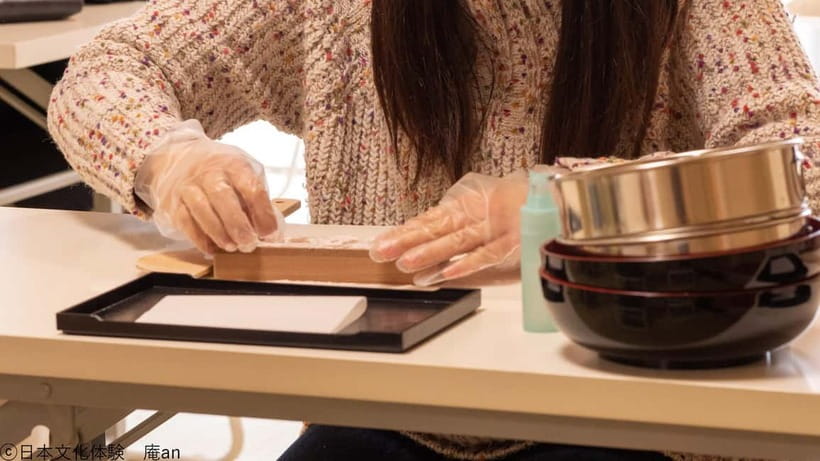
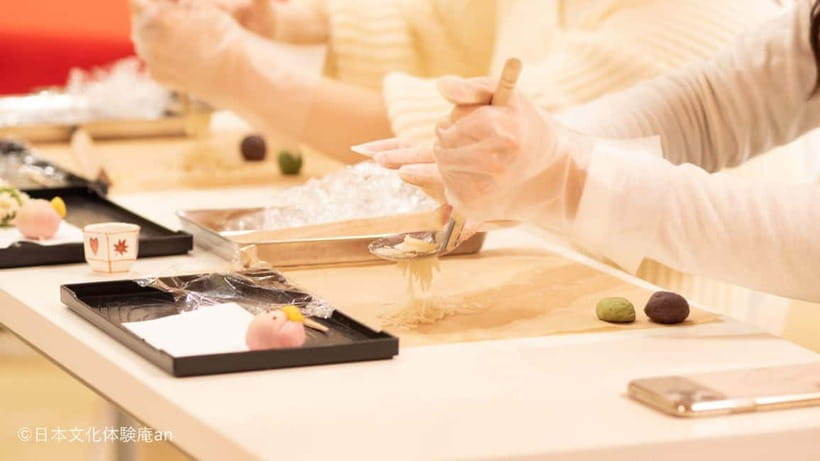
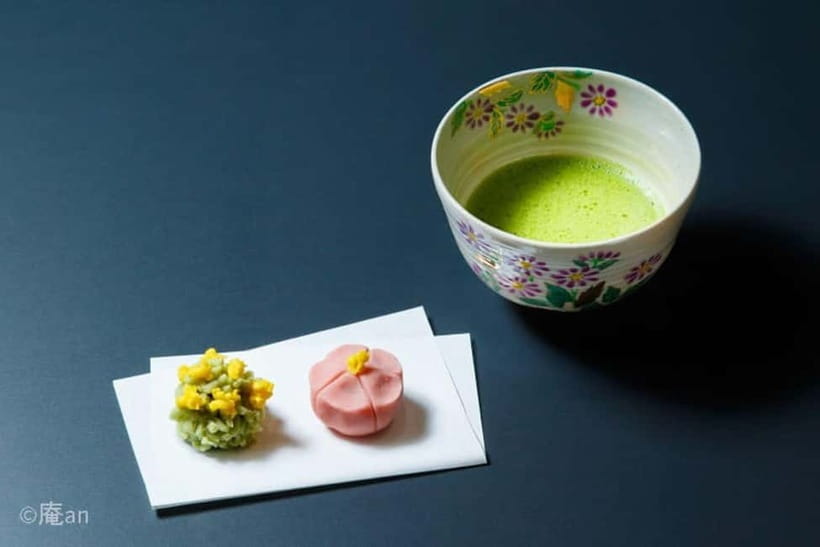
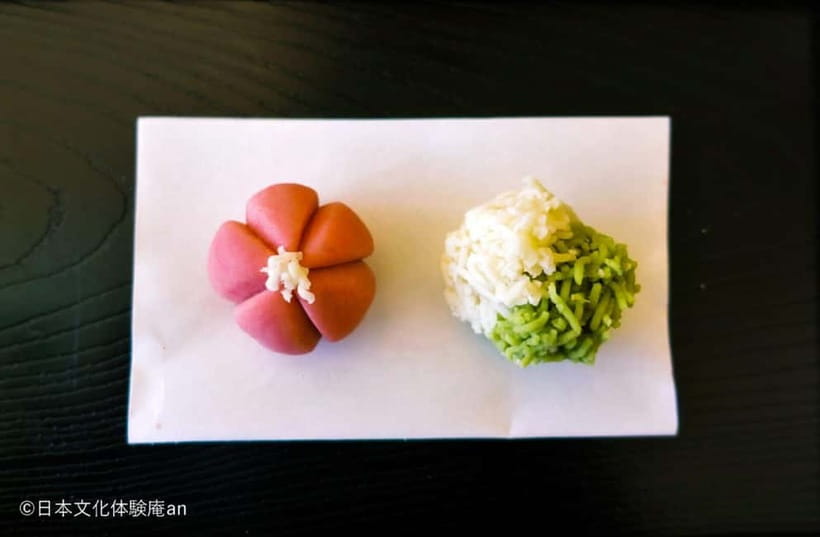
The nerikiri portion is the heart of the workshop. You make two sweets, one flower-shaped and one kinton-style, using white and red bean paste from long-established Kyoto shops.
The flower-shaped nerikiri gives you a clear introduction to form. The kinton nerikiri offers a different appearance and texture, so the two pieces do not feel like the same task repeated. The seasonal designs are important here. Japanese sweets often reflect flowers, plants, or other signs of the time of year, and the workshop uses that idea to guide the shapes you make.
The ingredients matter, too. White bean paste and red bean paste are common foundations in Japanese confectionery, but the quality and preparation affect the final result. Using paste produced by established Kyoto shops gives the lesson a stronger local connection than a generic cooking activity.
You should not expect professional pastry work on your first attempt. The point is to learn the shaping method and see how much care goes into a small sweet. The finished pieces may not look identical to the instructor’s, which is part of the fun. Their size and design make the activity manageable even if you have limited cooking experience.
A break follows the nerikiri work. The schedule places this around the 85-minute mark, giving you a pause before the tea portion. That break also keeps the workshop from feeling like two straight hours of close handwork.
A completely different kind of day out:
- PERFECT KYOTO 1-Day Bus Tour
★ 5.0 · 13,518 reviews - [Kyoto & Nara Day Tour] Sagano Scenic Railway & Nara Park & Fushimi Inari Taisha Thousand Torii Gates & Togetsukyo Bridge & Bamboo Grove & Kimono Forest (Departing from Osaka)
★ 4.9 · 10,942 reviews - Kyoto: Fushimi Inari, Kinkakuji, Bamboo Grove 1 Day Bus Tour
★ 4.8 · 4,316 reviews - Kyoto: Gion Make Your Own Chopsticks with Engraving Option
★ 5.0 · 3,465 reviews
Grinding and preparing your own matcha
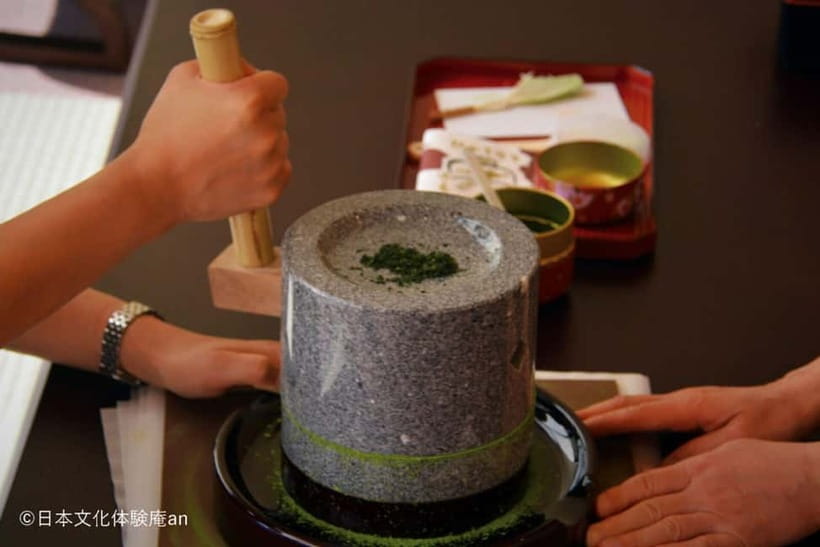
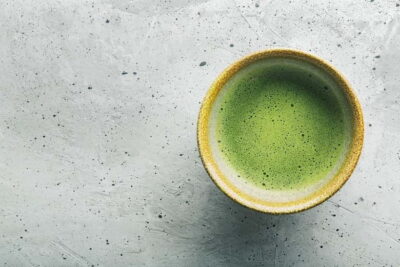
After the sweets, the instructor explains tea and demonstrates matcha grinding. This is followed by the tea ceremony experience, where you make your own matcha.
The wording here is worth understanding before you reserve. The session is casual and educational. It introduces tea practice and lets you prepare a cup, but it is not presented as a formal ceremony with a highly elaborate sequence of movements. One participant expected a more traditional ceremony and found the tea section closer to an explanation followed by matcha preparation.
That is not necessarily a weakness. If you want an approachable first look at matcha, making your own drink can be more satisfying than sitting quietly through a long formal presentation. You can connect the tea to the sweets you made earlier, which gives the entire session a clear purpose.
The single-origin special matcha is another good detail. It signals that the tea is selected with care rather than treated as an afterthought. You should still book this for the making and learning, not for a full tea-master performance.
The final portion includes picture time, followed by eating and drinking. You finish at about 125 minutes, so you can plan your next Kyoto activity without losing an entire afternoon.
The teaching style and English support
The instructor teaches in Japanese, and English translation is provided as much as possible. That means the amount and smoothness of English support may vary, so you should contact the provider in advance if detailed English instruction is essential.
The available feedback gives a useful picture of the teaching. Maiko is specifically praised for being attentive and informative, and another assessment describes the instructor as friendly and enthusiastic with good English. Those are encouraging signs for English-speaking visitors, though the official language remains Japanese.
The activities themselves also help bridge language gaps. You can watch the shaping demonstrations, copy the movements, and follow the sequence with your hands. Still, the explanations about ingredients, tea, and traditional sweets may be less complete if translation is limited on your particular date.
A practical tip: contact the provider before booking if you want English added to the reservation. Do not assume every session will offer the same level of translation.
Atmosphere: workshop rather than quiet tearoom
The room can affect your impression of the experience. One assessment describes a classroom-like setting that felt clinical rather than intimate. Another notes that a noisy, disrespectful group made the session less pleasant.
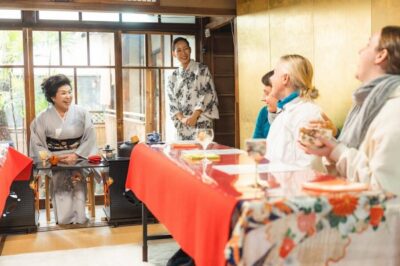
That is useful to know because the workshop’s atmosphere is not fully under the instructor’s control. You may get a calm, attentive group, or you may share the room with people who talk through explanations. The teaching remains the same, but the feeling of the tea portion can change.
I would frame this as a hands-on culture class, not a private tea ceremony. If you want a polished, silent setting with a strong sense of ceremony, this may feel too practical. If you prefer to make something, ask questions, and keep moving, the classroom format is likely a fair trade for the price.
The compact schedule also supports that format. You move from ohigashi to nerikiri to matcha, with explanations and breaks placed between each stage. It is organized for participation rather than lingering.
Is $28 a good value?
At $28, the workshop offers good value for the amount of activity. You make one ohigashi preparation, two seasonal nerikiri sweets, and a cup of matcha. You also receive explanations about Japanese sweets, a matcha grinding demonstration, tea instruction, picture time, and time to consume what you made.
The price becomes especially attractive if you are choosing between several short cultural activities in Kyoto. This one covers sweets and tea in a single booking, and the central location saves you time getting there.
A few optional charges are worth including in your budget:
- Adding color costs 200 yen.
- A take-out box costs 100 yen.
- An experience completion certificate costs 300 yen.
These extras are not necessary for the main activity. The take-out box may be useful if you want to save your sweets, but the base experience already includes the making and eating portions.
Children under two who sit on a parent’s lap are free. Anyone who does not take part in the activity cannot enter, so this is not a convenient drop-in option for a companion who only wants to watch.
Who will enjoy this experience most?
I would recommend this workshop to you if you want a practical introduction to Japanese confectionery and matcha without committing to a full-day food class.
It suits:
- First-time visitors who want a structured cultural activity in Kyoto.
- Couples and friends who enjoy making food together.
- Families with children old enough to follow demonstrations and shape sweets.
- Anyone curious about the connection between Japanese sweets and tea.
- Visitors looking for a central activity near a subway station.
- People who prefer a casual lesson to a formal ceremony.
You may want another option if your main goal is a formal tea ceremony, a private setting, or a fully English-led class. The activity is also less suitable if you cannot manage the stairs, unless the provider confirms an arrangement that works for you.
Booking, cancellation, and timing tips
The activity operates from 10:00 to 17:00. Reservations received after 17:00 are processed the next day, so do not expect an immediate response to a late-evening request.
You can cancel up to 24 hours in advance for a full refund, and the reserve-now, pay-later option helps keep your Kyoto schedule flexible. Once the cancellation fee applies, changing the date or time can bring another specified charge.
Do not book this with a very tight connection to another activity. The session lasts 125 minutes, and the provider does not hold the event for late arrivals. Also remember that travel costs to the venue are not compensated if you cancel.
Should you book the Gojo sweets and matcha workshop?
Book it if you want three hands-on Japanese food experiences for $28 and you are comfortable with a casual, classroom-style setting. The seasonal nerikiri, Kyoto bean paste, wasanbon sugar, and single-origin matcha give the session real substance, while the subway location makes it easy to fit into a day of sightseeing.
Skip it if you are seeking a silent, formal tea ceremony with elaborate etiquette. For that purpose, the casual tea lesson may leave you wanting more. For an approachable introduction that lets you shape sweets, prepare matcha, and eat what you make, this is a well-priced Kyoto activity with enough variety to earn its place on your schedule.
FAQ
Where is the Japanese sweets and tea experience located?
It is one minute from Exit 1 of Gojo Station on the Subway Karasuma Line. The entrance faces Gojo-dori, the main street.
How long does the experience last?
The full experience lasts 125 minutes, or 2 hours and 5 minutes.
What sweets will I make?
You will make wasanbon ohigashi, a flower-shaped nerikiri, and a kinton nerikiri. The two nerikiri sweets match the season.
Will I make matcha myself?
Yes. The session includes a matcha grinding demonstration, followed by a casual tea experience where you make your own matcha.
Is this a formal Japanese tea ceremony?
It is a casual and informative tea experience. It includes explanations and making your own matcha rather than presenting itself as a fully formal tea ceremony.
Is English available?
The instructor’s language is Japanese, and English translation is provided as much as possible. You can contact the provider if you would like English support added.
Is the venue wheelchair accessible?
The activity is listed as wheelchair accessible, but the building has no elevator and stairs are required to reach each venue. Contact the provider before booking to confirm access for your needs.
What optional extras cost additional money?
Adding color costs 200 yen, a sweets take-out box costs 100 yen, and an experience completion certificate costs 300 yen.
Can I cancel for a full refund?
You can cancel up to 24 hours in advance for a full refund. After that point, cancellation fees may apply, and reservations received after 17:00 are treated as received the next day.
More Dessert Tours in Kyoto
- Kyoto: Japanese Traditional Sweets Making and Tea Ceremony
★ 4.4 · 314 reviews - Kyoto Wagashi(Japanese sweets) Cooking Class near Fushimiinari
★ 5.0 · 60 reviews - Kyoto: Wagashi (Japanese sweets) Cooking near Fushimiinari
★ 5.0 · 40 reviews - Kyoto: Traditional Tea Ceremony with Matcha & Sweets in Gion
★ 4.9 · 27 reviews
Just added in Kyoto
- The “Golden Route” and Ancient Japan by DIAMIR Erlebnisreisen – 14-Day Tour★ 2.0 · 2 reviews
- Japan: Castles & Cuisine by G Adventures – 6-Day Kyoto to Osaka Tour★ 4.5 · 4 reviews
- Cycle Japan by Explore! – 13-Day Kyoto to Tokyo Tour★ 4.7 · 12 reviews
- Cycle Japan by Intrepid Travel – 11-Day Kyoto to Tokyo Tour★ 4.8 · 2 reviews
- Classic Japan by Intrepid Travel – 11-Day Kyoto to Tokyo Tour★ 4.4 · 14 reviews
- Ancient & Modern Japan 14-Day Tour by Exodus Adventure Travels★ 4.4 · 40 reviews
- 5 Day Cultural Adventure of Kyoto, Nara & Osaka by Tourist Journey★ 2.5 · 2 reviews
- 12 Days Kinosaki Onsen Escape: A Journey Through Japan’s Timeless Towns by UME Travel★ 4.8 · 5 reviews
Tea Ceremonies, compared.
Tea Ceremony in a Traditional Tea House in Kiyomizu
Read our review →
World Heritage Kyoto & Nara Uji Authentic Matcha Experience
Read our review →
Browse the lists this tour appears in