
Reviewed · CASTLES AND HISTORIC SITES
Imperial Palace Tour: Discover Samurai History with a Local Guide
Tokyo’s past is hiding in plain sight. This two-hour walking tour brings you into the Imperial Palace East Gardens, where Edo Castle ruins, old watchtowers, stone walls, and formal gardens tell the story of samurai rule and imperial Japan. I like the small group limit of eight people, which should make it easier to hear the guide and ask questions. I also like the low $12.90 price, especially since the route includes several of central Tokyo’s most important historic sights.
The main drawback is the meeting point. The tour begins at the Starbucks in Wadakura Fountain Park, and one person had trouble finding the guide at the start. I would arrive early, keep the booking confirmation handy, and contact the operator if the guide is not easy to spot.
At a 4.9 out of 5 rating from 20 ratings, with 100 percent recommending the experience, this is a strong choice for a short introduction to Tokyo’s imperial and samurai past. Just keep your expectations in check: you are touring the palace grounds and historic remains, not entering the Emperor’s private residence.
In This Review
- Key points before you book
- Why the Imperial Palace grounds are worth your time
- Meeting at Wadakura Fountain Park
- Sakurada Tatsumi Yagura and the castle’s defensive side
- Nijūbashi, the famous double-arched bridge
- The East Gardens and the Tenshudai ruin
- The Imperial Palace and Japan’s changing political center
- What the guide adds to the walk
- Is $12.90 good value?
- Who will enjoy this experience most?
- Who may want a different palace experience?
- Should you book the Imperial Palace tour?
- FAQ
- How long does the Imperial Palace tour last?
- What does the tour visit?
- Where does the tour begin?
- Where does the tour end?
- How much does the tour cost?
- Is admission to the stops included?
- How many people can join the group?
- Is this a mobile ticket experience?
- Is the tour suitable for people with limited fitness?
- Can I cancel for a full refund?
Key points before you book
- Edo Castle remains: See stone walls, gates, the Tenshudai base, and other traces of the former Tokugawa stronghold.
- Small group of up to eight: The size should allow for a more personal walk and easier conversation with the guide.
- Four historic stops: The route includes Sakurada Tatsumi Yagura, Nijūbashi, the East Gardens, and the Imperial Palace area.
- Strong value at $12.90: The price is modest for a guided two-hour walk through one of Tokyo’s most important historic districts.
- Free admission at each stop: The listed sights do not require a separate admission ticket.
- Moderate walking required: You should be comfortable walking outdoors on paths around gardens, moats, and castle remains.
Why the Imperial Palace grounds are worth your time
The Imperial Palace can feel puzzling if you arrive without context. Much of the inner residence is closed to the public, and the modern palace buildings are not the main attraction on this walk. The appeal comes from seeing how Tokyo’s center developed around the old castle and how political power shifted from shogun to emperor.
The East Gardens occupy part of the former Edo Castle site. This was once the headquarters of the Tokugawa shogunate, the military government that ruled Japan for centuries. Today, you see a calmer setting of clipped gardens, open paths, stonework, gates, and surviving castle features.
I like this kind of sightseeing because the history is tied to physical details. A guide can point to a wall and explain its defensive role, or show how a watchtower helped protect the castle. Without that explanation, some of the ruins may look like attractive pieces of old masonry. With it, the grounds become a map of power.
The two-hour length is also sensible. You get enough time to cover several major points without giving up half a day. If you have only a short stay in Tokyo, this tour fits neatly into a morning or afternoon.
More Castles and Historic Sites in Tokyo
- Tokyo: Imperial Palace and Shogun Historical Walking Tour
★ 5.0 · 2,251 reviews - Tokyo Castle & Imperial PalaceーShogun Walking Tour
★ 4.7 · 1,068 reviews - Tokyo: Samurai Ninja Museum Guided tour and Experience
★ 4.6 · 1,010 reviews
Meeting at Wadakura Fountain Park

The tour starts at Starbucks Coffee in Wadakura Fountain Park, at 3-1 Kōkyogaien in Chiyoda City. The location is near public transportation, but the palace area has broad open spaces, multiple entrances, and plenty of paths. Give yourself extra time to find the exact meeting spot.
This is the one part of the arrangement that deserves care. A previous participant had difficulty locating the guide at the beginning, although the rest of the walk became interesting and enjoyable. The operator responded with an apology and said the feedback would help improve communication.
My practical advice is simple:
- Arrive before the scheduled start.
- Check the exact Starbucks and park name on your confirmation.
- Keep your phone available in case the guide needs to contact you.
- If you cannot see the guide, ask staff at the meeting point rather than wandering toward the palace gates.
The tour ends back at the same meeting point. That makes planning easier because you do not have to work out a new pickup location after the walk.
Sakurada Tatsumi Yagura and the castle’s defensive side
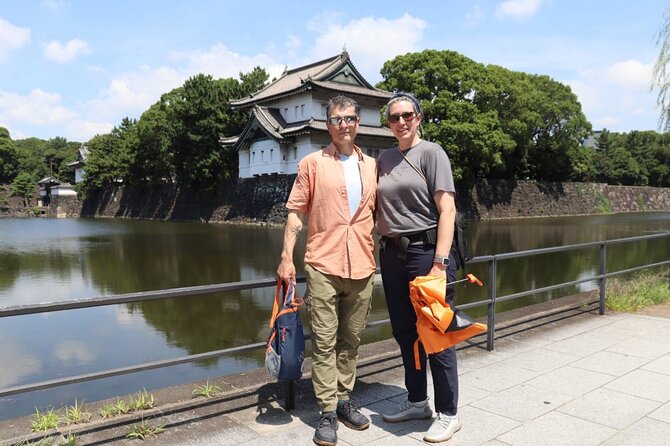
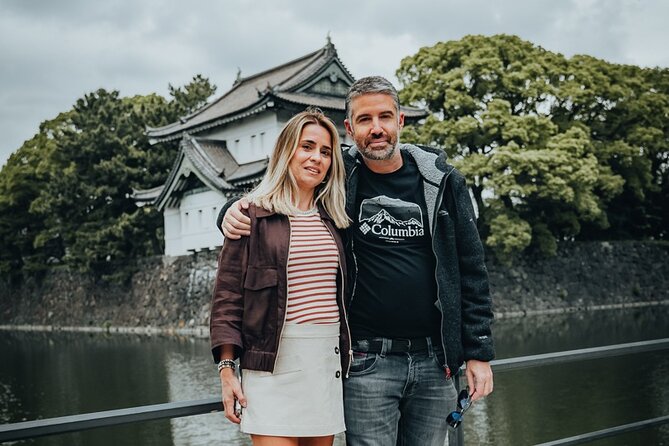
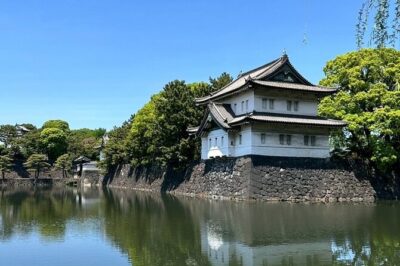
The first listed stop is Sakurada Tatsumi Yagura, also called Sakurada Nijū Yagura. This two-story watchtower is one of the few surviving structures from the Edo period within the palace grounds.
A yagura was more than a decorative building. It served as a lookout and defensive position, giving guards a strong view over the castle approaches. The tower helps you picture Edo Castle as a working fortress rather than a palace in the modern European sense.
The scheduled time here is about 30 minutes, which gives the guide room to explain the structure and its place in the castle system. This is likely one of the more useful stops for people who want to understand samurai-era security and military design.
You should not expect to enter the tower. The value comes from seeing the surviving exterior and learning how it fit into the wider defenses. Take time to look at the proportions, the position beside the moat, and the way the stonework and tower work together.
For photography, this is a good point to pause. The tower is a distinctive reminder that the palace grounds preserve more than gardens. They also preserve the outline of a former seat of military power.
Nijūbashi, the famous double-arched bridge
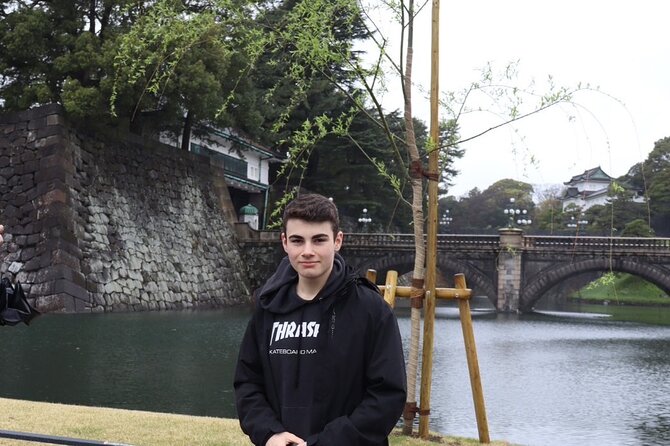
The second stop is Nijūbashi, or the Two-tiered Bridge. It is one of the best-known views associated with the Imperial Palace and spans the moat on the approach to the inner grounds.
The bridge is admired for its elegant stone form and formal setting. It is also a useful place to understand the separation between the public city and the palace interior. The moat, bridge, gates, and walls create a clear sense of controlled access.
The scheduled stop lasts about 15 minutes. That is enough for an explanation, photographs, and a look across the water, but it is not meant to be a long visit. The bridge is mainly a viewing point, so people who want a great deal of time at each sight may find this portion brief.
I would treat Nijūbashi as a visual pause rather than the historical center of the tour. It gives you one of Tokyo’s classic palace views, then the walk moves back toward the older castle remains in the East Gardens.
A completely different kind of day out:
- Tokyo Disney Resort – Tokyo Disneyland & Tokyo DisneySea Park Tickets
★ 4.8 · 99,488 reviews - SHIBUYA SKY Ticket
★ 4.7 · 46,509 reviews - JR Whole Japan Rail Pass
★ 4.8 · 29,150 reviews - Mt Fuji and Hakone 1-Day Bus Tour Return by Bullet Train
★ 5.0 · 26,383 reviews
The East Gardens and the Tenshudai ruin
The East Gardens are the heart of this experience. They are open to the public and occupy former Edo Castle grounds, with stone walls, gates, seasonal flowers, and Japanese garden design.
The most important remains include the Tenshudai, the stone base of the former castle keep. The keep itself no longer survives, but the base gives you a sense of the scale and ambition of Edo Castle. A guide can help connect this broad stone platform to the Tokugawa government that once controlled Japan from here.
This is where the tour’s theme comes together. You get samurai history, castle architecture, imperial history, and Tokyo’s growth in one setting. The gardens are peaceful now, but their walls and foundations point to a much more guarded past.
The 30-minute allocation should allow for a focused visit. You may see seasonal planting and carefully maintained paths as well as the ruins. Since this is a walking tour, the balance between nature and history is part of its appeal. You are not simply looking at a monument. You are moving through a former castle compound that has been reshaped over time.
The drawback is that ruins require imagination. If you want intact castle rooms or a fully preserved fortress, this will not provide that. The tour works best when you enjoy reading the site through walls, foundations, gates, and the guide’s explanation.
The Imperial Palace and Japan’s changing political center
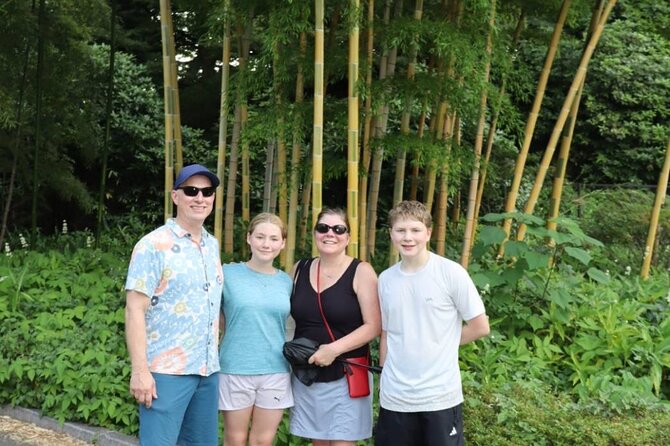
The final listed stop is the Imperial Palace itself, the Emperor of Japan’s residence in Chiyoda Ward. The palace sits on the former Edo Castle site, so the visit brings together two very different chapters of Japanese government.
The Tokugawa shoguns once ruled from this location. Later, imperial power took a new form, and the site became associated with the modern Japanese state. That shift is one of the most interesting ideas the guide can explain during the walk.
The palace area includes moats, stone walls, and the East Gardens. Much of the inner residence remains restricted, so it is important to understand what this tour offers. You are seeing the grounds and public areas around the palace, along with historic remnants of Edo Castle. This is not an indoor palace tour.
The final 30-minute section should help place the earlier stops in context. After seeing the watchtower, bridge, and castle base, you can better understand why the palace district remains such an important part of Tokyo.
I especially like the way this route links Tokyo’s past to its present. The city around the palace is modern and intensely urban, yet the old castle walls and moats remain at its center. You do not have to travel far from the main city to see evidence of samurai rule.
What the guide adds to the walk
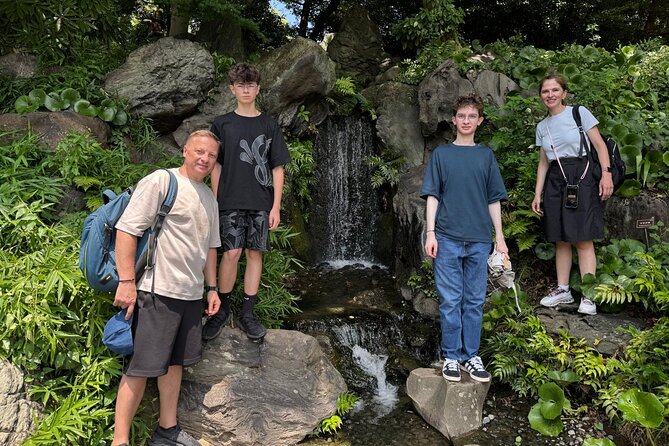
The guide is the reason to book this rather than visit the gardens alone. The paths and ruins can be enjoyed independently, but the tour promises stories about emperors, samurai warriors, political power, and Tokyo’s evolution.
The best commentary should answer questions such as:
- Why was Edo Castle built and defended in this way?
- How did the Tokugawa shogunate use the site?
- What changed when imperial authority became central?
- Why do only certain castle structures remain?
- How do the gardens fit into the former castle compound?
The available information does not name the individual guide, so you should not expect a particular person or language specialist unless your booking confirmation says otherwise. Still, the small group limit of eight is a real advantage. A group this size is easier to manage around narrow paths and historic features, and you have a better chance to ask about details that catch your eye.
One rating of four out of five described a poor start caused by difficulty finding the guide, followed by an interesting tour. That suggests the communication at the meeting point deserves attention, but it also indicates that the main walk can recover once the group gets moving.
Is $12.90 good value?
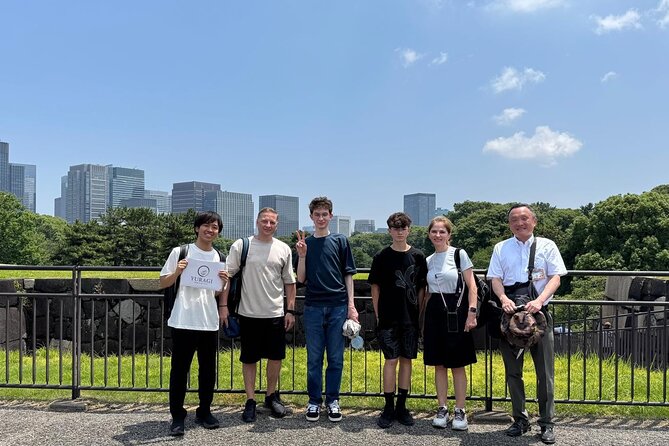
At $12.90 per person, this is inexpensive for a two-hour guided walk in central Tokyo. The attractions themselves have free admission, so you are mainly paying for the guide’s time, route planning, and historical explanation.
That matters because the palace grounds are easy to visit without paying for entry. If you are happy to read signs and explore at your own pace, you can see much of the area independently. The tour earns its price when you want the story behind the stone walls and castle remains.
The maximum group size of eight also improves the value. It is not a large coach outing where the guide must speak to a crowd. A smaller group should feel more manageable and personal, although the exact atmosphere depends on the group that joins your departure.
Group discounts are available, which may make the cost even more attractive for families or parties booking together. Mobile tickets add convenience, since you can keep the booking details on your phone rather than carry printed paperwork.
The free cancellation policy provides some useful flexibility. You can cancel for a full refund up to 24 hours before the start time. Cancellations or changes made within 24 hours are not refunded or accepted, and the cut-off uses Tokyo local time.
Who will enjoy this experience most?
I would recommend this tour to first-time visitors who want a clear introduction to Tokyo’s political and samurai past. It also suits people who prefer a short guided walk rather than a long museum visit.
History fans should appreciate the combination of Edo Castle remains and imperial landmarks. Photographers may enjoy the watchtower, bridge, moat, stone walls, and garden paths. The route also works for people who want a calm break from Tokyo’s busier shopping districts.
Families can consider it if children are comfortable walking and listening to historical explanations. The small group size may make the experience easier to follow than a large public tour, though the provided information does not specify a child age range or special family activities.
You should have a moderate level of physical fitness. The tour is on foot and takes place around outdoor paths, gardens, and castle remains. The information does not give a distance, step count, or detailed accessibility notes, so contact the provider if you need specific mobility guidance.
Service animals are allowed. The activity is near public transportation, which helps with access from other parts of Tokyo.
Who may want a different palace experience?
This may not be right for you if your main goal is to enter the Emperor’s residence or see furnished palace rooms. The tour focuses on public grounds, the East Gardens, and historic remains.
It may also disappoint you if you want a full-day historical program with museums, castle interiors, or a long samurai demonstration. The experience lasts about two hours and keeps its attention on walking, viewing, and commentary.
Independent explorers may prefer to visit the free East Gardens alone. In that case, the $12.90 fee is not necessary for entry. The tour makes more sense when you want help interpreting what you see.
Finally, do not cut the arrival time too close. The only specific criticism available concerns difficulty finding the guide at the start. That is easy to reduce with an early arrival and careful attention to the meeting instructions.
Should you book the Imperial Palace tour?
I would book it if you want an affordable, compact introduction to Edo Castle, samurai-era defenses, and the Imperial Palace district. The small group format, free admission to the listed sights, and $12.90 price make it a sensible choice for a first visit.
I would skip it if you want to go inside the palace, explore at your own pace, or spend hours on detailed castle archaeology. For most people, though, this tour offers a useful dose of Tokyo history without taking over the day.
Arrive early at the Wadakura Fountain Park Starbucks, wear comfortable walking shoes, and bring your curiosity. The gardens are attractive on their own, but the guide’s stories are what turn old walls and a watchtower into a readable chapter of Japan’s past.
FAQ
How long does the Imperial Palace tour last?
The tour lasts approximately two hours.
What does the tour visit?
The route includes Sakurada Tatsumi Yagura, Nijūbashi, the East Gardens of the Imperial Palace with Edo Castle ruins, and the Imperial Palace area.
Where does the tour begin?
It begins at Starbucks Coffee in Wadakura Fountain Park, 3-1 Kōkyogaien, Chiyoda City, Tokyo 100-0002, Japan.
Where does the tour end?
The activity ends back at the meeting point.
How much does the tour cost?
The listed price is $12.90 per person.
Is admission to the stops included?
The listed itinerary shows free admission tickets for each stop.
How many people can join the group?
The activity has a maximum of eight participants.
Is this a mobile ticket experience?
Yes. Mobile tickets are available.
Is the tour suitable for people with limited fitness?
The provided information recommends a moderate level of physical fitness. The activity is a walking tour, but no exact walking distance is given.
Can I cancel for a full refund?
Yes. You can cancel at least 24 hours before the experience start time for a full refund. Cancellations or changes made less than 24 hours before the start time are not accepted, and the amount paid is not refunded.
Just added in Tokyo
- Tokyo Like a Local: Private & Personalised Experience (2-3 hours)★ 4.5 · 81 reviews
- Samurai Experience – Learn Bushido through Kendo, in Tokyo★ 5.0 · 88 reviews
- Tokyo Layover 5 Hours Private Tour★ 5.0 · 40 reviews
- Tokyo: SEGA Joypolis E-Tickets with Optional Tokyo Metro Pass★ 4.0 · 14 reviews
- Experience Big soba knife Soba Making Class in Tokyo Kappabashi★ 5.0 · 71 reviews
- Traditional Japanese Comedy, Juggling & Magic Live Show in Tokyo★ 5.0 · 37 reviews
- Tokyo Ikebukuro Evening Tour Dive into Japanese culture★ 5.0 · 15 reviews
- Tokyo Imperial Palace with Kagurazaka Alley Tour★ 5.0 · 54 reviews
Castles and Historic Sites, compared.
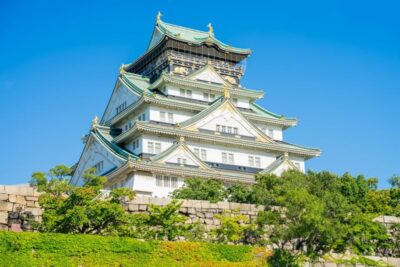

Imperial Palace and Shogun Historical Walking Tour
Read our review →
Tokyo Castle & Imperial PalaceーShogun Walking Tour
Read our review →
Nijo-jo Castle and Ninomaru Palace Guided Tour
Read our review →
Samurai Ninja Museum Guided tour and Experience
Read our review →Browse the lists this tour appears in