
Reviewed · COOKING CLASSES
Izakaya Style Cooking Class
Good food is better when you make it. This three-hour Kyoto class turns a traditional wooden house into a friendly kitchen, where you learn dashi and Japanese seasoning before preparing several casual dishes and sitting down to eat them. I like the hands-on format, and I like that you take the recipes home instead of leaving with only a pleasant meal memory. The main consideration is that the menu changes with seasonal ingredients, so you may not cook every dish listed in the description.
The class costs $71.63 per person and begins at 2pm at Cooking Sun, 679 Funayachō, in Kyoto’s Shimogyo Ward. Small groups of up to eight allow for personal help, though one larger session had enough participants that the instructors had to work as a team. Also note that sake is not necessarily covered by the class price: one participant was charged 600 yen per glass after accepting an offer.
In This Review
- Key points to know before booking
- Why izakaya cooking is worth your Kyoto afternoon
- Arriving at Cooking Sun at 2pm
- The opening lesson: dashi, seasonings, and izakaya customs
- Preparing several dishes instead of one main course
- How much personal help can you expect?
- Sitting down to eat your own izakaya dinner
- What you take home besides dinner
- Price, group size, and practical value
- Who should book this Kyoto cooking class?
- Should you book it?
- FAQ
- Where does the Izakaya Style Cooking Class begin?
- What time does the class start?
- What is included in the price?
- How many people can join the class?
- Can I request dietary accommodations?
- Can I cancel for a full refund?
Key points to know before booking
- Learn dashi from the start: Japanese soup stock gives you a useful foundation for soups, sauces, and many home dishes.
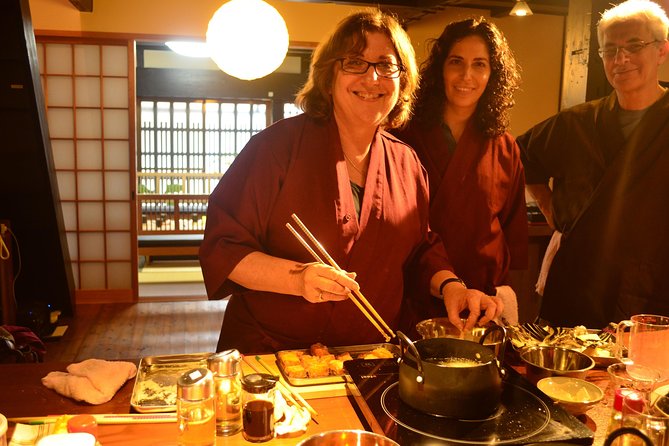
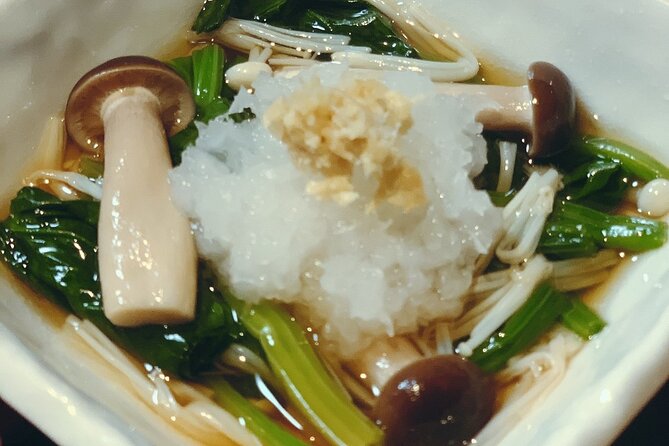
- Cook around six dishes: Past menus have included spinach with sesame sauce, teriyaki yellowtail, vegetable chowder, mushroom tempura, vegetable rice, pasta, pumpkin soup, cucumber salad, and mochi, but seasonal changes apply.
- Eat what you prepare: Dinner is included, so the class moves from demonstration to cooking and then to a shared meal.
- Good for mixed skill levels: Clear instruction and prepared ingredients help beginners, while experienced cooks can pick up new flavor combinations and utensils.
- Useful for families: Children aged 10 and 12 were able to follow the lesson, and families described it as one of the best shared activities of their Japan trip.
- Plan for the fine print: Dietary needs should be provided when booking, the class does not include hotel pickup, and cancellation is free until 24 hours before the start time.
Why izakaya cooking is worth your Kyoto afternoon
Izakaya is often compared with tapas, but the comparison only goes so far. It refers to casual Japanese food served with drinks, usually in small portions and ordered for sharing. The tradition developed from sake shops that began serving food, and today izakaya-style cooking covers a broad range of simple, savory dishes rather than one fixed menu.
That makes this class a useful change from the familiar sushi and teriyaki circuit. You work with sauces, stocks, vegetables, fish, rice, fried foods, and sweets. The result gives you a better sense of what many people eat at home or in casual restaurants.
I especially like the focus on Japanese flavor building. You are not simply copying a recipe. You learn how ingredients such as soy sauce, sesame, dashi, and other seasonings behave together. That is the part most likely to help once you return home and try to recreate the meal.
The class also gives you cultural context without turning the afternoon into a lecture. The introduction explains how izakaya developed during the Edo period and why these places became affordable social settings for people of different ages. That background makes the food feel connected to daily life rather than presented as a collection of exotic dishes.
More Cooking Classes in Kyoto
- Ramen Cooking Class at Ramen Factory in Kyoto
★ 5.0 · 1,937 reviews - Sushi Making in Kyoto! Same-day bookings welcome!
★ 5.0 · 713 reviews - Kyoto: Ramen Cooking Class at a Ramen Factory with Souvenir
★ 4.9 · 532 reviews
Arriving at Cooking Sun at 2pm
The class starts at 2pm at Cooking Sun, 679 Funayachō, Shimogyo Ward, Kyoto, postal code 600-8466. The cooking studio is described as being in a traditional wooden house, which suits the subject far better than a standard modern classroom would.
The exact location information is provided at booking, so check your confirmation carefully before setting out. The studio is near public transportation, but hotel pickup and drop-off are not included. You will need to make your own way there and return from the same meeting point after the meal.
The timing works well for a Kyoto sightseeing day. You can spend the morning visiting a temple or market, then head to the class for the afternoon. Since the session lasts about three hours and ends back at the meeting point, avoid scheduling a tight evening reservation immediately afterward.
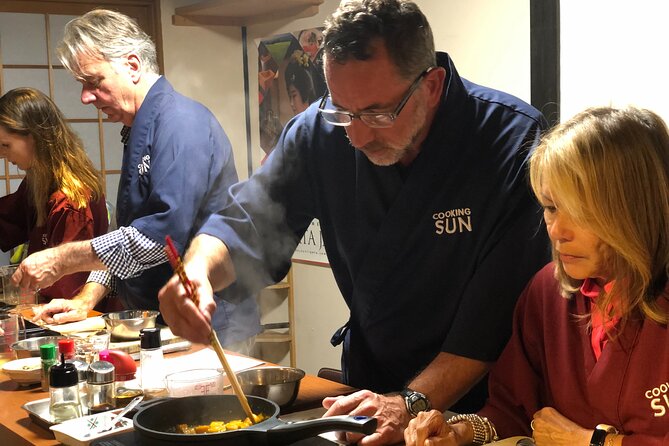
An apron is supplied, along with all ingredients and an English-speaking cooking instructor. The setup is designed for active participation, not simply watching a chef work at the front. You should arrive ready to handle a knife, stir, season, and help prepare the dishes.
The opening lesson: dashi, seasonings, and izakaya customs
The class begins with an explanation of izakaya and the place it holds in Japanese food culture. This matters because the dishes are meant to be understood as a meal that people share, not as isolated cooking exercises.
Next comes an introduction to the ingredients and techniques. The most important lesson is likely dashi, the Japanese soup stock used in many soups, sauces, and cooked dishes. Learning to make it gives you a base for understanding why Japanese food can taste full and savory without relying on heavy seasoning.
The instructors also explain differences between sauces and condiments. This is a small detail with a big payoff. If you have ever bought Japanese ingredients and wondered which bottle to use, a guided comparison can make those pantry items much less mysterious.
The teaching appears carefully paced. Instructions are given in English, and the staff demonstrate each stage before you try it. Participants with very different cooking abilities were able to keep up, including children and experienced home cooks.
Preparing several dishes instead of one main course
One of the strongest features is the number of dishes prepared during the session. Past menus have included spinach with sesame sauce, teriyaki yellowtail, vegetable chowder, mushroom tempura, and rice with vegetables. Some sessions have produced six dishes, while other combinations included cucumber salad, pumpkin soup, pasta, and mochi.
That variety is valuable because it shows how a Japanese meal is built from several smaller elements. You learn different methods rather than spending the whole afternoon perfecting one complicated entrée.
The menu can change with seasonal ingredients. This is sensible in Kyoto, where good cooking often follows the calendar, but it means you should not book with one exact dish in mind. The description mentions several possible favorites, not a guaranteed menu.
Ingredient preparation is handled efficiently. In some sessions, much of the chopping and early preparation was done in advance. That leaves more time for cooking and allows the class to cover more dishes. The tradeoff is that you may not perform every small prep task from beginning to end.
For a beginner, that is probably a benefit. You get a clear look at the key techniques without spending half the class peeling and slicing. For an avid cook, it may feel slightly less thorough if you hoped to practice every knife cut yourself.
A completely different kind of day out:
- PERFECT KYOTO 1-Day Bus Tour
★ 5.0 · 13,518 reviews - [Kyoto & Nara Day Tour] Sagano Scenic Railway & Nara Park & Fushimi Inari Taisha Thousand Torii Gates & Togetsukyo Bridge & Bamboo Grove & Kimono Forest (Departing from Osaka)
★ 4.9 · 10,942 reviews - Kyoto: Fushimi Inari, Kinkakuji, Bamboo Grove 1 Day Bus Tour
★ 4.8 · 4,316 reviews - Kyoto: Tea Ceremony in a Traditional Tea House in Kiyomizu
★ 4.9 · 3,519 reviews
How much personal help can you expect?
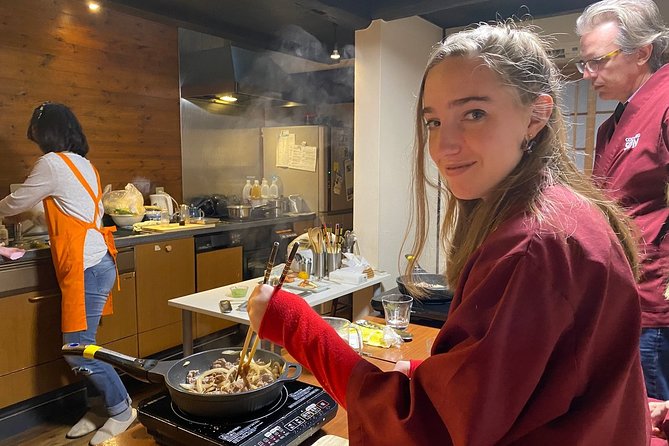
The maximum group size is eight people per booking, and the activity itself also lists a maximum of eight participants. That is a useful size for a practical cooking lesson. You are close enough to see the demonstration and ask questions without the class feeling like a large tour.
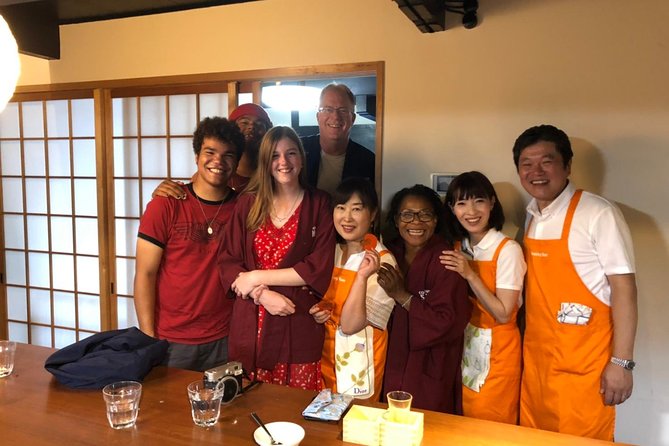
The instructors receive especially strong praise for organization and patience. Keiko and her team are described as friendly, structured, and quick to help. Several instructors may work together, moving ingredients, cleaning stations, and assisting people who need extra guidance.
That teamwork matters in a cooking class. Good instruction is not only about explaining a recipe. It is also about keeping the work moving, clearing space, and noticing when someone has missed a step. The staff seem to handle those practical jobs well.
You do not need advanced cooking skills. The recipes are described as easy to follow, and the instruction is suitable for beginners and experienced cooks alike. If you cook regularly, you may enjoy the details about flavor combinations, Japanese kitchen tools, and how familiar ingredients are used differently.
The class also works for families. A family with children aged 10 and 12 found the instruction accessible, and other parents described cooking and eating together as a highlight of their trip. Children should still be comfortable taking part in a kitchen setting, especially when knives and hot equipment are involved.
Sitting down to eat your own izakaya dinner
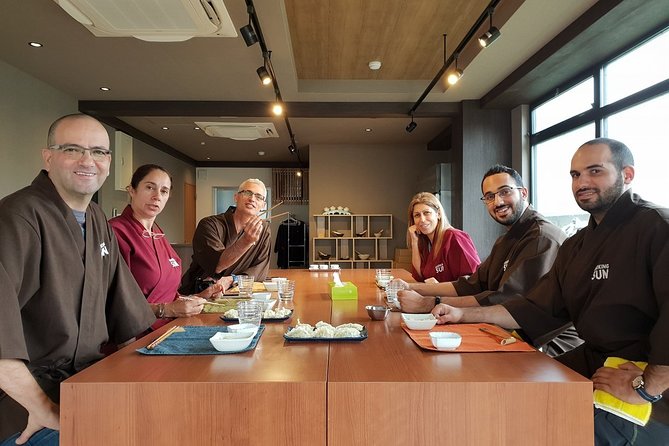
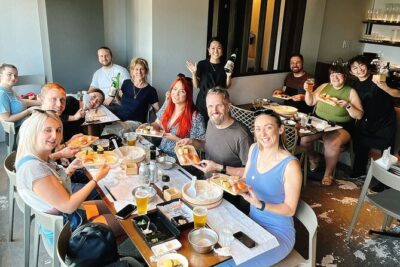
After the cooking, you sit with the other participants and eat the dishes you have prepared. Dinner is included in the price, as are the ingredients, instructor, and apron.
This final meal gives the afternoon a satisfying shape. You have learned the background, watched the methods, cooked the food, and then tasted the results. It is also a natural time to compare notes with people from different places and ask the instructor for recommendations for the rest of your Kyoto visit.
You should arrive hungry. A family described eating a large amount of food, and several menus included multiple savory dishes plus dessert. Because the dishes are served as a spread, you get to sample a wide range of flavors rather than filling up on one heavy plate.
The food is often described as delicious, healthy, and easy to repeat at home. That combination is important. Some cooking classes produce impressive dishes that are difficult to make again. Here, the emphasis is on practical home cooking, so the recipes have a better chance of becoming part of your regular kitchen routine.
One small cost issue deserves attention. A participant accepted a glass of sake with the meal and later learned it cost 600 yen. The lesson is simple: ask the price before ordering or accepting any extra drink. The class includes dinner, but the information does not promise that alcoholic drinks are included.
What you take home besides dinner
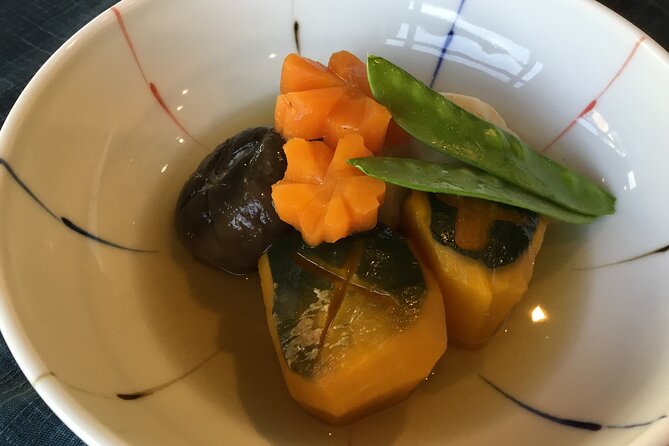
The recipes are provided after the class. This is one of the best reasons to choose a cooking lesson over a standard food tour. You leave with something you can use, not just a photograph and a full stomach.
The dishes are also practical for sharing with friends and family. Several menus used familiar ingredients in Japanese ways, so you may be able to adapt them outside Japan. The lessons on dashi and seasoning are particularly useful because they can support many future meals.
You may also learn about Japanese utensils and pantry items. One experienced cook was excited to try new flavor combinations and tools at home, while another participant wished the menu had included Japanese noodles instead of a pasta dish. That points to the class’s only real culinary uncertainty: the menu may sometimes mix traditional Japanese dishes with more flexible or international choices.
If your goal is a strict regional cooking course with a fixed menu, this may not be the right fit. If your goal is to understand approachable Japanese home cooking and enjoy a varied meal, the changing format works in your favor.
Price, group size, and practical value
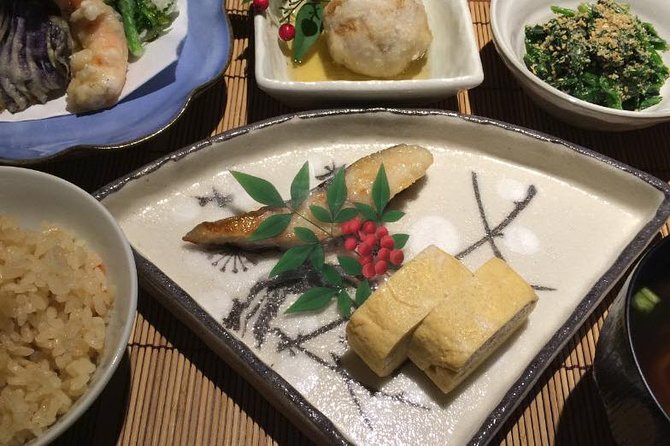
At $71.63 per person, the class is not a bargain meal, but it offers more than dinner. You receive about three hours of instruction, all ingredients, an apron, an English-speaking instructor, and the meal you prepare. You also receive recipes and cultural background.
I think the value is strongest for people who will actually use the recipes. If you only want to eat Japanese food, a casual izakaya restaurant will cost less and require no chopping. If you want instruction, a social activity, and a meal in one booking, the price is reasonable.
The small group also improves the value. With no more than eight participants, the class can give direct help rather than leaving you to watch from a distance. Group discounts are available, which may make the class more attractive for families or friends booking together.
The 99 percent recommendation rate and 4.9 rating from 219 reviews point to a consistently strong experience. The most repeated praise concerns friendly instructors, careful organization, tasty food, and recipes that can be made again at home. The occasional concerns are modest: a menu may include a less traditional dish, a larger session can feel busy, and extra sake may cost more than expected.
Dietary needs should be stated when booking. The staff have accommodated vegetarians and allergies, including celiac concerns, but you should not wait until the class begins to raise the issue. Service animals are allowed, and the studio is near public transportation.
Who should book this Kyoto cooking class?
I would recommend it to first-time visitors who want a useful introduction to Japanese food beyond sushi. It is also a good choice for families, couples, friends, and solo participants who like meeting others through a shared activity.
Beginners should feel comfortable here because the recipes are explained clearly and the instructors provide hands-on help. Experienced cooks can still gain something from the dashi lesson, seasoning comparisons, Japanese utensils, and the chance to see how several small dishes come together.
The class is less suitable for anyone who wants a quiet, restaurant-style afternoon. You will be working in a group, following instructions, and taking part in the preparation. It may also disappoint you if you require a fixed menu or specifically want noodles, sushi, or a formal kaiseki-style meal.
Book only if you can keep your schedule flexible around the seasonal menu. And if you are offered sake, confirm the price first.
Should you book it?
Yes, if you want to learn practical Japanese cooking and eat a varied dinner in a friendly setting. The best parts are the dashi lesson, the number of dishes, the patient instruction, and the recipes you can use after returning home.
I would choose this class over a simple food tasting if you enjoy doing things with your hands. The $71.63 price is fair for a three-hour lesson with dinner and ingredients, especially with a group discount. Just allow time to reach the wooden cooking studio, disclose dietary needs early, and remember that the menu and drinks may involve small surprises.
Free cancellation is available up to 24 hours before the 2pm start time. Cancellations or changes within 24 hours are not refunded or accepted.
FAQ
Where does the Izakaya Style Cooking Class begin?
It begins at Cooking Sun, 679 Funayachō, Shimogyo Ward, Kyoto, 600-8466, Japan. The cooking studio is located in a traditional wooden house, and the exact location information is provided when booking.
What time does the class start?
The class starts at 2pm and lasts approximately three hours. It ends back at the meeting point.
What is included in the price?
The price includes dinner, all cooking ingredients, an English-speaking cooking instructor, and an apron. Hotel pickup and drop-off are not included.
How many people can join the class?
The activity has a maximum of eight participants, and each booking can include up to eight people. Group discounts are available.
Can I request dietary accommodations?
Yes. You should provide any specific dietary requirements when booking. Vegetarian and allergy accommodations have been handled in previous sessions.
Can I cancel for a full refund?
Yes, you can cancel at least 24 hours before the experience start time for a full refund. Cancellations or changes made less than 24 hours before the start time are not refunded or accepted.
More Bar Hopping and Izakaya Tours in Kyoto
- Kyoto: Izakaya Bars Guided Walking Tour
★ 4.9 · 815 reviews - Kyoto Bar Hopping Night Tour
★ 5.0 · 613 reviews - Kyoto Local Bar Crawl in Kawaramachi Area
★ 5.0 · 378 reviews - Kyoto: Afternoon Japanese Izakaya Cooking Class
★ 4.9 · 241 reviews
Just added in Kyoto
- The “Golden Route” and Ancient Japan by DIAMIR Erlebnisreisen – 14-Day Tour★ 2.0 · 2 reviews
- Japan: Castles & Cuisine by G Adventures – 6-Day Kyoto to Osaka Tour★ 4.5 · 4 reviews
- Cycle Japan by Explore! – 13-Day Kyoto to Tokyo Tour★ 4.7 · 12 reviews
- Cycle Japan by Intrepid Travel – 11-Day Kyoto to Tokyo Tour★ 4.8 · 2 reviews
- Classic Japan by Intrepid Travel – 11-Day Kyoto to Tokyo Tour★ 4.4 · 14 reviews
- Ancient & Modern Japan 14-Day Tour by Exodus Adventure Travels★ 4.4 · 40 reviews
- 5 Day Cultural Adventure of Kyoto, Nara & Osaka by Tourist Journey★ 2.5 · 2 reviews
- 12 Days Kinosaki Onsen Escape: A Journey Through Japan’s Timeless Towns by UME Travel★ 4.8 · 5 reviews
Cooking Classes, compared.
Sushi Making Tokyo Roll and Authentic Japanese Sushi Class
Read our review →
Roll and Authentic Sushi Making Class in Asakusa
Read our review →
Ramen Cooking Class at Ramen Factory in Kyoto
Read our review →
Sushi Making Class in a Happi Coat near a Famous Spot
Read our review →
Sushi Making Osaka Roll and Authentic Japanese Sushi Class
Read our review →
Tokyo Sushi Making Class in Tsukiji with Professional Chef
Read our review →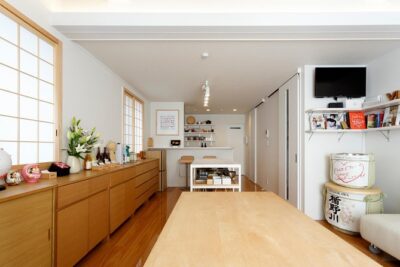
Ramen & Gyoza Cooking Class in Tokyo with Local Supermarket Visit
Read our review →Browse the lists this tour appears in