
Reviewed · TEA CEREMONIES
Matcha Kimono Tea Ceremony in Tokyo
Matcha tells a bigger story than its taste. This 90-minute Shinjuku workshop pairs an easy-to-wear kimono with a hands-on tea lesson, giving you a friendly introduction to Japanese customs without taking half a day. I especially like the chance to prepare your own bowl of matcha and the small group size, capped at 10 people.
I also like the host’s clear English and willingness to answer questions. You learn about green, black, Chinese, and Japanese teas, then compare matcha by sight, smell, and taste. The main consideration is that this is an informal workshop, not a formal, highly ritualized tea ceremony, and the 10-minute late arrival rule is strict.
- Easy kimono dressing: Specially designed garments take far less time to put on than a standard kimono.
- Hands-on matcha making: You use traditional tea tools and prepare your own bowl.
- First-flush matcha: The workshop serves high-quality matcha selected from a collection of more than 100 Japanese varieties.
- Small-group setting: A maximum of 10 participants leaves room for questions and personal help.
- Cultural context: The talk covers tea types, tea ceremony etiquette, and the philosophy of Teaism.
- Flexible schedule: At about 90 minutes, it fits neatly into a busy day in Tokyo.
In This Review
- A Short, Practical Introduction to Japanese Tea
- Putting On the Easy Kimono
- Learning Why Matcha Is Different
- Making Your Own Bowl of Matcha
- Teaism, Etiquette, and the Meaning Behind the Ritual
- How the 90-Minute Format Affects the Experience
- What the $59.46 Price Includes
- Who Will Get the Most From This Workshop
- Practical Tips Before You Go
- Should You Book the Matcha Kimono Tea Ceremony?
- FAQ
- How long does the Matcha Kimono Tea Ceremony last?
- Where does the activity start and end?
- Is the kimono difficult to put on?
- Do I need to bring tea ceremony tools?
- Do I need to wear socks?
- What happens if I arrive late?
A Short, Practical Introduction to Japanese Tea
This experience takes place in Shinjuku, one of Tokyo’s most convenient areas for visitors, at the meeting point listed as MPPG+HH, Shinjuku City. You meet there and finish at the same location, so you do not need to arrange private transport or work out a complicated return route.
The workshop is designed for people who want more than a cup of matcha in a café. You learn what makes matcha different from ordinary green tea, see how tea fits into Japanese culture, and then try the preparation yourself. That combination gives the activity real value. You are not only watching someone perform a ceremony. You are learning enough to understand what you see and taste.
The experience lasts about an hour and a half. That is long enough for a proper lesson, but short enough to fit before dinner, between sightseeing plans, or into a day when you want one quiet cultural stop. A maximum of 10 people keeps the group small enough for questions and help with the kimono and tea tools.
The workshop has received a 5 out of 5 rating from 104 reviews, with 99 percent recommending it. Those figures suggest a consistently strong experience, though you should still match your expectations to the format. Think of this as a welcoming introduction rather than a full formal tea school or a long ceremony in a historic temple.
Putting On the Easy Kimono
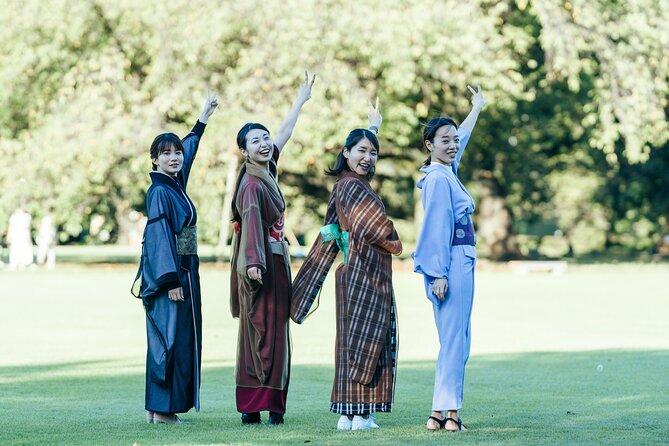
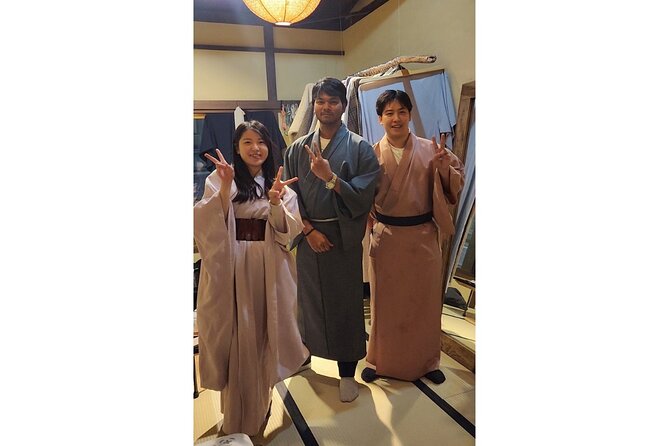
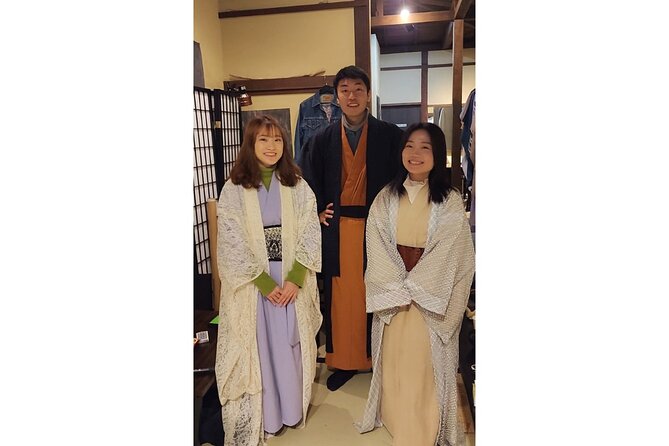
The activity begins with the kimono. You choose a simple, stylish garment and receive help putting it on before the tea presentation starts.
This is not the same as being dressed in a full formal kimono. Traditional dressing can take around 30 minutes, while these garments are designed to be worn quickly and with less fuss. That matters because you spend more of your limited time learning and less time standing still while layers and ties are adjusted.
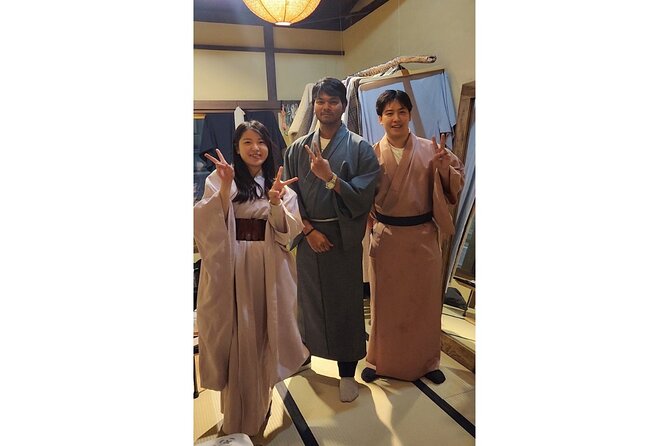
The casual design also makes the activity approachable if you have never worn Japanese clothing. You do not need prior experience with kimono dressing, and the host helps you put it on properly. The result is a cultural experience that feels accessible rather than intimidating.
You must wear socks in the tatami room. This is an easy detail to miss, so pack a clean pair before you arrive. If you forget, the workshop asks you to buy socks at the venue. That small extra cost is avoidable with a little planning.
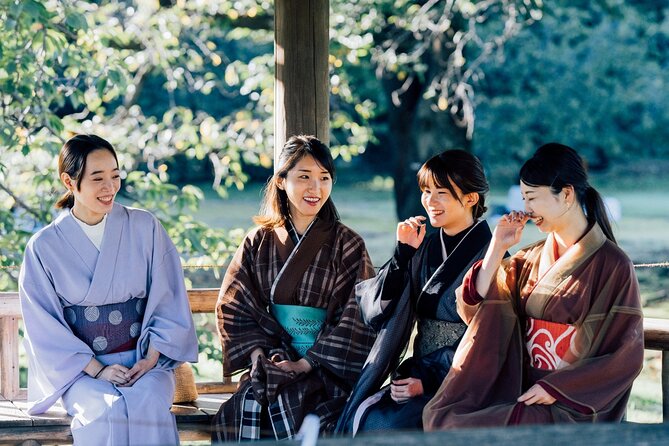
The kimono also adds a visual and social element to the workshop. You are not simply sitting in a classroom. You are taking part in a Japanese setting, wearing traditional clothing while learning about tea manners and preparation. Photos may also be taken, as one visitor specifically noted that the host photographed the group.
More Kimono Experiences in Tokyo
- Tokyo Asakusa Kimono&Yukata Rental at Kimono Miyabi Asakusa Station
★ 4.9 · 8,489 reviews - Tokyo Kimono, Furisode, and Yukata Rental Experience | Exquisite Hairstyling & Japanese Makeup & Photo Shoot (Ookini Asakusa Kaminarimon)
★ 4.8 · 767 reviews - Let’s make kimono !(Kimono is a gift for you
★ 5.0 · 252 reviews
Learning Why Matcha Is Different
The presentation covers several kinds of tea, including green tea, black tea, and Chinese tea. The point is not to turn you into a professional tea buyer in one sitting. Instead, it gives you a useful framework for understanding how Japanese tea fits into the wider tea world.
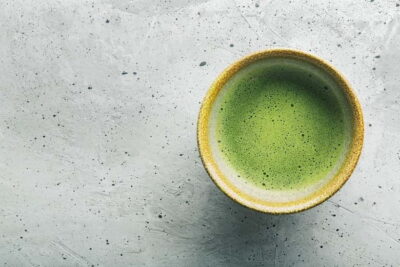
Matcha is often described casually as green tea, but the workshop explains why the two are not the same. With ordinary green tea, you steep the leaves and usually remove them. With matcha, you drink the finely ground tea itself after whisking it with water. That difference affects the texture, taste, and preparation.
The session also compares Japanese matcha with matcha from overseas. The workshop presents these as very different products, which is useful if you have bought matcha outside Japan and found the flavor inconsistent. You get a chance to consider color, aroma, and taste rather than judging the powder by packaging alone.
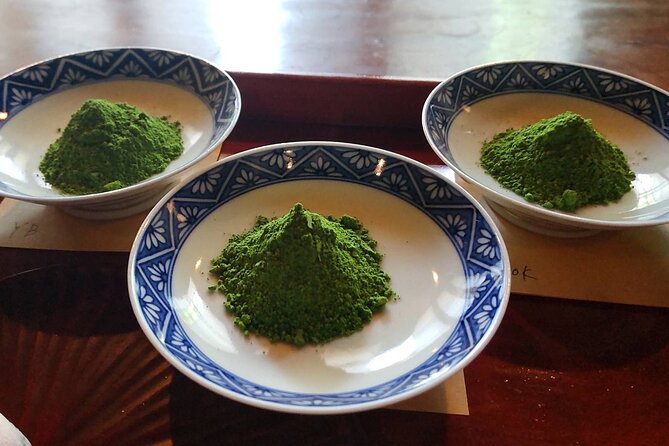
One of the most distinctive parts is the tasting approach. The host uses a collection of more than 100 matchas from around Japan and includes first-flush matcha, described as the highest-quality selection. You are encouraged to use your eyes, nose, and tongue to decide which variety suits you best.
That tasting element gives the lesson a practical edge. If you already drink matcha, you can compare styles and ask more detailed questions. If you are new to it, you can work out whether you prefer a stronger, milder, sweeter, or more unusual flavor without needing expert vocabulary.
A decaf option is available. The provided details also list a Terror matcha option, although the exact meaning of that name is not explained. If caffeine is a concern, ask the host about the available choices at the start.
Making Your Own Bowl of Matcha
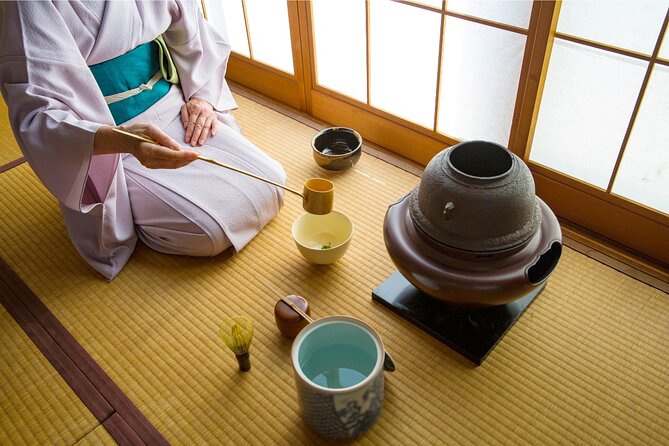
After the lecture, you prepare matcha yourself. The workshop supplies the tea ceremony tools, so you do not need to bring equipment or buy anything before arriving.
This is where the activity becomes more useful than a simple demonstration. You handle the tools, follow the preparation method, and make a bowl you can drink. The host explains the traditional way to prepare it and shows you the basic manner for drinking it.
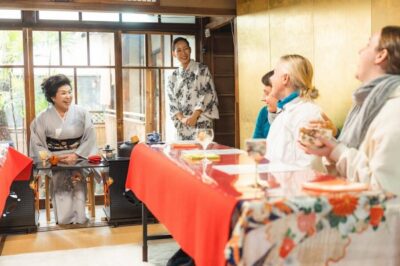
You should expect guidance rather than pressure. The session is built as a workshop, and the host helps participants through the steps. Several visitors found the instruction patient and easy to follow, especially for a first attempt.
The preparation also gives you a better sense of why tea ceremony values attention and control. Small actions matter: how you use the implements, how you whisk, and how you receive and drink the tea. You do not need to master every rule, but you leave with a clearer idea of the care behind the ritual.
Japanese traditional snacks are included with the tea. They provide a little contrast to the matcha and make the tasting feel like a complete cultural lesson rather than a single drink. A welcome drink of high-quality matcha, coffee, or tea is also included in the package details.
If you already dislike matcha, you can still gain something from the session. The cultural explanation, clothing, tools, and etiquette remain worthwhile even if the flavor is not your favorite. Just do not book this expecting a sweet café-style matcha latte. The focus is traditional preparation and the taste of the tea itself.
Teaism, Etiquette, and the Meaning Behind the Ritual
The workshop goes beyond instructions. It explains the philosophy of Teaism and the broader idea of tea ceremony.
That cultural context is one of the strongest reasons to choose this activity. Without it, whisking matcha can feel like a craft demonstration. With it, you begin to understand why the ceremony places value on manners, awareness, hospitality, and the careful use of ordinary objects.
You also learn basic drinking etiquette. This is useful for anyone who plans to visit another tea house in Japan, though the lesson does not turn you into a ceremony expert. The goal is confidence and respect, not perfection.
The format appears relaxed and conversational. The host speaks fluent English, according to the feedback provided, and encourages questions. That is important in a subject where small cultural details can be hard to understand from a guidebook alone.
I would especially recommend asking questions if you are curious about tea grades, regional differences, or why certain tools are used. The small group gives you a better chance to do that than a large demonstration would.
More Tea Ceremonies in Tokyo
- Matcha Making Class in Tokyo with Authentic Japanese Sweets Set
★ 5.0 · 744 reviews - Tokyo: Traditional Tea Ceremony with a Tea Master
★ 5.0 · 528 reviews - Tokyo: Matcha Making Experience with Mochi Sweets in Asakusa
★ 4.9 · 388 reviews - Tokyo: Matcha and Kimono Experience
★ 4.7 · 219 reviews
How the 90-Minute Format Affects the Experience
At roughly 90 minutes, this is a compact activity. You can fit it into a day built around Shinjuku shopping, food, museums, or other Tokyo sights, though the meeting point itself is the fixed start and end location.
The short schedule is a strength, but it also sets limits. You receive an introduction to kimono, matcha, tea types, philosophy, preparation, and etiquette in one sitting. That means each topic receives a focused overview rather than a long academic lesson.
You will probably appreciate the pace if you want a cultural activity that does not consume an afternoon. Families and first-time visitors may find the structure easier than a formal ceremony with strict silence and complex rules. Children are allowed, but all children are charged the full price.
The group size is limited to 10 people. That is small enough for individual help, especially during the kimono dressing and matcha preparation. It also means the activity may feel more personal than a large tour, though the exact group size on your date can be smaller or close to the maximum.
Arrive early. The reservation is automatically canceled after 10 minutes of delay, with no refund. Tokyo’s transport system is efficient, but finding a specific meeting point can still take time, so do not plan to arrive exactly at the start time.
What the $59.46 Price Includes
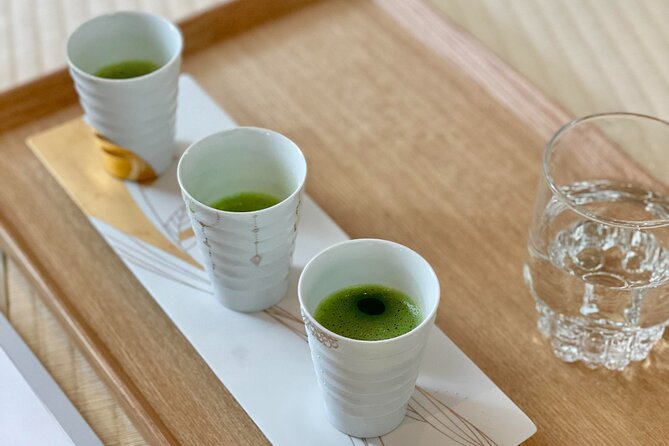
The price is $59.46 per person. That includes the easy-to-wear kimono rental, tea ceremony tools, Japanese traditional snacks, high-quality matcha, and a welcome coffee or tea.
I consider that a fair price for a short, guided cultural activity, especially because the fee combines several elements that would otherwise be separate: clothing, instruction, tasting, equipment, and food. You are paying for access to the host’s tea collection and explanations as well as the physical items.
The value is strongest for first-time visitors. If you only want to drink matcha, a café will cost less and take less time. If you want to understand the drink, try the preparation, wear a kimono, and ask questions, this package offers more.
Private transportation is not included. You are responsible for reaching the Shinjuku meeting point and returning from there, though the location is near public transportation. The fixed point also keeps the experience simple. There is no hotel pickup to coordinate and no need to wait for a vehicle.
Free cancellation is available if you cancel at least 24 hours before the start time. Cancellations or changes made within 24 hours are not refunded, and the activity may be changed or fully refunded if its minimum number of participants is not reached.
Who Will Get the Most From This Workshop
I would choose this experience if you want a clear first step into Japanese tea culture. It suits visitors who enjoy learning by doing, since you do not merely watch the host prepare matcha.
It is also a good fit for:
- Matcha drinkers who want to understand quality and preparation
- First-time visitors to Japan seeking a direct cultural activity
- Couples or friends who want kimono photos and a shared workshop
- Families who can manage the full child price
- Busy sightseers with only 90 minutes available
- Anyone who wants an English-friendly setting with time for questions
You may want something else if your main goal is a formal tea ceremony with elaborate kimono, strict ritual, or a historic setting. This workshop uses simple clothing and a relaxed teaching style. That is part of its appeal, but it is also the reason not to confuse it with a full ceremonial performance.
Practical Tips Before You Go
Bring socks for the tatami room. This is the most important clothing tip, and forgetting them may mean buying a pair at the workshop.
Keep your schedule loose enough to reach the meeting point early. The 10-minute cancellation rule leaves no useful cushion for getting lost or delayed.
If you have strong preferences about caffeine or tea flavor, ask about the decaf and other matcha options when the session begins. The workshop offers a broad selection, so the tasting can be more useful when you explain what you normally like.
Use the question time. The host’s English and patient explanations are repeatedly praised, and the small group format gives you a good chance to ask about tea, kimono, etiquette, or preparation.
Finally, wear something comfortable under the kimono. The garments are designed for easy use, but you will still be sitting in a tatami room and taking part in a hands-on activity.
Should You Book the Matcha Kimono Tea Ceremony?
Yes, if you want an easy, friendly introduction to matcha and Japanese tea customs. The strongest parts are the hands-on preparation, the high-quality tea tasting, the simple kimono, and the chance to ask questions in a small group.
At $59.46, the experience offers good value when you want several cultural elements in one short visit. Book it for learning, tasting, and a relaxed photo opportunity. Skip it only if you are seeking a formal, highly traditional ceremony or if you cannot arrive well before the start time.
FAQ
How long does the Matcha Kimono Tea Ceremony last?
The experience lasts approximately 1 hour and 30 minutes.
Where does the activity start and end?
It starts at MPPG+HH in Shinjuku City, Tokyo, and ends back at the same meeting point.
Is the kimono difficult to put on?
No. The kimono is specially designed to be easy and quick to wear, unlike a standard kimono that can take about 30 minutes to put on.
Do I need to bring tea ceremony tools?
No. Tea ceremony tools are provided for use during the workshop.
Do I need to wear socks?
Yes. Socks are required in the tatami room. If you forget them, the workshop asks you to buy socks at the venue.
What happens if I arrive late?
The reservation is automatically canceled after 10 minutes of delay. No refund is provided in that situation.
Just added in Tokyo
- Tokyo The Izakaya tour★ 5.0 · 131 reviews
- The Best Family-Friendly Tokyo Tour with Government Licensed Guide★ 5.0 · 28 reviews
- Highlights & Hidden Gems of the Shibuya District Private Tour★ 5.0 · 48 reviews
- Tokyo Deep Inside Cycle Tour~3 Hours E Bike Tour around Tokyo★ 5.0 · 50 reviews
- Tattoo-friendly open-air Onsen & drink★ 5.0 · 25 reviews
- Tokyo Traditional Tea Ceremony with a Japanese Tea Master★ 5.0 · 40 reviews
- Taisho Sushi Making Class in Tokyo★ 5.0 · 89 reviews
- Baseball Professional • Yomiuri Giants★ 4.5 · 13 reviews
Tea Ceremonies, compared.
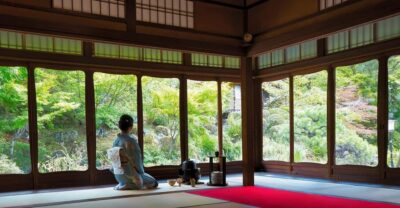
Tea Ceremony in a Traditional Tea House in Kiyomizu
Read our review →
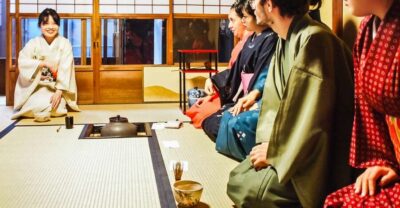
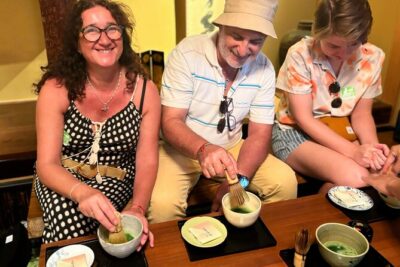
World Heritage Kyoto & Nara Uji Authentic Matcha Experience
Read our review →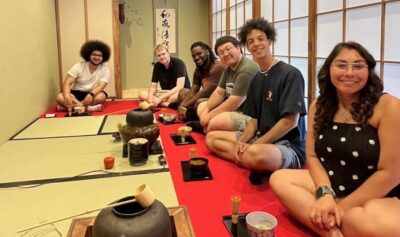
Browse the lists this tour appears in