
Reviewed · KIMONO AND CULTURAL DRESS
Kyoto: Gion Geisha District & Sake-in-Hand Walking Tour
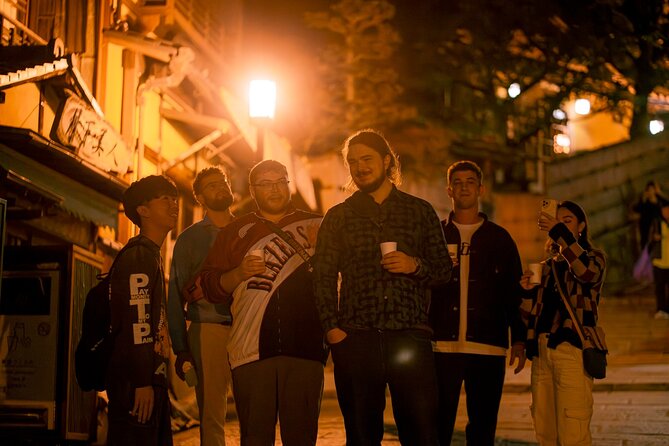
Kyoto glows after dark. This small-group walk takes you through Gion’s lantern-lit lanes, past shrines and old wooden houses, with sake to sip along the way. I like the nighttime atmosphere and the chance to hear about geisha culture from a local guide. I also like that the group is capped at 10 people, which gives you a better chance to ask questions. The main drawback is simple: this is a walking tour with limited formal sightseeing time, and one unhappy participant found the guide too quiet and the tour shorter than expected.
At $27.84 per person, the tour is priced as an easy addition to a Kyoto evening rather than a major splurge. I would choose it for a first look at Gion, especially if you want help finding the back streets and enjoy Japanese sake. You should expect a relaxed walk, not a staged geisha performance or a formal sake seminar.
In This Review
- Key points to know before you book
- Why Gion works especially well at night
- Starting beside the Kamo River
- Gion and Hanamikoji Street
- Yasui-Konpiragu and its unusual purpose
- Hokanji Temple and the Yasaka Pagoda view
- Ninenzaka and Sannenzaka: beautiful, but not easy on your feet
- Nene-no-Michi and the quieter side of Higashiyama
- Yasaka Shrine and the tour’s finish
- What the sake adds, and what it does not
- Group size, guide style, and pace
- Is $27.84 a fair price?
- Who should book this Kyoto night walk?
- Should you book the Gion Geisha District and Sake-in-Hand Walking Tour?
- FAQ
- How long does the tour last?
- What is the price?
- What is included in the tour?
- Is the tour suitable for children?
- How many people can join?
- Where does the tour begin and end?
- Do I need good walking shoes?
- Can I cancel for a refund?
Key points to know before you book

- Gion after dark: Lanterns and quieter lanes give the district a softer mood than you’ll find during the busy daytime hours.
- Small group size: The maximum is 10 people, though some departures may be much smaller.
- Sake along the way: A local sake tasting is included, and some departures have featured several bottles from different parts of Japan.
- A wide-ranging route: The walk covers Gion, Hanamikoji Street, Yasui-Konpiragu, Yasaka Pagoda, Ninenzaka, Sannenzaka, Nene-no-Michi, and Yasaka Shrine.
- A culture-focused guide: Expect commentary on geisha life, samurai culture, Zen meditation, shrines, and everyday life in Japan.
- A real walking commitment: The route uses lanes, slopes, and stone-paved streets, so comfortable shoes matter.
Why Gion works especially well at night
Gion is Kyoto’s best-known geisha district, but it is not an entertainment park built for sightseeing. It is a living neighborhood with teahouses, restaurants, homes, and narrow lanes. That makes orientation useful. A guide can help you pass through the area respectfully instead of wandering into private spaces or missing the streets that give Gion its character.
The evening timing is one of the strongest reasons to book this walk. The old wooden machiya houses look especially appealing beneath lantern light, and the narrow streets can feel calmer once many daytime sightseers have left. Rain can even add to the mood, with wet paving stones reflecting the lights.
The tour also gives you a practical way to learn about geisha culture without treating it as a photo opportunity. Your guide may explain the difference between geiko and maiko, discuss the role of teahouses, and point out places where you might spot a performer. Seeing a geiko or maiko is never guaranteed, and you should not follow, block, or photograph anyone without permission.
The tone appears to depend partly on the individual guide. Shumpei and Mune received especially warm praise for being friendly, informative, and ready to discuss Japanese life as well as famous sights. One participant had a less satisfying experience, describing little conversation and not enough information. That is worth keeping in mind if you want a highly structured lecture rather than a flexible walk.
More Kimono Experiences in Kyoto
- [Kyoto & Nara Day Tour] Sagano Scenic Railway & Nara Park & Fushimi Inari Taisha Thousand Torii Gates & Togetsukyo Bridge & Bamboo Grove & Kimono Forest (Departing from Osaka)
★ 4.9 · 10,942 reviews - Kyoto Geisha Walking Tour: Gion District & Hidden Gems
★ 4.7 · 3,273 reviews - Kyoto: Gion Magical Night Walking Tour with Geisha Trivia
★ 4.9 · 2,393 reviews
Starting beside the Kamo River
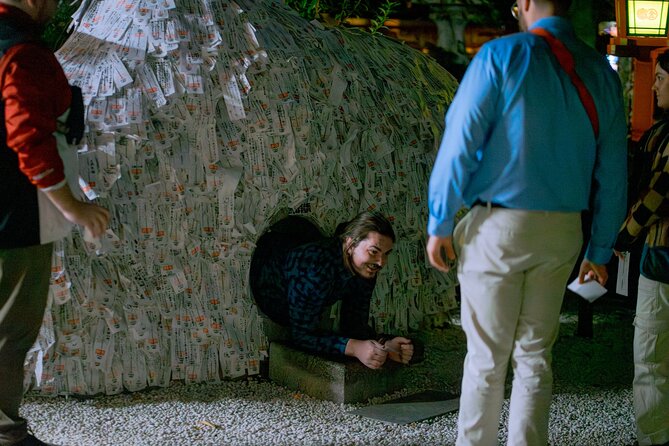
The meeting point is near Kikunoi Roan in Saitocho, in Kyoto’s Shimogyo Ward. The route begins around the Kamo River, the waterway that runs through central Kyoto. Its banks are known for scenic views and cherry trees, though the exact amount of time spent there is not specified.
This is a sensible place to begin. The river helps you get your bearings before the route turns into Gion’s more confusing web of lanes. It also provides a gentle opening rather than dropping you straight into a crowded sightseeing street.
Bring only what you need. You will be walking for roughly one to one and a half hours, and the route later includes stone paving and sloped streets. The tour is near public transportation, but the walk ends at Yasaka Shrine, not back at the starting point.
Gion and Hanamikoji Street
The first main stop is Gion, where traditional wooden machiya houses and teahouses line streets that have served as the backdrop for Kyoto’s geisha culture for generations. You are scheduled to spend about 10 minutes here, though the guide commentary and walking between points will shape the actual pace.
The value of this section is context. Without an explanation, Gion can look like a collection of pretty facades. With a guide, you can learn how the district functions, why some alleys are private, and how geisha entertainment differs from the assumptions often created by films and popular culture.
Hanamikoji Street receives another 10-minute stop. It is one of Gion’s most recognizable lanes, lined with preserved wooden buildings and teahouses. It is also one of the places where visitors need to behave well. Keep your voice down, stay out of doorways, and avoid treating performers or residents as scenery.
This part of the route may be the busiest section, depending on the evening. The tour’s small size helps your group stay together, but it does not guarantee an empty street. If your main aim is photography, you will need to move quickly and respectfully rather than setting up for long shots.
Yasui-Konpiragu and its unusual purpose
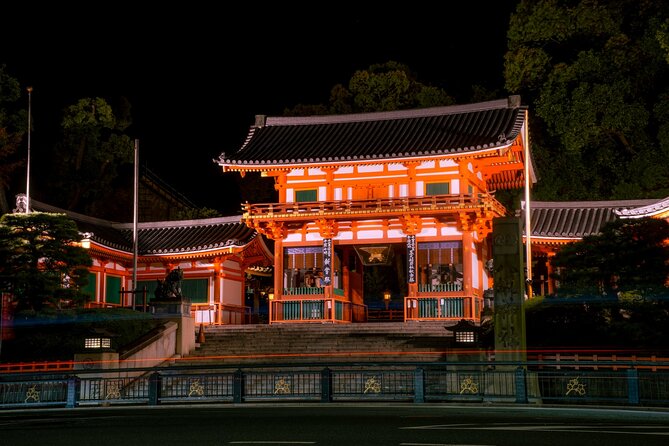
Yasui-Konpiragu Shrine gets about 15 minutes. The shrine is known for its large enmusubi and en-kiri stone, associated with breaking harmful relationships and forming good ones. Visitors traditionally write wishes and pass through the opening in the stone.
This stop adds a more personal layer to the walk. You are not just looking at architecture. You are seeing a place where people come with hopes about love, friendship, work, and difficult changes in life. Your guide can explain the custom and the shrine’s meaning, which is far more useful than simply taking a photograph and moving on.
The grounds are free to enter, like the other stops on this route. Still, the time here is limited. If you want to make a prayer, read every sign, or study the shrine at length, you may need to return on your own.
More Walking Tours in Kyoto
- Kyoto: Gion Geisha District Walking Tour – Stories of Geisha
★ 4.7 · 2,187 reviews - Night Walk in Gion: Kyoto’s Geisha District
★ 4.5 · 2,003 reviews - Kyoto Gion Geisha District Walking Tour – The Stories of Geisha
★ 5.0 · 1,441 reviews - Nishiki Market Brunch Walking Tour (7 Tastings + Brunch)
★ 5.0 · 1,355 reviews
Hokanji Temple and the Yasaka Pagoda view

Hokanji Temple, commonly called Yasaka Pagoda, receives about 15 minutes. The five-story pagoda is one of the most recognizable sights in Higashiyama, with origins reaching back to the sixth century. Its shape appears frequently in photographs of Kyoto, but seeing it within the surrounding old streets gives it more meaning.
This is one of the route’s best photo stops. The pagoda rises above traditional buildings and narrow lanes, creating the classic Kyoto view many people hope to find. Evening lighting can make the scene especially attractive, though the streets around it are not flat or especially roomy.
Do not expect a full temple visit. The schedule gives you time to see the pagoda and hear about its place in the district, not to explore every part of Hokanji Temple. That is a fair trade for a short evening tour, but visitors who want detailed temple study should plan a separate visit.
Ninenzaka and Sannenzaka: beautiful, but not easy on your feet
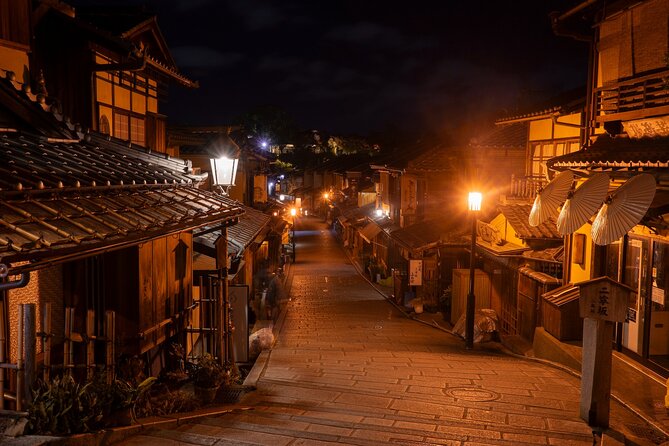
The route then reaches Ninenzaka and Sannenzaka, two traditional pedestrian streets in Higashiyama. Each receives only about five minutes, so these are passing stops rather than long visits.
Ninenzaka is known for its preserved wooden buildings, shops, and gentle slope. Sannenzaka is a stone-paved incline nearby, with a similar old-Kyoto feel. These lanes are photogenic, but their beauty comes with practical concerns: uneven paving, steps in places, and crowds at popular times.
I would pay attention to the guide’s stories here rather than trying to shop. The short timing means you are mainly seeing the streets and moving through the district. If you have mobility concerns or dislike walking on slopes, this route may be tiring. The tour asks for moderate physical fitness, and that description is important.
Nene-no-Michi and the quieter side of Higashiyama

Nene-no-Michi receives about 10 minutes. This stone-paved path is named for Nene, the wife of Toyotomi Hideyoshi, and connects the area near Kodaiji Temple with Maruyama Park. Compared with Hanamikoji Street, it can feel more open and peaceful.
This section helps balance the famous sights with a less commercial walk. You get another chance to enjoy old Kyoto architecture without needing to rush into a major attraction. The path also reinforces the tour’s basic appeal: you are seeing how the streets connect, rather than visiting isolated monuments by taxi.
As elsewhere, keep your voice low. The tour passes through residential areas at night, and the operator specifically asks participants to respect local residents. That rule is not a minor detail. A quiet group will have a better experience and will be less disruptive to the neighborhood.
Yasaka Shrine and the tour’s finish
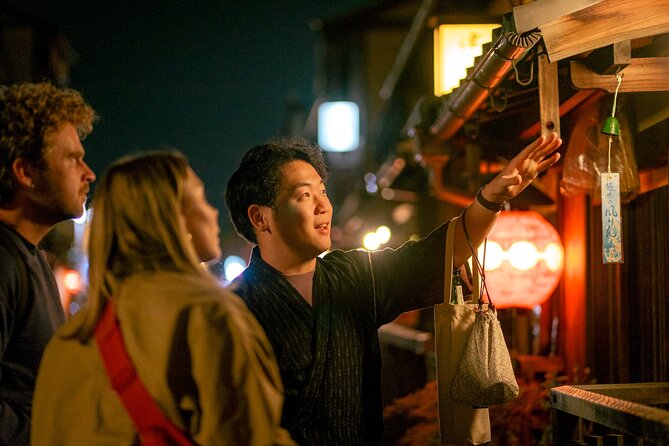
The final stop is Yasaka Shrine, where the tour spends about 20 minutes. Also called Gion Shrine, it dates to 656 and is closely linked with the district. Its location makes it a fitting end point because Gion’s cultural identity and the shrine’s religious life have long been connected.
Yasaka Shrine is free to enter, and the grounds can be atmospheric at night. The evening route lets you see the shrine without trying to fit it into a packed daytime temple schedule. You may also find it useful as a reference point for further exploring Higashiyama.
The tour ends here rather than returning to Saitocho. Most buses may have stopped running by the time the walk finishes, but the operator can help you arrange a taxi or find your way back. Plan for that before you start. If you are staying far away, check your return route in advance.
What the sake adds, and what it does not
The included sake tasting is the feature that separates this walk from a standard Gion orientation tour. Sipping local sake while moving through Kyoto’s old streets can make the evening feel social and informal. It is not a substitute for a dedicated brewery visit, but it gives the guide an easy way to discuss Japanese drinking customs and regional differences.
One particularly appealing detail is that some departures have included a selection of sake from different Japanese regions. That gives you a chance to compare flavors instead of receiving a single token sample. Some participants also enjoyed snacks with the tasting, though the confirmed tour description specifically promises sake, so I would not book this expecting a substantial food component.
There is a practical catch. Alcohol while walking through public streets will not suit everyone. Participants must be at least 20 years old, and you are asked to drink responsibly. If you do not drink, have dietary concerns, or prefer a seated tasting, this may not be the right format.
The title’s sake-in-hand wording should also set your expectations. This is a walking experience with alcohol included, not a restaurant meal or polished tasting-room event. One disappointed participant felt the sake and snack presentation was too casual. Others considered the combination excellent value. Your reaction will depend on whether you enjoy relaxed, simple experiences or want formal service.
Group size, guide style, and pace
The maximum group size is 10. That is small enough for a guide to answer questions and keep the group moving through narrow lanes. Some departures can be even smaller. A rainy evening once resulted in a group of only two people plus the guide, creating a particularly quiet walk through Gion.
The best reports focus on the guides’ personalities. Shumpei was praised for making the walk friendly and fun while answering questions about daily life in Japan. Mune was also singled out for his warm manner and clear explanations. Those details matter because the tour depends heavily on conversation.
This is not a headset-and-checklist tour. The pace is described as relaxed and go-at-your-own-speed, which can be pleasant if you want time for questions and photos. It can also feel underpowered if your guide is not talkative. The Spanish-language criticism is a useful warning: one participant felt the guide offered too little content and finished around 1 hour 10 minutes, despite the advertised duration reaching 1 hour 30 minutes.
The overall rating is 4.8 out of 5, with 95 percent recommending it. That is a strong result, but the uneven experience described above means I would book this for atmosphere and local explanation, not for a guaranteed script packed with facts.
Is $27.84 a fair price?
At $27.84, you are paying for three things: a guide who handles orientation, cultural commentary, and the included sake tasting. You are not paying admission to a paid attraction, and all the listed shrine and street stops are free.
I consider the price fair if you would otherwise spend an evening wandering Gion without knowing where to go. The guide’s route links several districts and gives you background on geisha culture, samurai traditions, Zen meditation, shrines, and Kyoto life. That is a useful bundle for a modest fee.
The value drops if you already know Gion well or want a long, detailed lecture at each site. It also drops if the sake tasting matters more to you than the walk. This is best understood as a friendly orientation with a drink, not a full cultural course.
Group discounts may be available, and mobile tickets make booking simple. Free cancellation is allowed up to 24 hours before the start time. A cancellation inside that window is not refunded, and poor weather or failure to reach the minimum group size can lead to a rescheduled date or full refund.
Who should book this Kyoto night walk?
I would recommend it to first-time Kyoto visitors who want an easy introduction to Gion after dark. It suits people who like walking, asking questions, seeing shrines without a rigid schedule, and trying a modest sake tasting.
It is also a good fit if you are nervous about navigating Gion’s back streets alone. The route gives you a useful mental map for returning later, perhaps in daylight when the shops and teahouses look different.
I would hesitate if you want an extensive geisha performance, a formal meal, a brewery tour, or guaranteed access inside temples. I would also think twice if you have difficulty with stone streets and slopes, dislike alcohol, or need the tour to return to its starting point.
Should you book the Gion Geisha District and Sake-in-Hand Walking Tour?
Book it if you want a reasonably priced, small-group evening walk with strong atmosphere and a local guide who may happily discuss more than the official sights. The lanterns, rainy streets, old wooden buildings, and sake tasting create a memorable Kyoto night.
Before booking, accept the tradeoffs: you will walk a lot, the commentary can vary by guide, and the tasting is informal. Choose comfortable shoes, keep your voice low in residential lanes, and arrange your return from Yasaka Shrine ahead of time. For the right visitor, this is a pleasant way to get oriented, enjoy Kyoto after sunset, and raise a small cup of sake to the city.
FAQ
How long does the tour last?
The approximate duration is 1 hour to 1 hour 30 minutes. The actual finish can vary, and one departure ended after about 1 hour 10 minutes.
What is the price?
The listed price is $27.84 per person. Group discounts may be available.
What is included in the tour?
The experience includes a guided walking tour through Gion and nearby Higashiyama areas, along with a local sake tasting.
Is the tour suitable for children?
No. All participants must be at least 20 years old because alcohol is provided.
How many people can join?
The maximum group size is 10 people. Some departures may have fewer participants.
Where does the tour begin and end?
It begins near Kikunoi Roan at 118 Saitocho, Shimogyo Ward, Kyoto. It ends at Yasaka Shrine in Gion.
Do I need good walking shoes?
Yes. The tour involves extensive walking through narrow lanes, stone-paved streets, and sloped areas. Comfortable clothing and shoes are recommended.
Can I cancel for a refund?
You can receive a full refund if you cancel at least 24 hours before the start time. Cancellations or changes made within 24 hours are not refunded or accepted. If poor weather or insufficient bookings cancel the tour, you can receive a full refund or choose another option.
Just added in Kyoto
- The “Golden Route” and Ancient Japan by DIAMIR Erlebnisreisen – 14-Day Tour★ 2.0 · 2 reviews
- Japan: Castles & Cuisine by G Adventures – 6-Day Kyoto to Osaka Tour★ 4.5 · 4 reviews
- Cycle Japan by Explore! – 13-Day Kyoto to Tokyo Tour★ 4.7 · 12 reviews
- Cycle Japan by Intrepid Travel – 11-Day Kyoto to Tokyo Tour★ 4.8 · 2 reviews
- Classic Japan by Intrepid Travel – 11-Day Kyoto to Tokyo Tour★ 4.4 · 14 reviews
- Ancient & Modern Japan 14-Day Tour by Exodus Adventure Travels★ 4.4 · 40 reviews
- 5 Day Cultural Adventure of Kyoto, Nara & Osaka by Tourist Journey★ 2.5 · 2 reviews
- 12 Days Kinosaki Onsen Escape: A Journey Through Japan’s Timeless Towns by UME Travel★ 4.8 · 5 reviews
Kimono and Cultural Dress, compared.
![[Kyoto & Nara Day Tour] Sagano Scenic Railway & Nara Park & Fushimi Inari Taisha Thousand Torii Gates & Togetsukyo Bridge & Bamboo Grove & Kimono Forest (Departing from Osaka)](https://media.japanvisits.com/wp-content/uploads/kyoto-nara-day-tour-sagano-scenic-railway-nara-park-fushimi-inari-taisha-thousand-torii-gates-togetsukyo-bridge-bamboo-grove-kimono-forest-departing-from-osaka-k110001-400x257.jpg)

Tokyo Asakusa Kimono&Yukata Rental at Kimono Miyabi Asakusa Station
Read our review →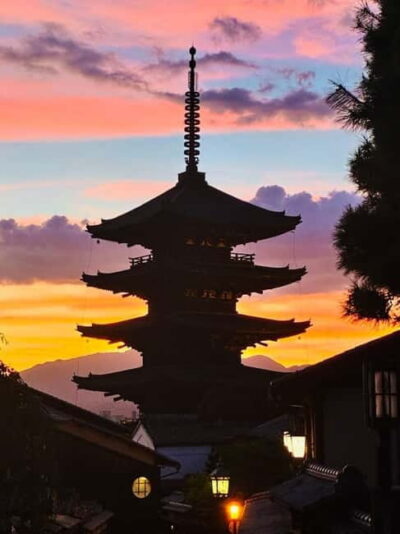
Kyoto Geisha Walking Tour: Gion District & Hidden Gems
Read our review →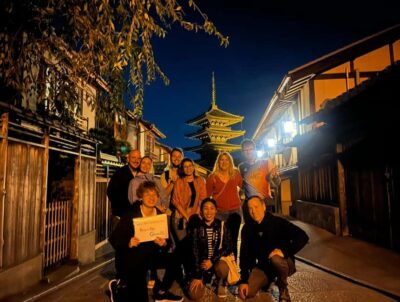
Gion Magical Night Walking Tour with Geisha Trivia
Read our review →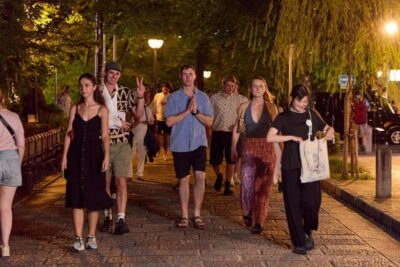
Gion Geisha District Walking Tour – Stories of Geisha
Read our review →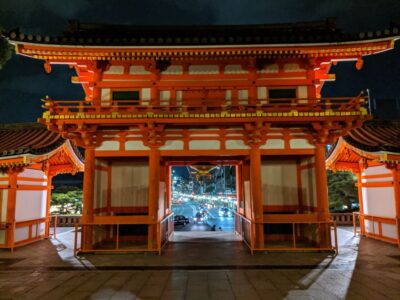
Best of Kyoto: Gion, Geisha, Pagodas & Cobblestones
Read our review →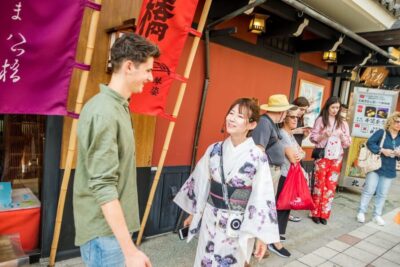
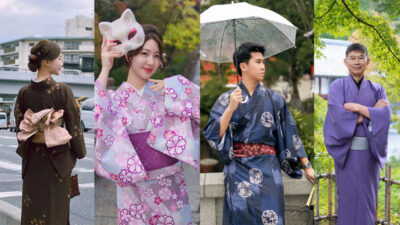
Kyoto Kimono Rental Experience (Optional Exquisite Hair Styling/Japanese Makeup/Photography) (Ookini Kiyomizu-dera Main Store)
Read our review →Browse the lists this tour appears in